Adventure Construction Set
| Developer: Fantasia Systems | Graphics: |
 | |
| Publisher: Electronic Arts | Sound: |
 | |
| Year: 1986 | Difficulty: |
 | |
| Genre: Role-playing game | Lastability: |
 | |
| Number of players: 4, alternating | Rating: |
8/10 | |
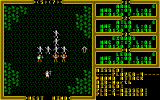
The title is misleading. This is less of an “adventure” game in the style of King’s Quest than an “8-bit” era role-playing game, similar to Ultima (1981, Apple II), though more primitive. Genres weren’t yet clearly defined at the time. Purists speak of “CRPG” (Computer Role-Playing Game), a term that originally designated the adaptation of a tabletop role-playing game to microcomputers, with its characters featuring evolving stat sheets, combat governed by dice rolls, after which players would share the spoils. The influence of Dungeons & Dragons and The Lord of the Rings was evident. Today, this acronym describes a role-playing game with traditional, if not outdated, mechanics (turn-based, significant element of chance, and most often, 2D representation).
Adventure Construction Set was developed for the Commodore 64 and published in 1984. Its author, Stuart Smith, had previously created three similar games: Fracas (Apple II, 1980), Ali Baba and the Forty Thieves (Atari 8-bit, 1981), and The Return of Heracles (Atari 8-bit, 1983). The first was a modest prototype centred on combat (simplistic and random). The second improved the presentation, adding a few weapons and armour as well as fleeting lines of text. The third, more elaborate both in its mechanics and narrative, allowed players to embody different heroes from Greek mythology. Each of them began one of twelve quests in a specific region, which offered greater replayability.
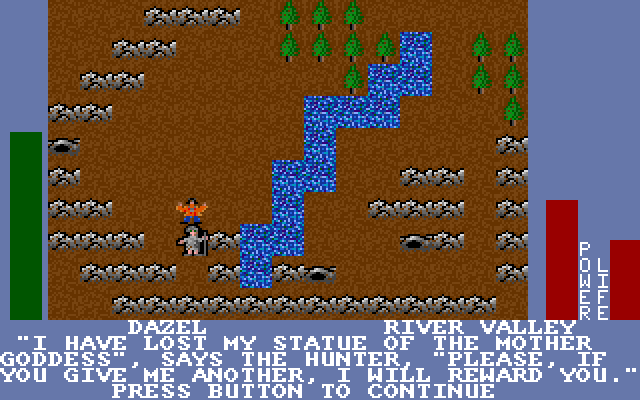
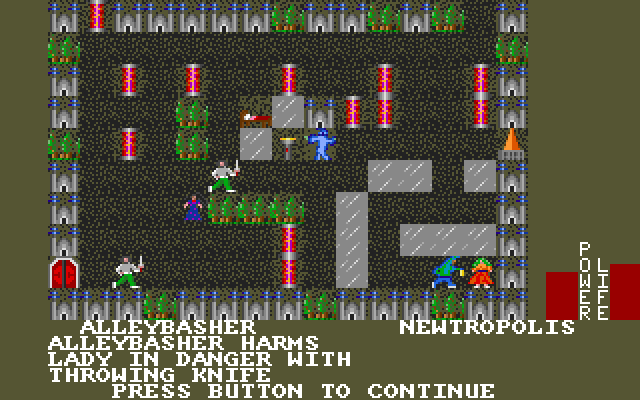
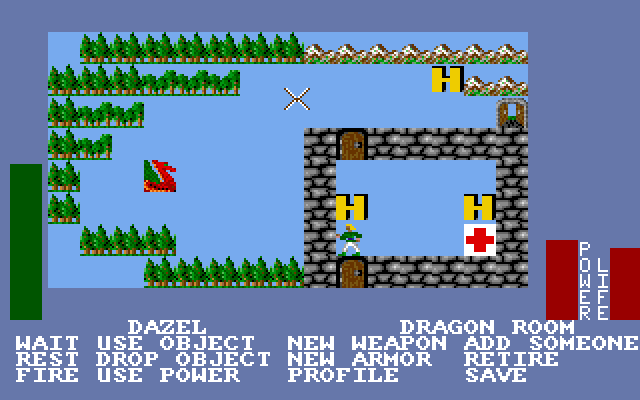
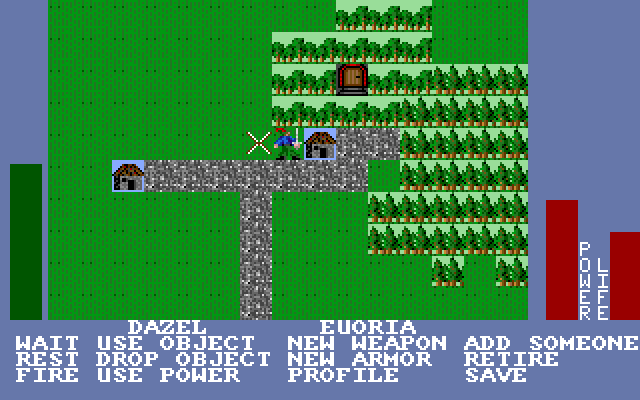
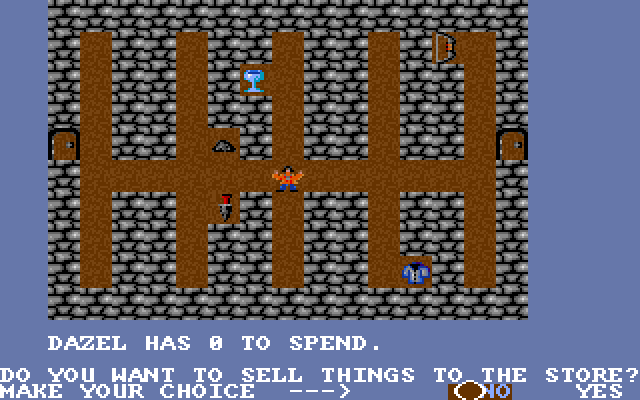
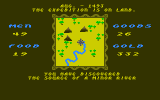
The world was presented on two levels of “zoom”: the map mode, in which the hero travelled from village to village, crossed the seas, and ventured into dungeons; then the close-up view, where encounters with other characters as well as combat took place (still highly dependent on chance). The environment was displayed on an invisible grid, where each “square” was occupied by an object, a creature, or a type of terrain. Characters moved square by square, in a jerky manner, without animation or screen scrolling, whilst actions were performed “turn-based in real-time” (with limited time to complete one’s turn). Unlike Ultima, the game did away with the first-person interface.
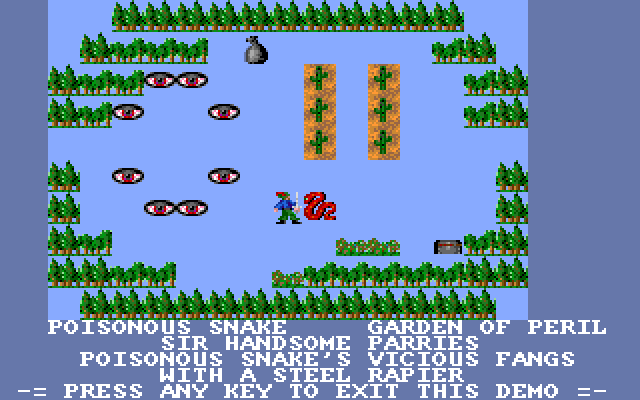
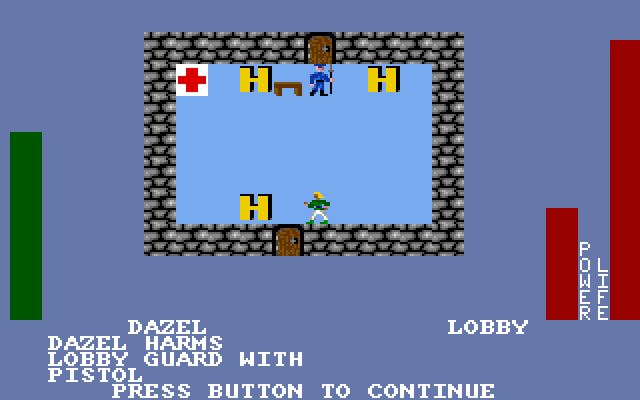
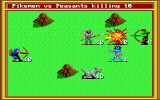
Despite graphics and functionality already obsolete in 1983 (compared to Ultima 3), certain innovative aspects deserve highlighting. Firstly, it was possible to play multiplayer by creating several characters, controlled independently (taking turns; forming a party wasn’t yet an option). Secondly, enemies showed initiative; they would sometimes fight with other monsters, flee, or even pick up items. Friendly characters could also take part in battles. More annoying were: those random events (often fatal) liable to abruptly cut short the game; the encumbrance system that slowed your movement based on the cumulative weight of objects in your inventory (gold coins included!); not to mention the unfortunate tendency of weapons to break on the first strike!
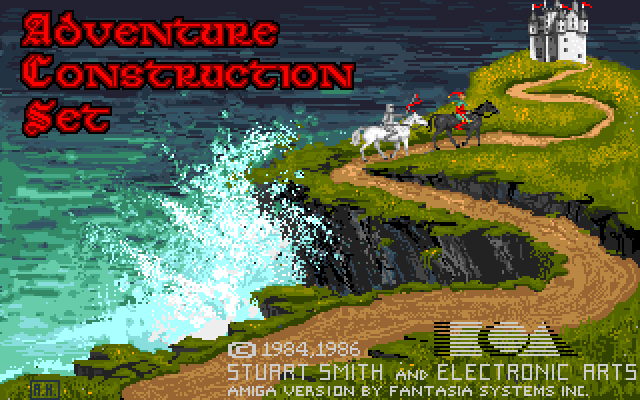
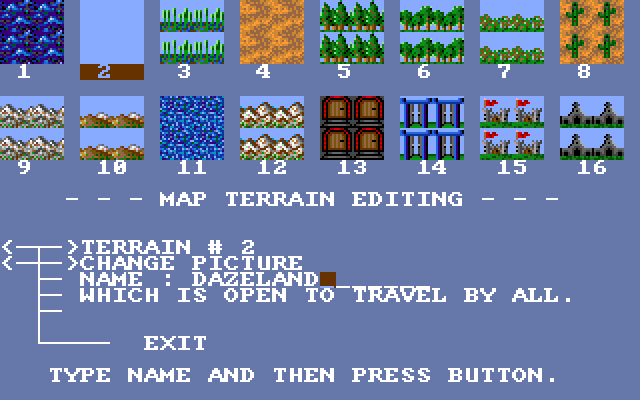
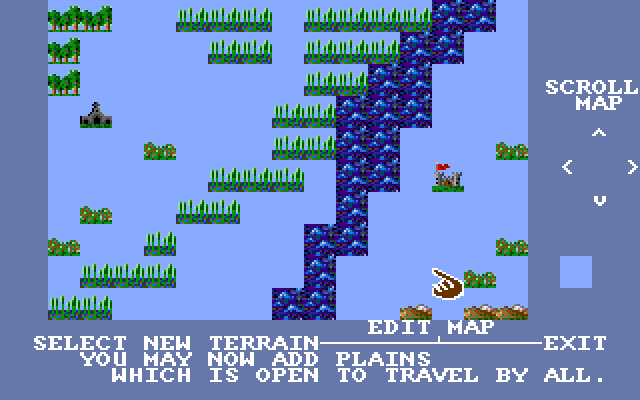
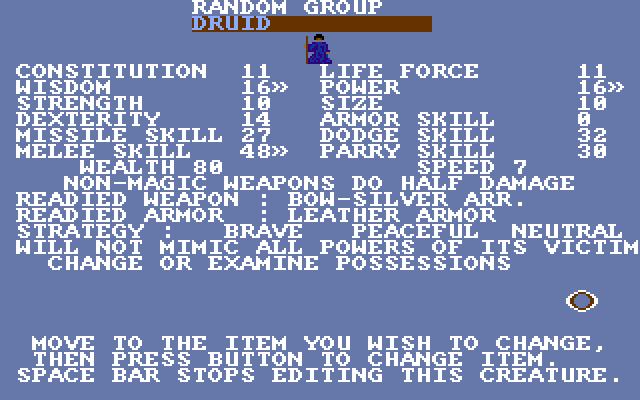
Adventure Construction Set takes the “game engine” from The Return of Heracles in its accomplished form (notably including ranged weapons and spells), accompanied by a complete tool for creating worlds, characters, and objects. It’s up to you to write the scenario and dialogues, draw scenery elements pixel by pixel, define creature statistics, and the function of items and spells. One is permitted to “programme” scripts and create simple interactions, or even small puzzles (for example: placing a particular object in a particular location to open a door). The software adapts just as well to fantasy universes as to science fiction or contemporary settings. It even offers a basic procedural generation function to compensate for a lack of inspiration. The idea wasn’t new: the genre’s earliest representatives already used it, such as Akalabeth: World of Doom (1979, Apple II) and Rogue (1980).
Besides the editor, the title includes three games built on the same architecture:
- Land of Aventuria: seven mini-adventures serving both as a tutorial and showcase for the creative tool.
- Rivers of Light: an adventure of about ten hours, inspired by the Epic of Gilgamesh.
- Galactic Agent: an adventure exclusive to the Amiga version, with a science fiction theme.
The menu, hardly explicit, requires copying the desired game onto a blank floppy disc beforehand. To play the first two, one must choose “make an adventure disk” (option 1), then “exit”, then “play an adventure” (option 4). To try the third, select “copy your adventure disk” (option 2).
The original version, on Commodore 64, met with sufficient success to spawn dozens of amateur creations, shared within clubs, or even presented at competitions. I don’t know whether this enthusiasm spread to the Apple II, Amiga, and PC adaptations (1987). The Amiga version, released two years later, clearly outclasses the others (32 colours instead of 4, mouse and second floppy drive support, faster). Still nothing to write home about, obviously, but the product proves polished, and I understand the appeal of being able to express one’s creativity and share one’s compositions with friends. I did the same thing on my calculator at secondary school, and didn’t care at all about the monochrome screen and slow display. Besides, did one have a choice in 1986? Comparable applications arrived years later: The Bard’s Tale Construction Set (Amiga and PC, 1991), Forgotten Realms: Unlimited Adventures (PC/Mac, 1993), Adventure Creation Kit (PC/Mac, 1995), RPG Maker (PC, 1995), not forgetting The Elder Scrolls Construction Set, a module integrated into the PC versions of Morrowind (2002) and Oblivion (2006).
This is therefore a programme to reserve for CRPG enthusiasts or the nostalgic. The dated interface remains relatively simple to use. On the other hand, it’s difficult to get into in 2025. I have fewer and fewer opportunities to say this but… I’m too young to appreciate it. I mention this title for the record, and between us, a game offering a level editor automatically deserves two extra points in its score (precedent: Mega Man Powered Up).
|