Airborne Ranger
| Developer: Imagitec | Graphics: |
 | |
| Publisher: MicroProse | Sound: |
| |
| Year: 1989 | Difficulty: |
 | |
| Genre: Strategy | Lastability: |
| |
| Number of players: 1 | Rating: |
4/10 | |
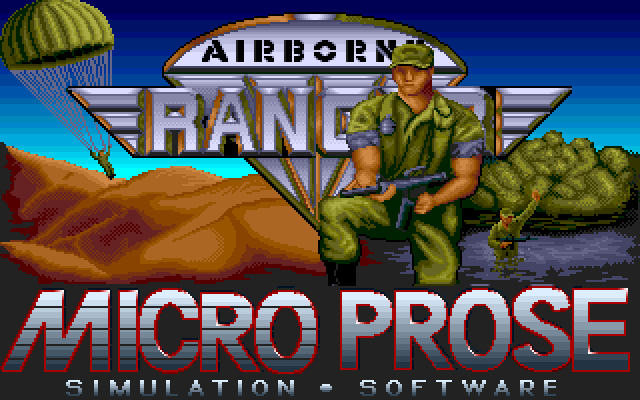
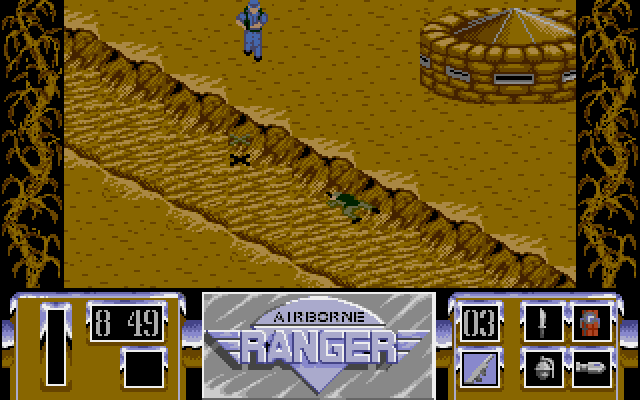
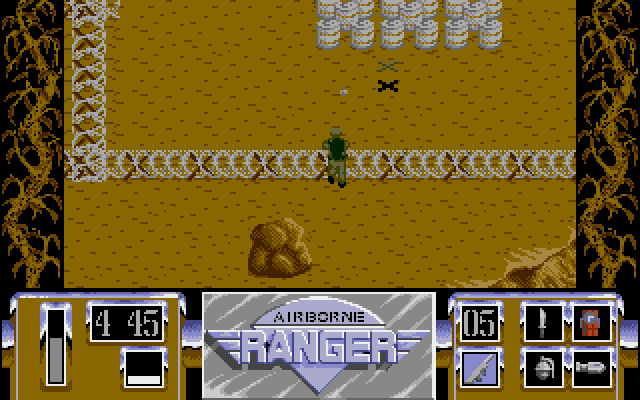
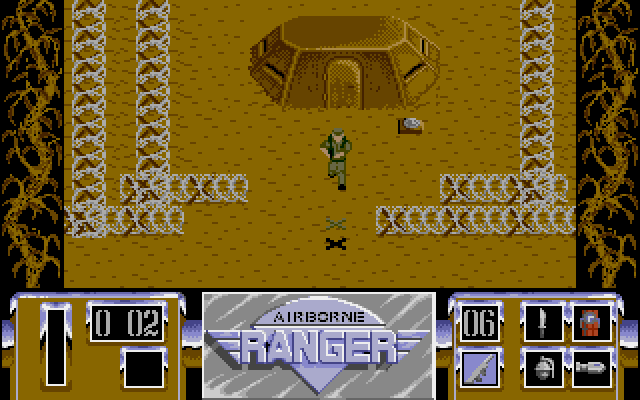
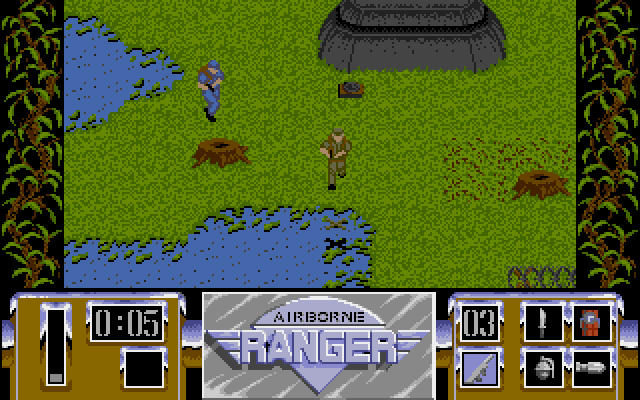
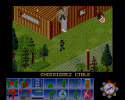
MicroProse was renowned for its complex simulations, accompanied by thick manuals. This title is one of the studio’s rare attempts to appeal to arcade game enthusiasts; an “action simulation”, as they called it. If the images evoke a clone of Commando (arcade, 1985), think again: this one requires genuine preparation work and a good dose of patience.
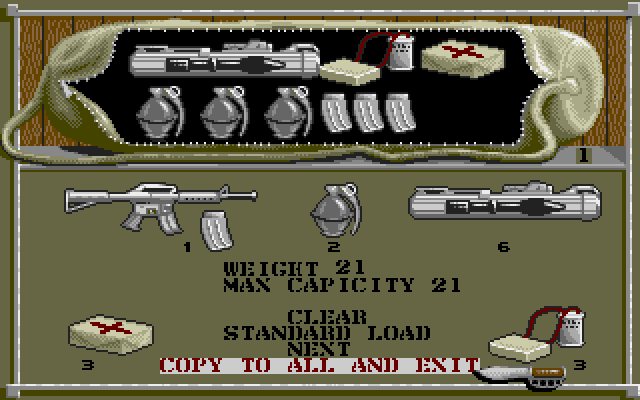
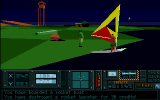
You play as a soldier parachuted alone behind enemy lines to carry out infiltration missions, such as sabotaging installations, stealing documents, or freeing prisoners. Your command has generously granted you three supply packages (ammunition and first aid kits) to drop in flight wherever you want, with the intention of retrieving them later. This contributes to the tactical dimension of the title: planning the optimal route between minefields and completing your objectives as you see fit, within the allotted time. This also contributes to giving the impression that enemy soldiers are idiots, asking no questions when duffel bags marked “US” fall from the sky in front of their barracks…
The game comprises twelve missions spread across three types of terrain (desert, temperate, and arctic). A career mode saves the name and service record of your character, who can be promoted, get captured … then possibly be freed by another of your soldiers. There’s also a training mode that propels you directly into the mission of your choice, in the skin of a default squaddie.
Airborne Ranger would be considered a classic on Commodore 64 (1987), a pioneer of the infiltration genre, on a par with Metal Gear (1987, MSX2/NES), minus Hideo Kojima let’s say less sophisticated, but in a more open environment. I’m not going to complain about that. Truth be told, I’m hardly a fan of infiltration games. Taking a long detour crawling through mud, knifing guards one by one without making a sound … that’s not really the approach Cabal instilled in me.
I’m less particular about a turn-based strategy game, but as soon as it’s controlled in real-time, I reckon I can expect comfortable handling. Here, the controls respond with a delay, and our soldier seems incapable of firing single shots (I don’t see the first shot of a burst come out of my rifle’s barrel), which is annoying when ammunition is limited! As for the “orienteering” aspect, whatever my route, whatever my decisions, soldiers appear from nowhere, infinitely, raise the alarm, bang bang bang … and it’s the most miserable part to play. So, this isn’t an action game, I’ve got it, but in that case, why does it seem to want to force its weak point upon us with such insistence?
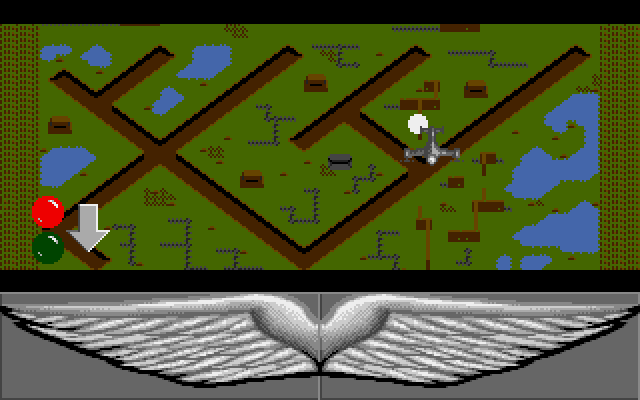
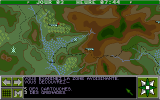
To display the map, the manual, very obliging, advises us to press the “map” button. Thank you, Manual! I assume a keyboard overlay was provided, that printed plastic or cardboard accessory placed over the keyboard to visualise the commands. That’s another MicroProse signature, they loved multiplying and scattering keyboard shortcuts. In short, “Space” to crawl, “Enter” on the numeric keypad to run, “Left Ctrl” to display the map, numeric keypad keys to change weapons, “Backspace” to use a medical kit. Once the mission is accomplished, press the escape key to recall the plane and “extract” yourself.
This game may be excellent on Commodore 64, perhaps one should blame the Amiga conversion, evidently devoid of effort (or competence). Moreover, it’s modelled on the Atari ST version, as usual. I’m also willing to admit a lack of competence on my part. Beyond the laborious controls, I’ve long since accepted that MicroProse games required an IQ higher than mine. This hybrid between strategy and action gave me neither food for thought nor real opportunity for fun. All it managed to provoke was the urge to bring out Hunter again.
A 3D remake was announced in 2025. Whilst awaiting its release, you can take a look at SEAL Team (PC, 1993).
|