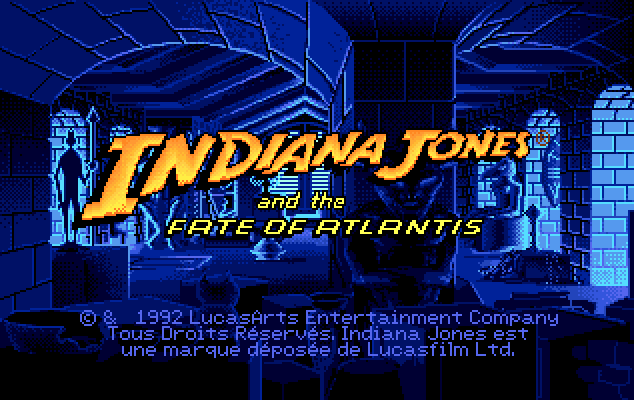
Indiana Jones and the Fate of Atlantis:
The Graphic Adventure
| Developer: LucasArts | Graphics: |
 | |
| Publisher: US Gold (Ubi Soft en France) | Sound: |
 | |
| Year: 1992 | Difficulty: |
| |
| Genre: Aventure | Lastability: |
 | |
| Number of players: 1 | Rating: |
8/10 | |
According to Wikipedia, Lucasfilm apparently asked the developers to recycle an old script for the third film (rejected in favour of that of Indiana Jones and the Last Crusade). The developers did not consider it good enough, and decided to write an entirely new story on the theme of Atlantis, thoroughly researched, which speaks to a commendable ambition. The game proved such a success that it was long regarded by a portion of the fanbase as the canonical fourth instalment. The belated release of the actual fourth film in 2008 and its lukewarm reception did not change every mind on the matter.
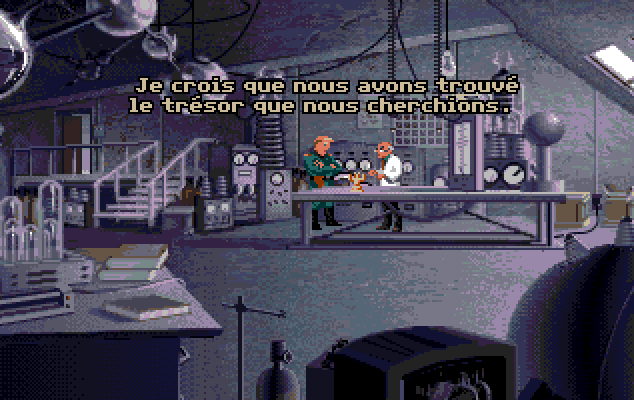
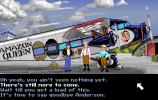
It is 1939. Indiana Jones and his former assistant (turned medium), Sophia Hapgood, are competing with a Nazi officer to locate the mythical island of Atlantis. It is said to harbour a formidable energy source, ripe for military exploitation…
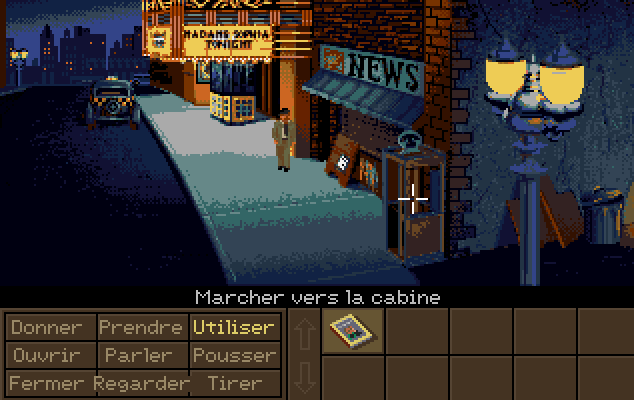
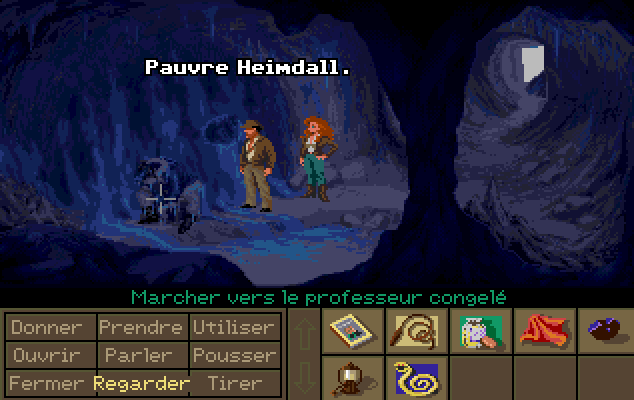
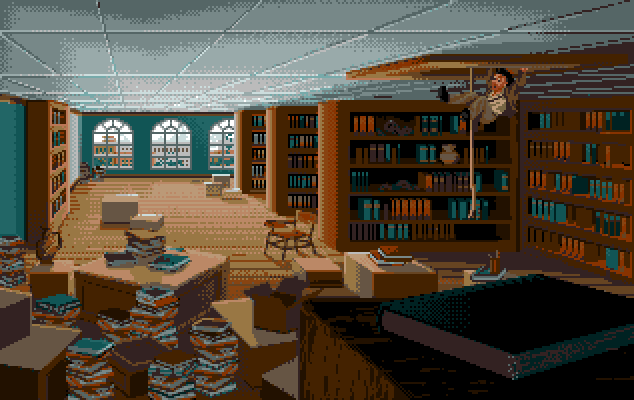
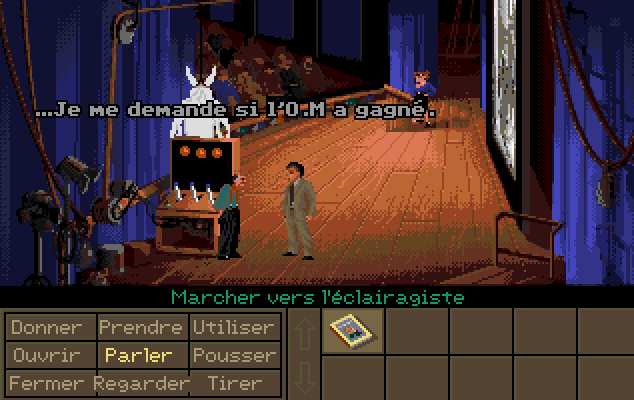
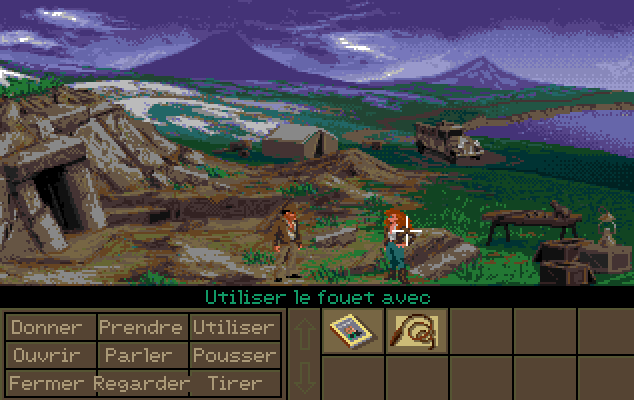
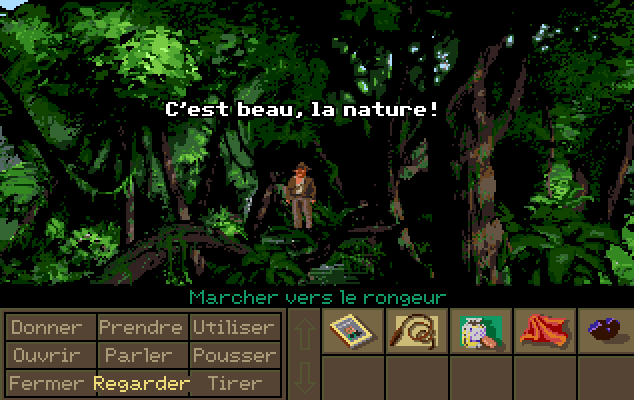
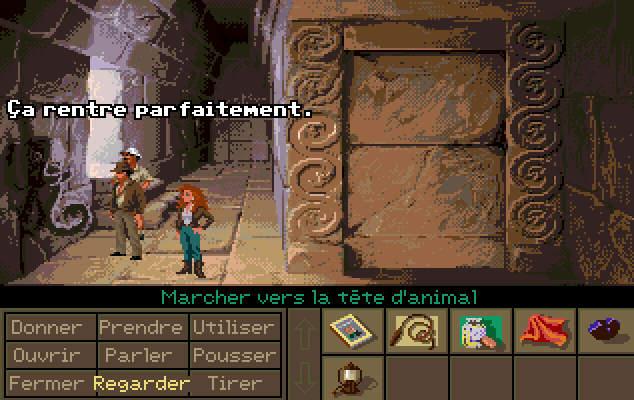
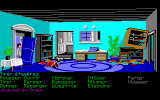
The game plays like its predecessor, but more polished. It is a point and click adventure in its most accomplished form, though entirely conventional. The interface has been streamlined, the number of verbs reduced to nine, freeing up space to display an inventory of items as thumbnails. The plot is straightforward yet faithful to the spirit of the films, and will take you through a variety of exotic locations. The mini-games do not overstay their welcome (the hand-to-hand combat in particular is more manageable than in the previous game, and often avoidable besides). There is a great deal of multiple-choice dialogue (generally inconsequential) and varied puzzles, occasionally defying all logic… On that note, I would offer the same advice as for Déjà Vu: open everything you see (and keep a walkthrough within reach).
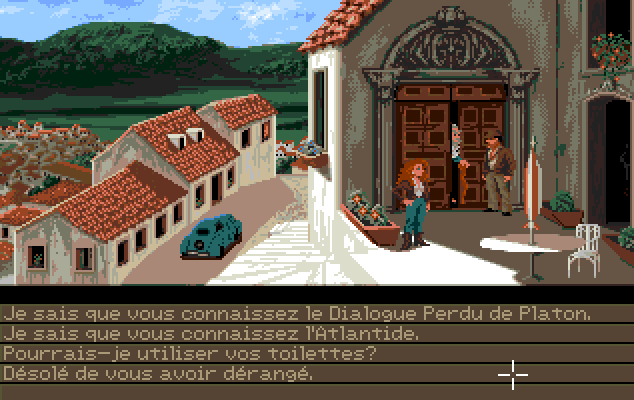
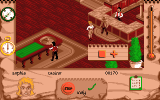
Three narrative paths are on offer, converging at the end, much like Gold Rush, which encourages multiple playthroughs. You may choose between the aggressive approach (fewer puzzles, more fighting), cooperation with Sophia (giving rise to lively, contentious exchanges), and a more “introspective” route (different puzzles, without the girl). That said, in all three cases the progression remains decidedly linear (one puzzle at a time, with a barrier between each). This lends the experience the feel of a guided tour rather than that of an explorer forging their own path. Finally, the ruins and skeleton-filled tunnels towards the end may well remind you of the hazards of the trade… Be warned, death remains a possibility at all times: keep multiple, separate saves!
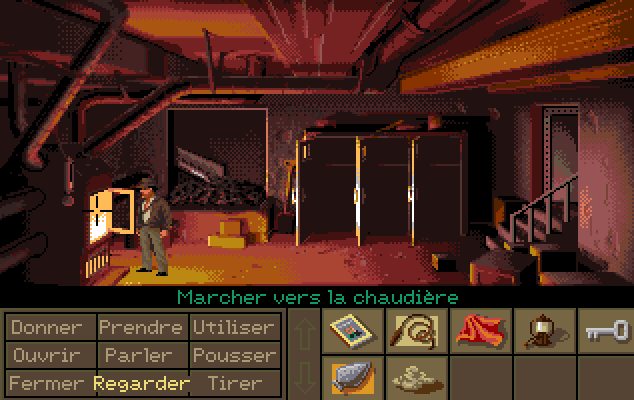
Beyond that, certain puzzles are optional or offer alternative solutions, and attempting them earns you IQ points (“Indy Quotient”). This system, carried over from the previous title, reflects your level of completion. Finishing the game at 100% requires a thousand points and dozens of hours of effort. I discovered this by accident, after tossing a cat into a lit furnace – a perfectly reasonable course of action, in my view, which nonetheless resulted in the permanent loss of my cat with nothing to show for it… I was naturally rather put out, to the point of suspecting either a bug or a copy protection measure. But it was intentional: there are three potential ways to find “the lost dialogue of Plato”, yet the game selects only one at random at the start of each playthrough, rendering some objects useless in the process. This ensures a few surprises remain in store for subsequent runs.
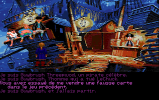
I would strongly recommend the PC version, which is far superior visually (256 colours as opposed to 32) and benefits from quality voice acting. On the Amiga, aside from the 11 floppy disks to contend with, I was struck by how thin the soundtrack felt.
A note for users of the Amiga version: the WHDLoad patch returns an error message. There appears to be a superfluous closing parenthesis in the installation script. On Windows, open the “Install” file (with no extension) in Notepad, navigate to the indicated line (136), delete the extra parenthesis, save the file, and restart the procedure.
|