Knights of the Crystallion
| Developer: Bill Williams | Graphics: |
 | |
| Publisher: U.S. Gold | Sound: |
 | |
| Year: 1990 | Difficulty: |
| |
| Genre: Unclassifiable | Lastability: |
| |
| Number of players: 1 | Rating: |
4/10 | |
I could have cited this one on the Mr. Bones page, as an example of artistic expression in video games. It’s something of an auteur game, made entirely by a single person, and not their first attempt either: The Pioneer Plague, Mind Walker, Alley Cat (Atari 8-bit, 1983), Necromancer (Atari 8-bit, 1982). You’ve surely come across this sort of specimen before, the kind that invariably raises two questions.
For you: “What on earth is this?”
For me: “What on earth was this?”
According to Wikipedia, it was submitted to Psygnosis, who reportedly refused to publish it, deeming it too “weird”. Rich, coming from the publisher behind Terrorpods and Ballistix…
So, concretely, what is it? To put it bluntly: a collection of cryptic mini-games that the manual struggles to dress up across twenty pages of New Age waffle!
The author mentioned the influence of a book: Always Coming Home by Ursula Le Guin (1985), a science-fiction tale depicting the life of a tribal society settled in Northern California, in a post-apocalyptic future setting. The culture of this fictional people was rendered in painstaking detail, much like an anthropological treatise, padded out with hundreds of pages of poems, fables and songs. An original work, though a hard one for fans of action novels to get into (I haven’t read it myself). Bill Williams therefore tried to follow the same approach in his game, with the idea of building a kind of “cultural simulation”. He probably lacked the means to match his ambitions…
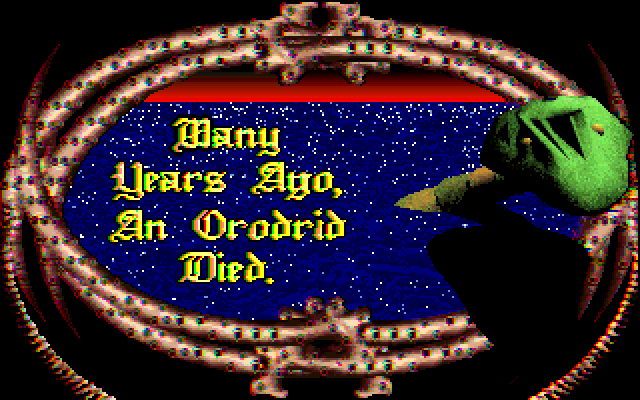
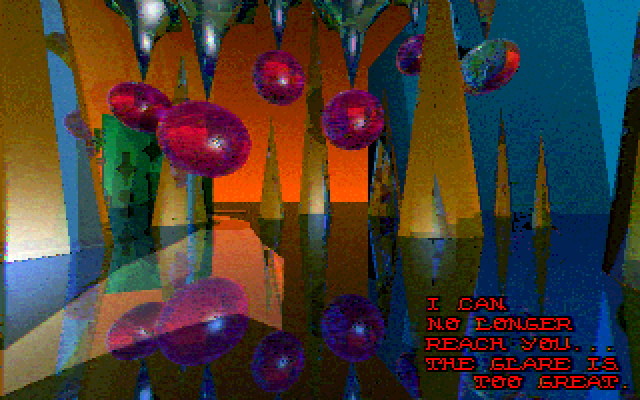
By the way, I’ve heard that film buffs distinguish a genuine so-bad-it’s-good film from a plain old turkey by its sincere ambition. Well, Knights of the Crystallion’s ambition was plain to see. The back of the box boasted of its advanced graphical techniques: the famous HAM mode (already used in The Pioneer Plague) and “ray traced graphic art”. Inside, you’d find the full soundtrack on audio cassette and a booklet of poetry containing valuable clues, which doubled as copy protection. The game’s introduction set the tone, with an elaborate presentation backed by a chaotic soundtrack that oddly reminded me of Extase. The storyline, for its part, was no less remarkable. Time to fasten your seatbelt…
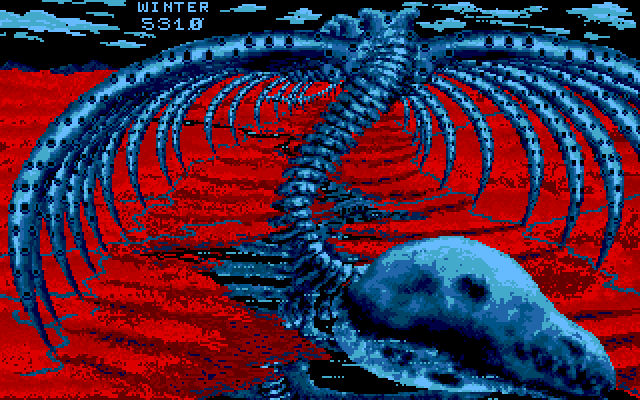
Thousands, or perhaps millions of years ago, an enormous sea creature named Orodrid became stranded in a river that was too narrow for it. The creature starved to death, and all that remains today is its fossilised skeleton, inside which a people of merchants have settled. They built Orodrid, the City of Bone. You play the head of one of the seven leading families, pursuing a rite-of-passage quest in order to earn your place on the council of elders who govern the city.
It’s when describing this quest that things get complicated. Your goal is to become a Knight of Crystallion. A knight is a fellow mounted on a horse. And a Crystallion? A horse made of crystal (a blend of “crystal” and “stallion”, I assume). Nothing to do with the diamond pony from another game, though!
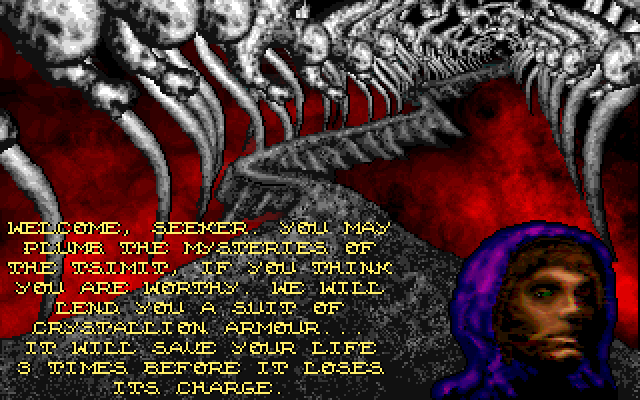
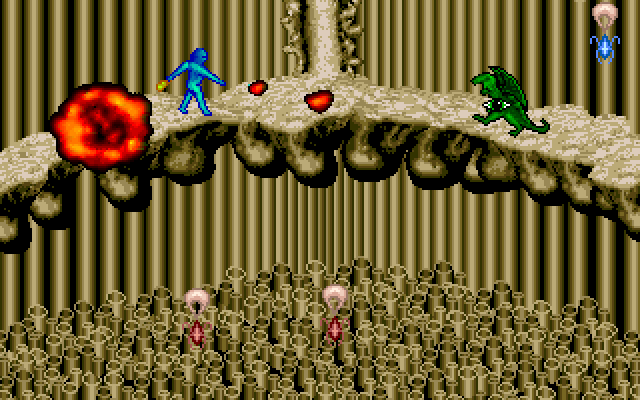
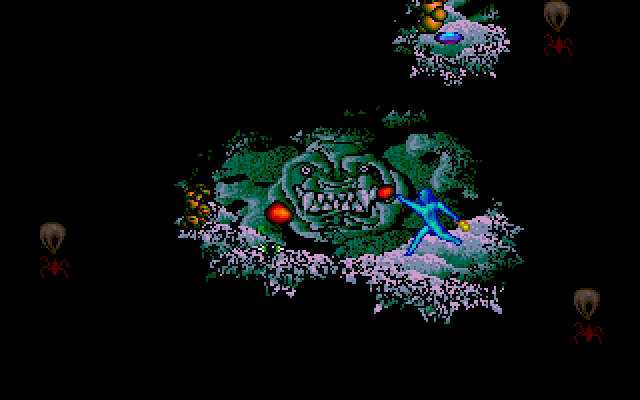
This mythical creature hatches from an egg, made of crystal, naturally. And to make it hatch, you need to enter into psychic resonance with the unborn horse… Did I mention you also wear a suit of Crystallion armour? It grants you the power to hurl fireballs at cockroaches descending by parachute…
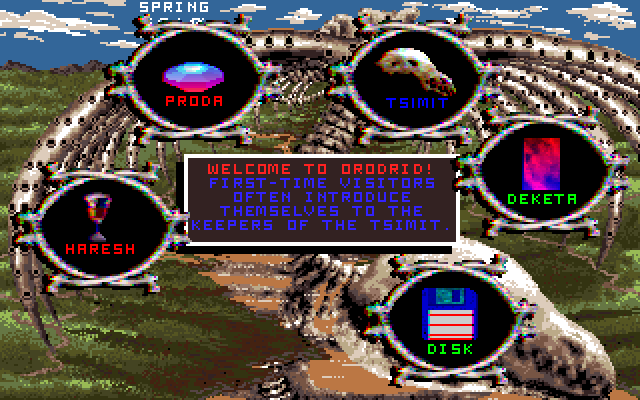
On to the mini-games. Each one is tied to a district of the city, set within a different part of the giant skeleton mentioned above.
Tsimit (the skull):
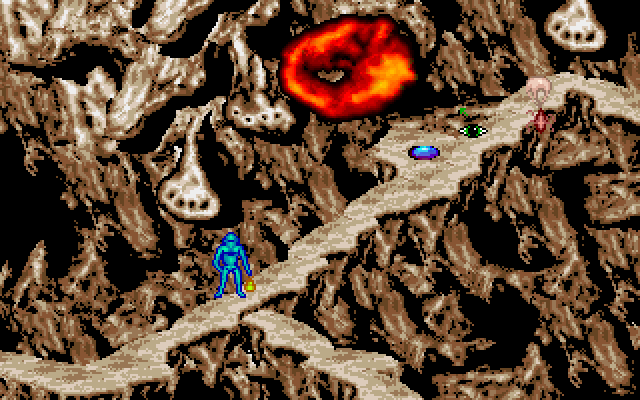
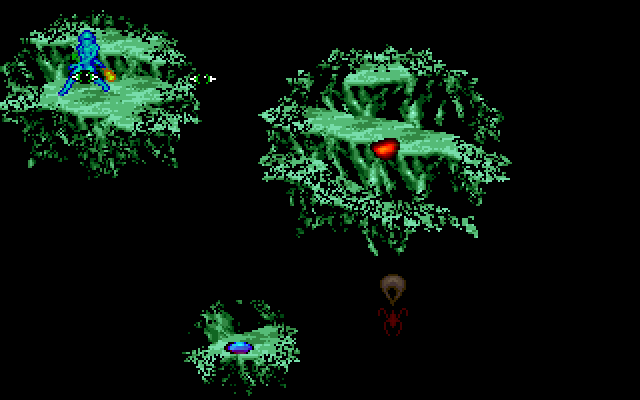
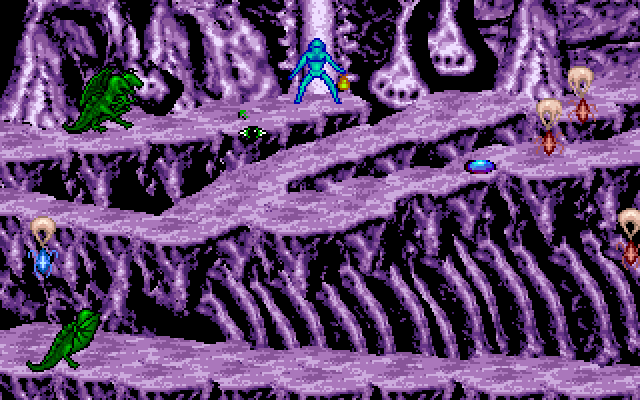
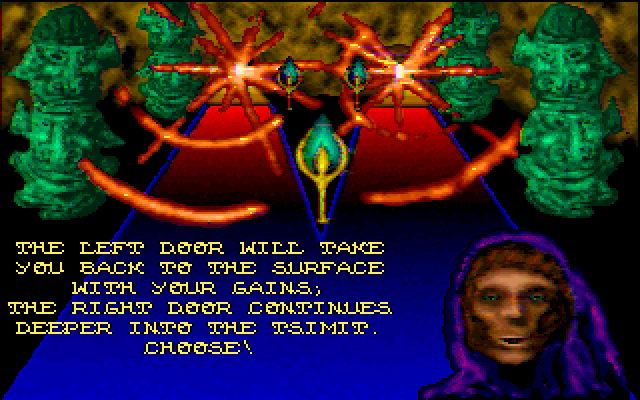
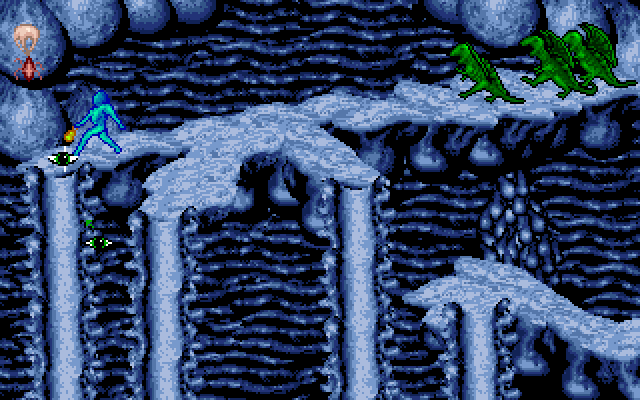
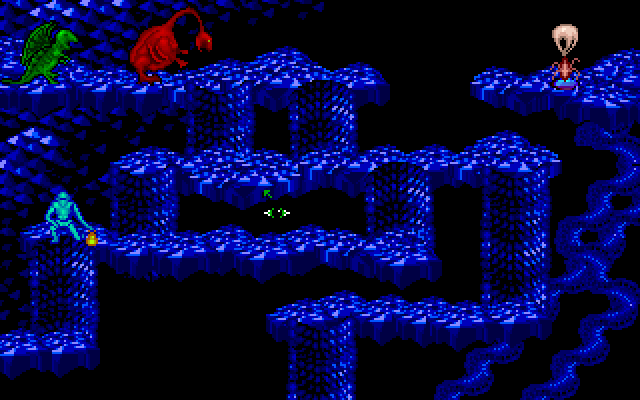
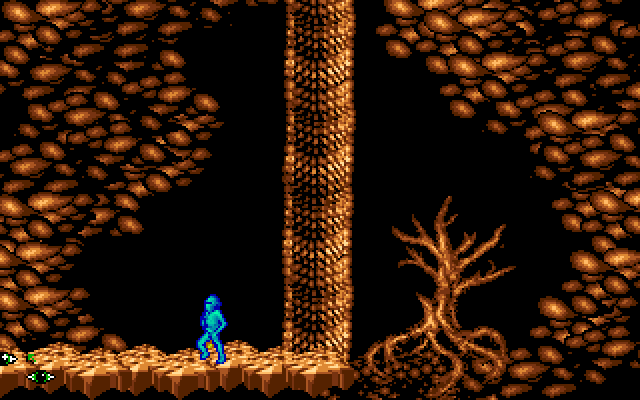
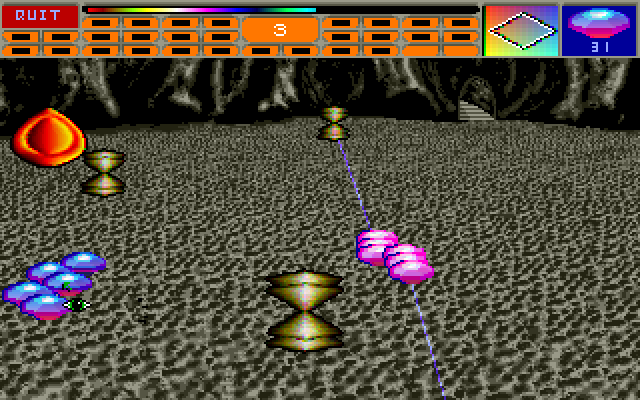
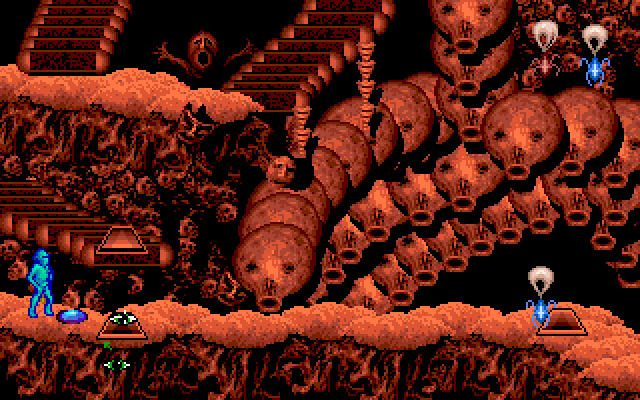
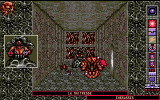
A maze spread across four levels, at the bottom of which the egg holding your future mount is supposedly waiting. Controls are mouse-based: right-click to move, left-click to shoot the creatures (hold it down to speed up your projectiles). The handling is reasonably responsive, but the action turns dreadfully repetitive after the first couple of minutes of curiosity. Enemies spawn endlessly, drift about aimlessly, and vanish in an instant, with no feedback whatsoever for the player (no points, no visual or sound effect). The satisfaction it offers is roughly on a par with deleting the contents of cells in an Excel spreadsheet.
Proda:
The ritual used to recharge your armour (regain lives) and make use of the crystals laboriously gathered throughout the labyrinth. Place them in the play area by clicking the square at the top right of the screen, then arrange them in a particular pattern so they generate sparks. Use right-click to shift your belongings about before some … thingamajig swoops down on them. If you can’t make sense of any of it, that’s fine, since it’s not essential, so long as the number at the top, showing how many charges your armour has (your lives), keeps going up.
Deketa:
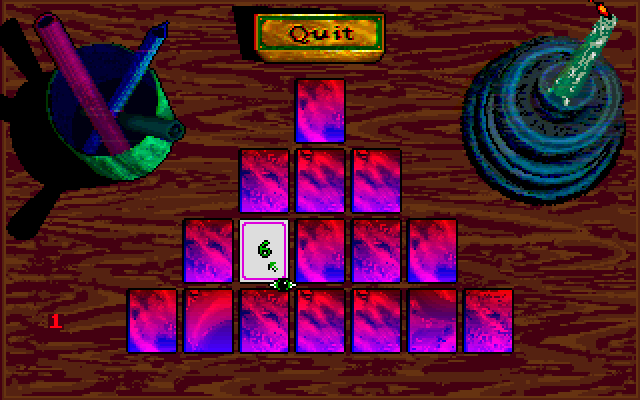
A simple game of memory. The more you play it, the more you strengthen your psychic powers, which will let you communicate mentally with your steed, and receive various hints across the other mini-games.
Bosu:
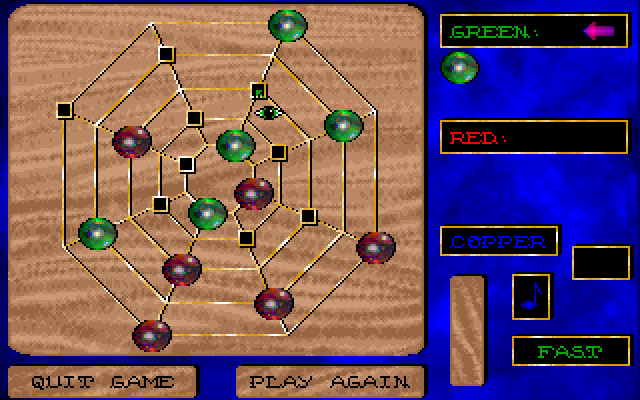
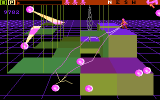
A heavily simplified variant of Go, played on a circular board against the computer. This one’s used to convince the clergy, guardians of the maze, that you’re worthy, so they’ll let you into the upper (or lower) levels. Each player places six tokens in turn. At the end of the match, points are awarded based on the empty space between tokens of the same colour. You eventually get the hang of it after about ten games.
Haresh (the ribs):
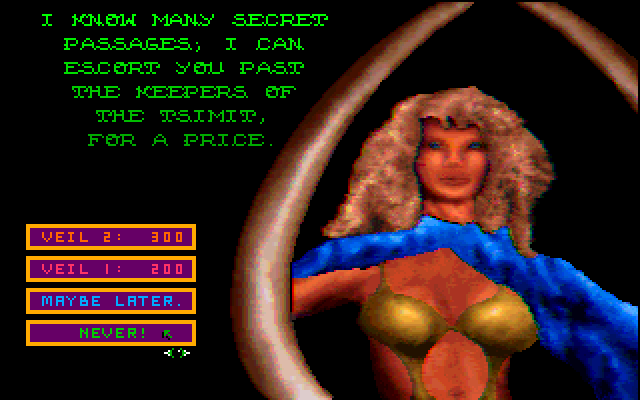
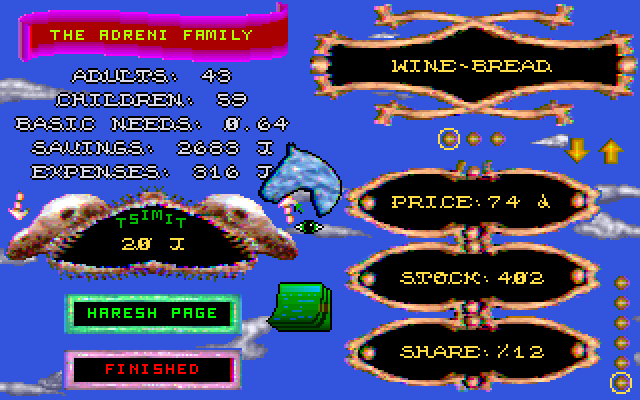
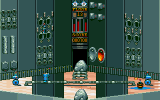
A trading mini-game. The idea is to barter seven types of goods with the other families. You represent the Adreni, who specialise in producing bread and wine. In the same humanist spirit as the book that inspired the author, you’re not encouraged to ruin your rivals, but rather to help the community prosper. I’ll refer you to the manual for the finer details. It’s not especially complex, but the presentation…
Note the option to hand over part of your profits to the religious congregation; a voluntary tax whose effect is no clearer than anything else here.
We can probably all agree to call this game “remarkable” or “unique”. It shows a refreshing candour and artistic sensitivity. There’s just one snag: since I never miss a chance to criticise big-budget games that put style ahead of substance, I see no reason to spare the small indie title either. That takes nothing away from the late Bill Williams’s talent, but a maze and a game of memory, really! And if we move on to presentation, where exploring Mind Walker’abstract world carried something genuinely special, a real sense of discovery, everything here feels messy and disconnected.
I can nevertheless imagine one way of appreciating this game: as a video-game equivalent of a so-bad-it’s-good film! Seriously, in the hands of a good narrator more attuned to this kind of bizarre universe, like Ross Scott, it would make prime material for his series The Game Dungeon, alongside Helious and Boppin’. I wouldn’t want to play a tenth of the games he covers, but it’s always gripping to watch.
Will you cut it out already?
|