Chrono Trigger (Super Nintendo)
| Developer: Square | Graphics: |
 | |
| Publisher: Square | Sound: |
| |
| Year: 1995 | Difficulty: |
 | |
| Genre: Role-playing game | Lastability: |
| |
| Number of players: 1 | Rating: |
7/10 | |
I thought I’d played it on the Super Nintendo, but it turns out it never made it to Europe, nor did its 1999 PlayStation remake (which came with animated cutscenes thrown in). I must have found it on some website in the early 2000s, in “dematerialised” form… Worth noting that an international release did eventually surface on the Nintendo DS in 2008, and later on Steam in 2018.
I remember liking it less than Secret of Mana (Super Nintendo, 1993) and Secret of Evermore (Super Nintendo, 1995) at the time, mostly because of the turn-based combat. I don’t mind turn-based systems when they demand a bit of thought, in strategy games for instance; but when all I’m asked to do is wait around mashing the “attack” button, over and over, dozens of times, with the same droning tune looping in the background… I like it a lot less. Odd, isn’t it? You might point out that something like Final Fantasy Tactics (PlayStation, 1997) or Shining Force 3 (Saturn, 1997) would suit me better, but there’s another snag: their saccharine aesthetic puts me off entirely (3D too, if I’m honest).
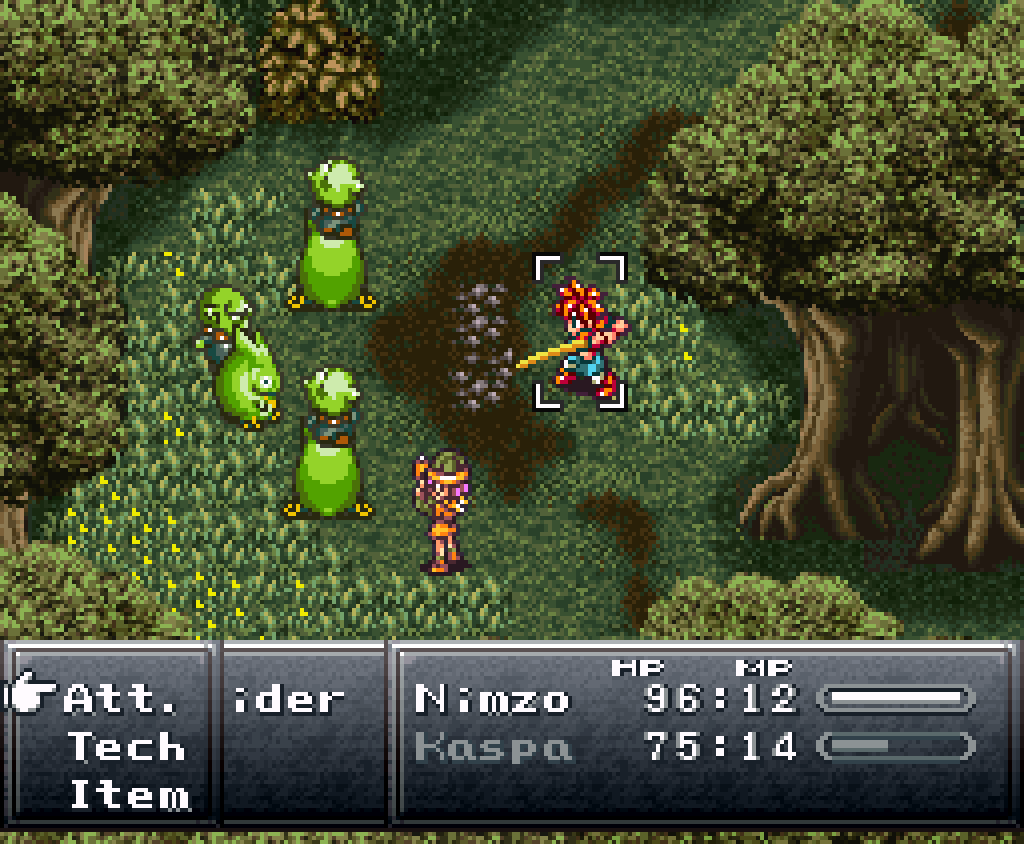
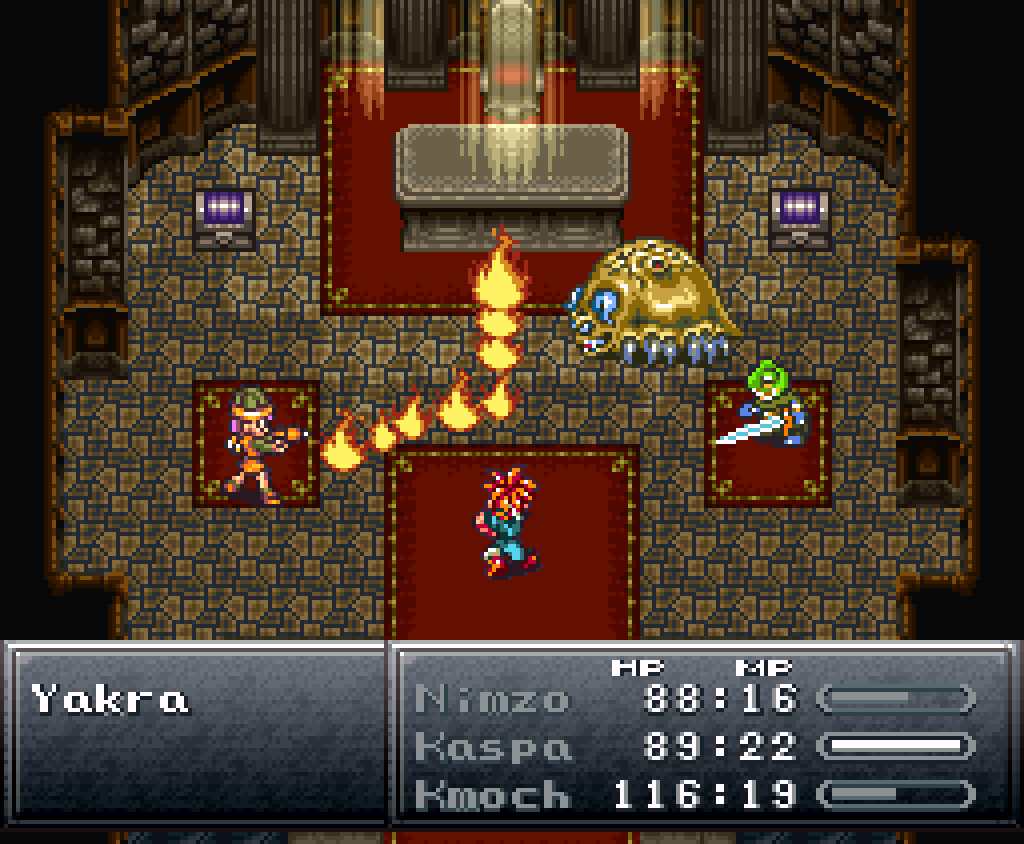
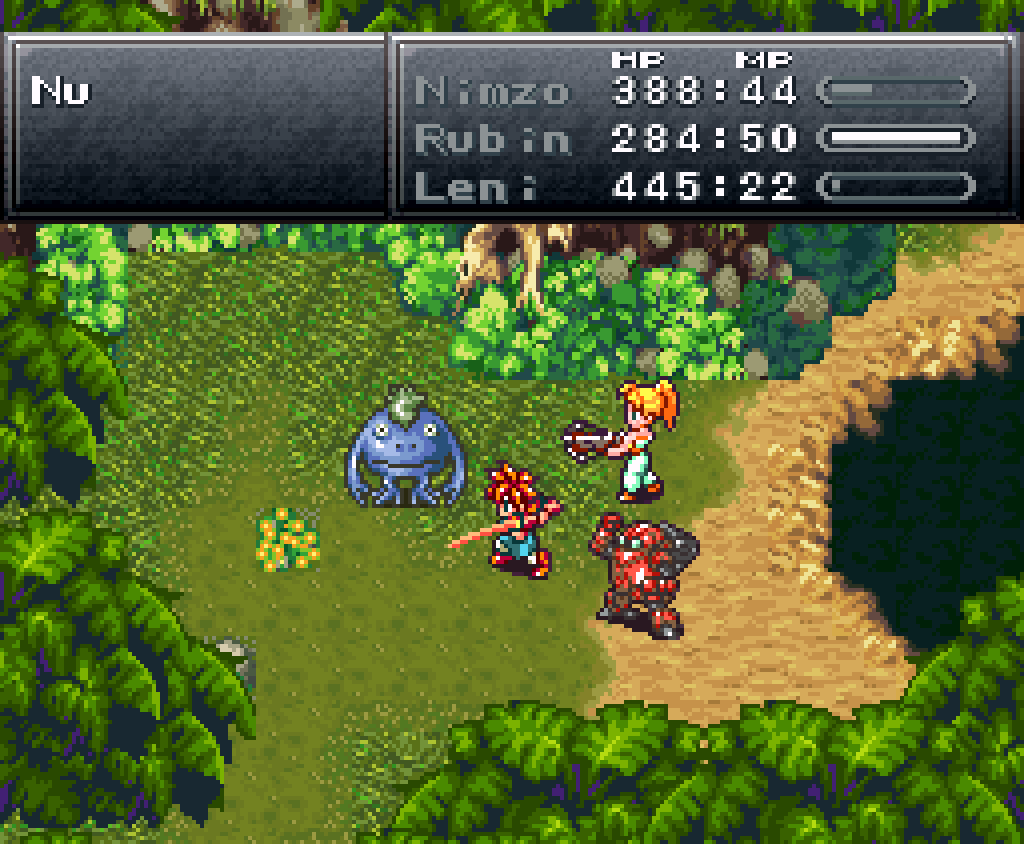
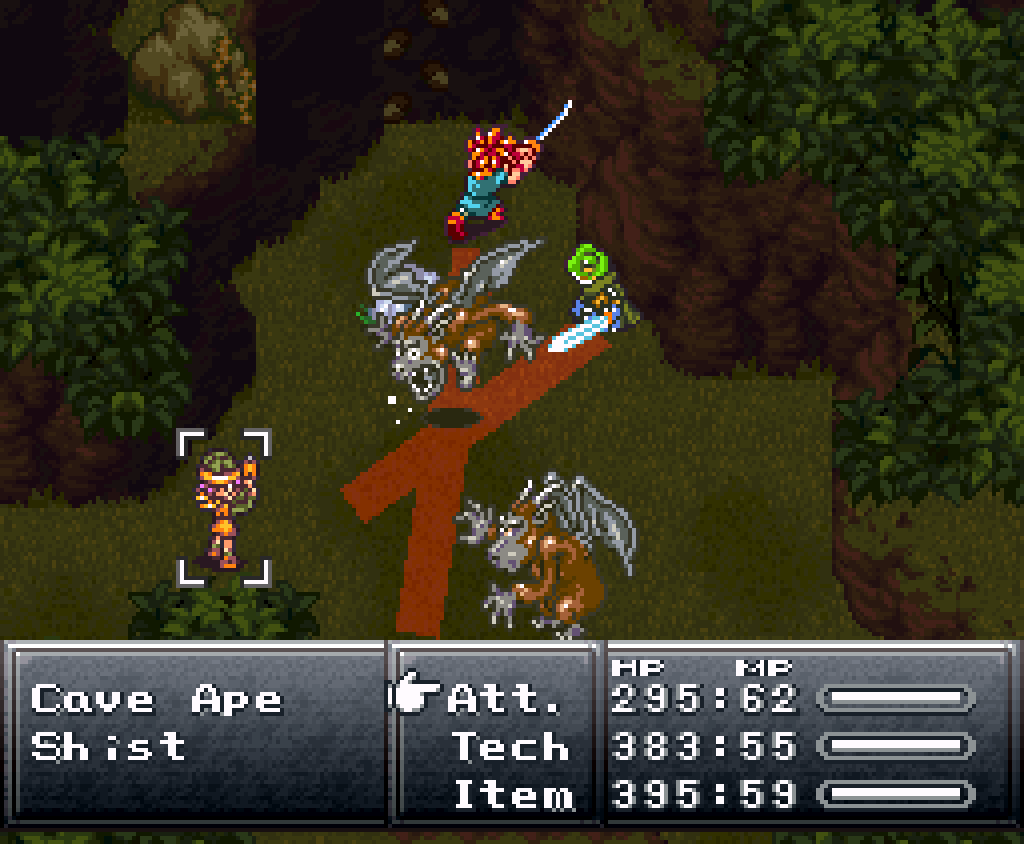
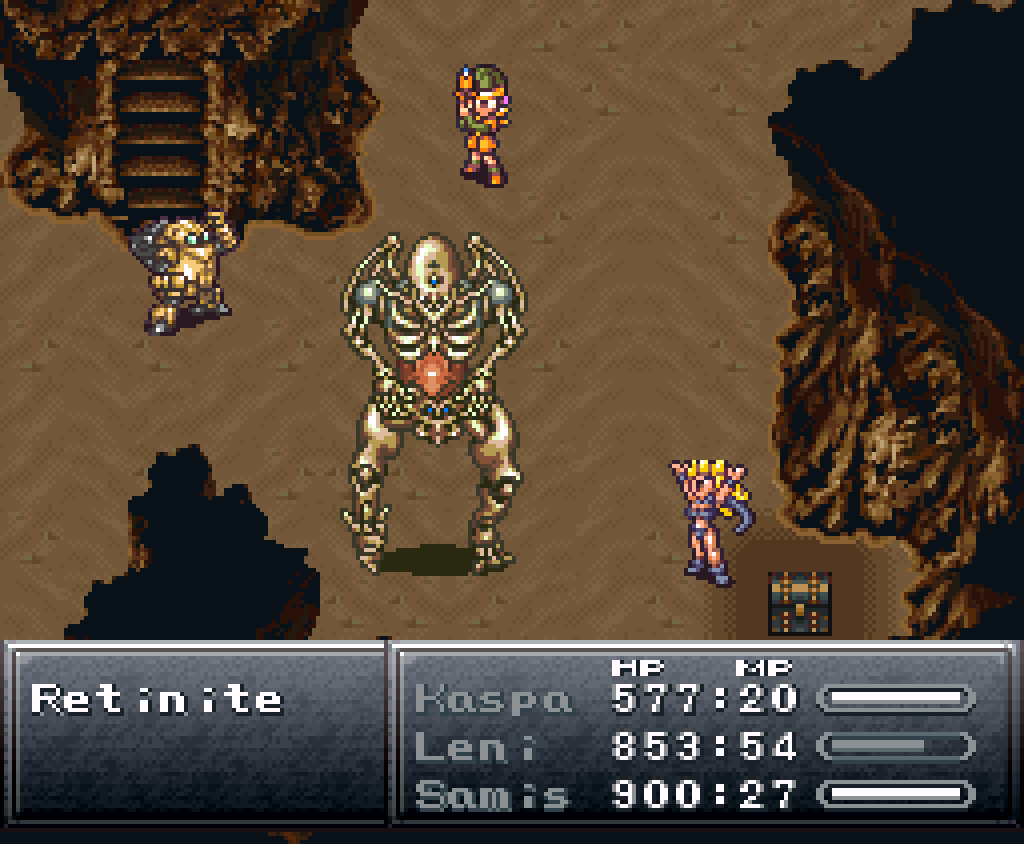
I wanted to revisit Chrono Trigger for a couple of reasons. First, because it’s held up as a “monument” of the JRPG (Japanese role-playing game), and represents my last shot at getting to grips with a genre so mysteriously beloved. Second, because it’s known for its more relaxed combat system: battles no longer spring up out of nowhere, but occur at set points instead (which doesn’t stop you grinding them for experience points, should you fancy it). What’s more, they play out directly within the game’s own environments, with no transition screen or teleporting off to some abstract arena. That makes the grind far easier to stomach than random interruptions, and it’s a wonder so few later games picked up the idea.
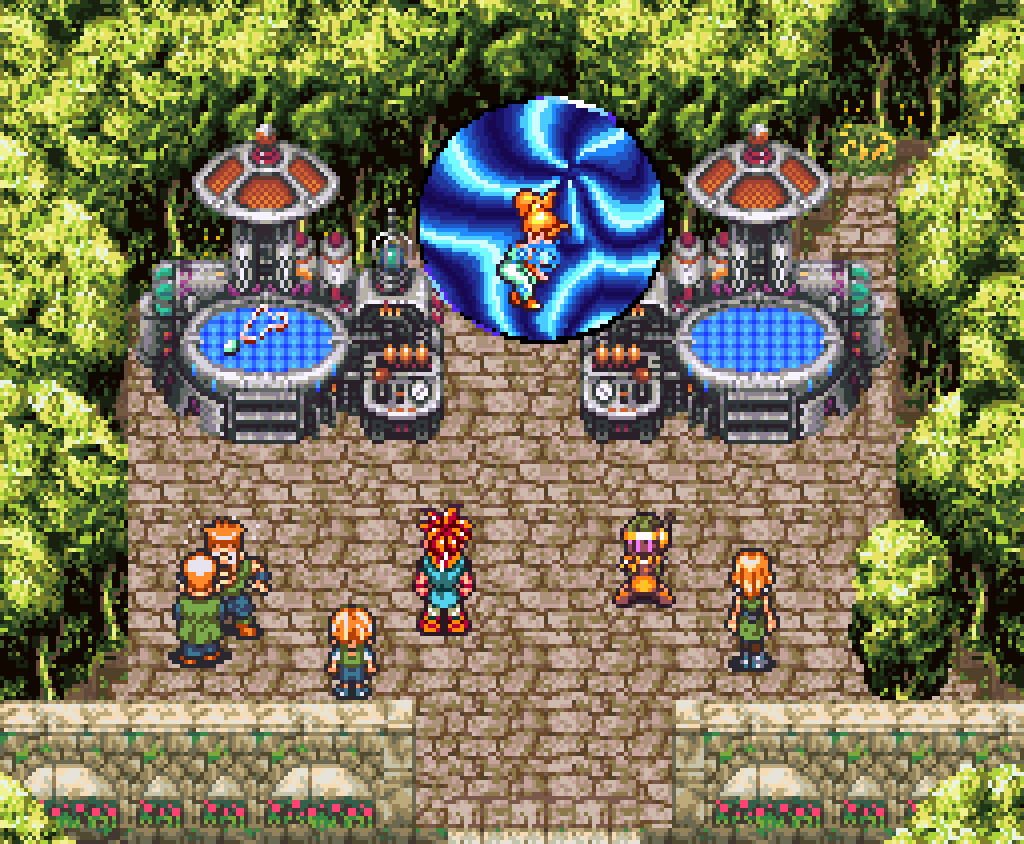
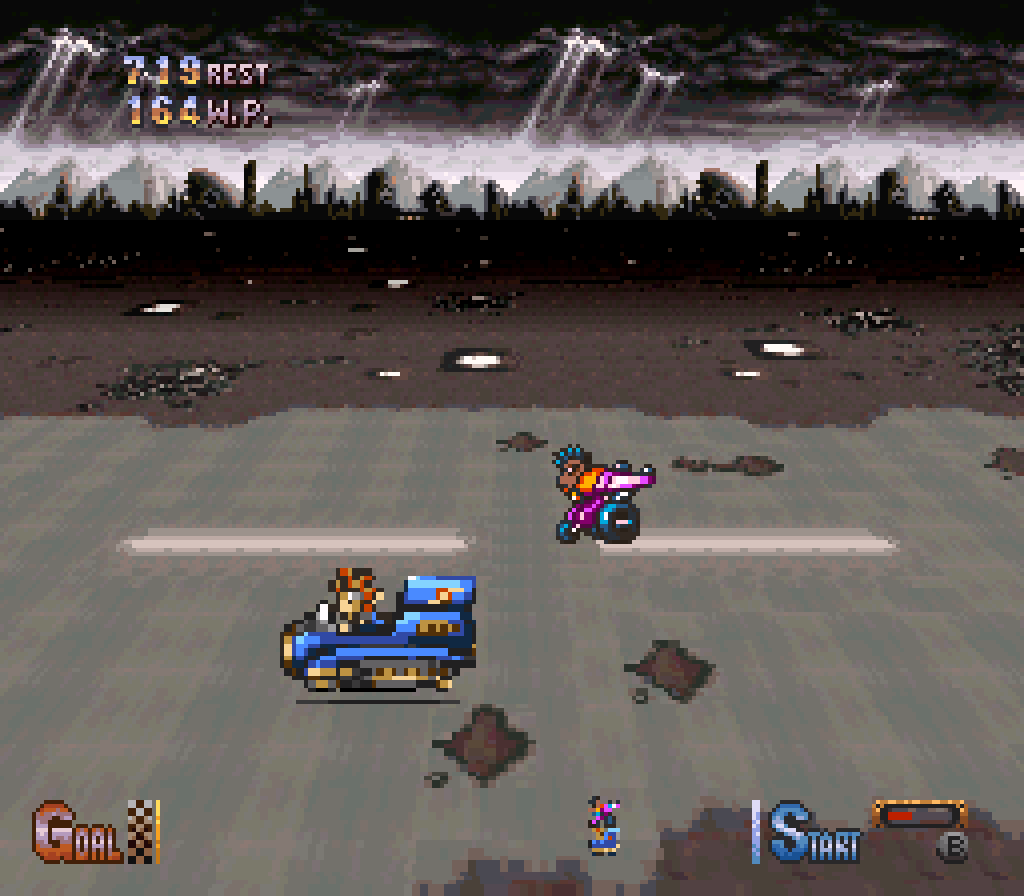
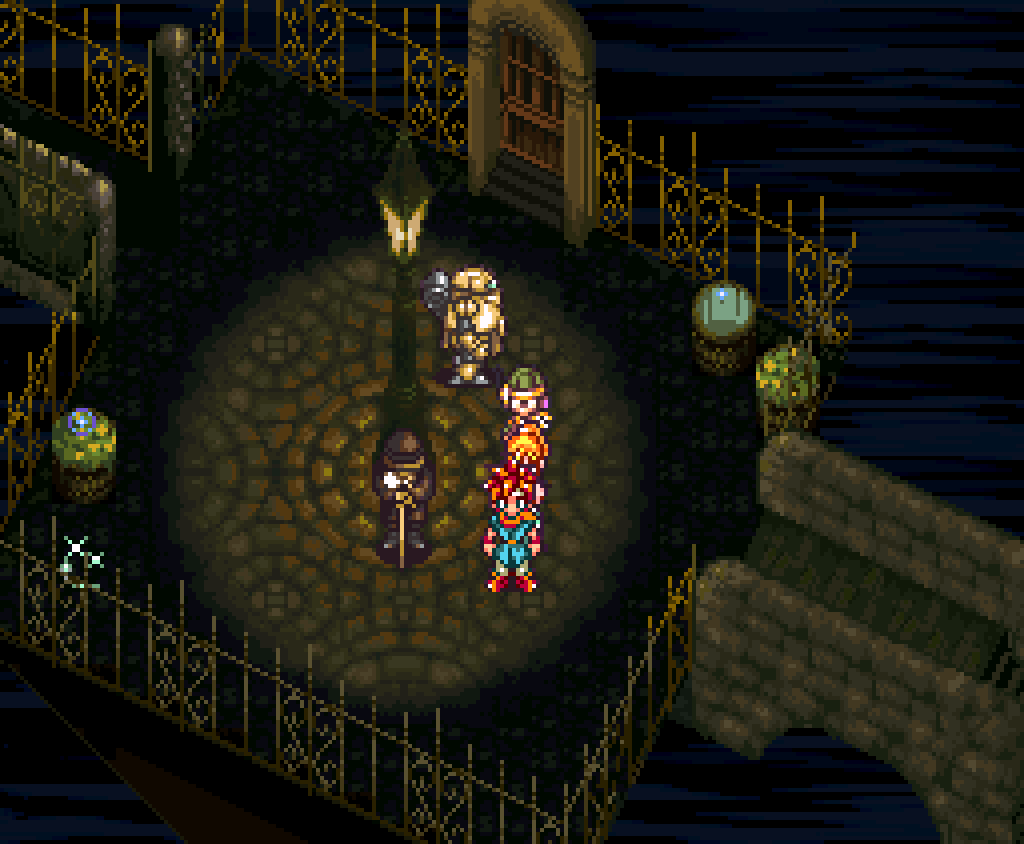
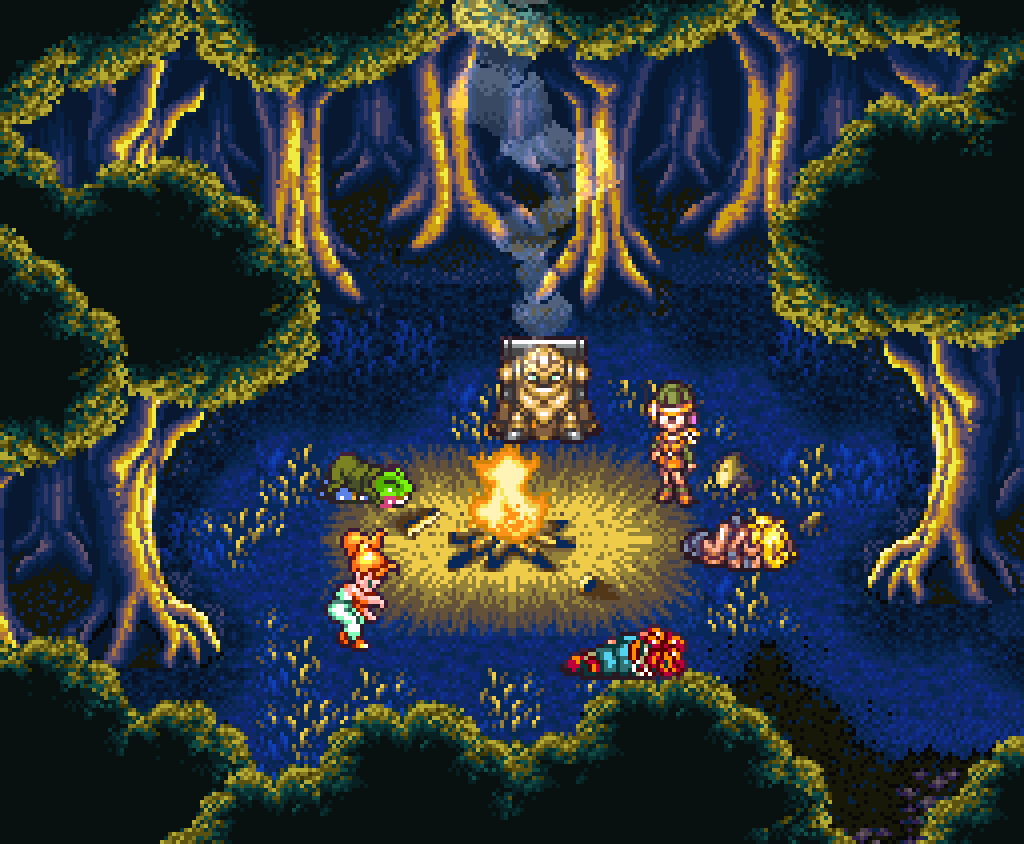
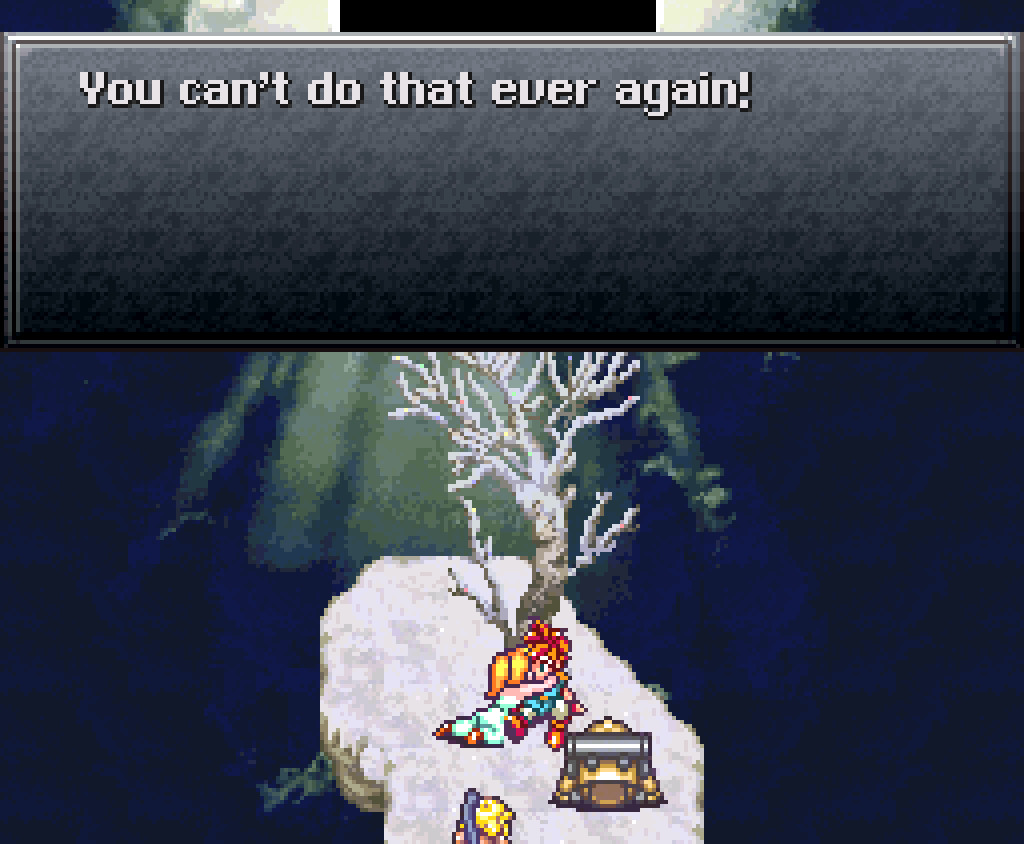
I won’t dwell too long on the presentation, which is handled with real skill. The Dragon Ball artist’s touch is unmistakable (the hero looks like Goku, the blonde like Lunch, and the gnome-like creatures bring to mind King Pilaf and Garlic Junior). One detail did catch me out, though: the treasure chests, poorly drawn and rather unappealing, sometimes made it genuinely hard to tell open ones from closed ones.
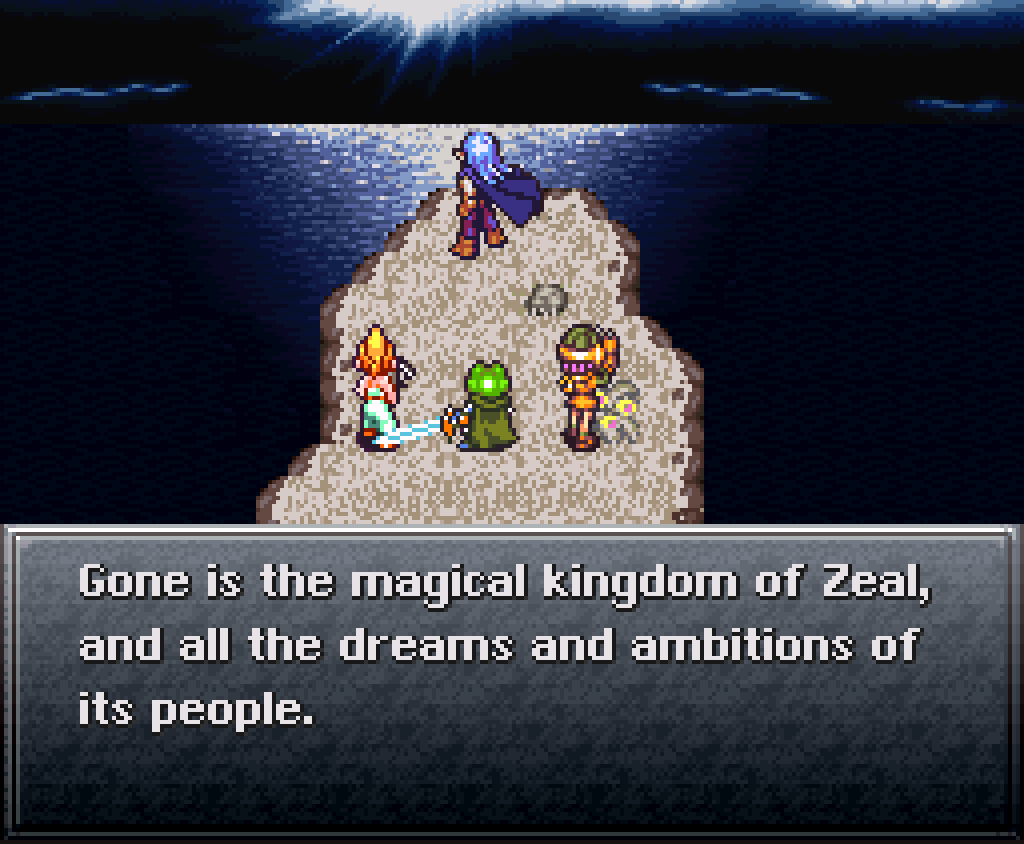
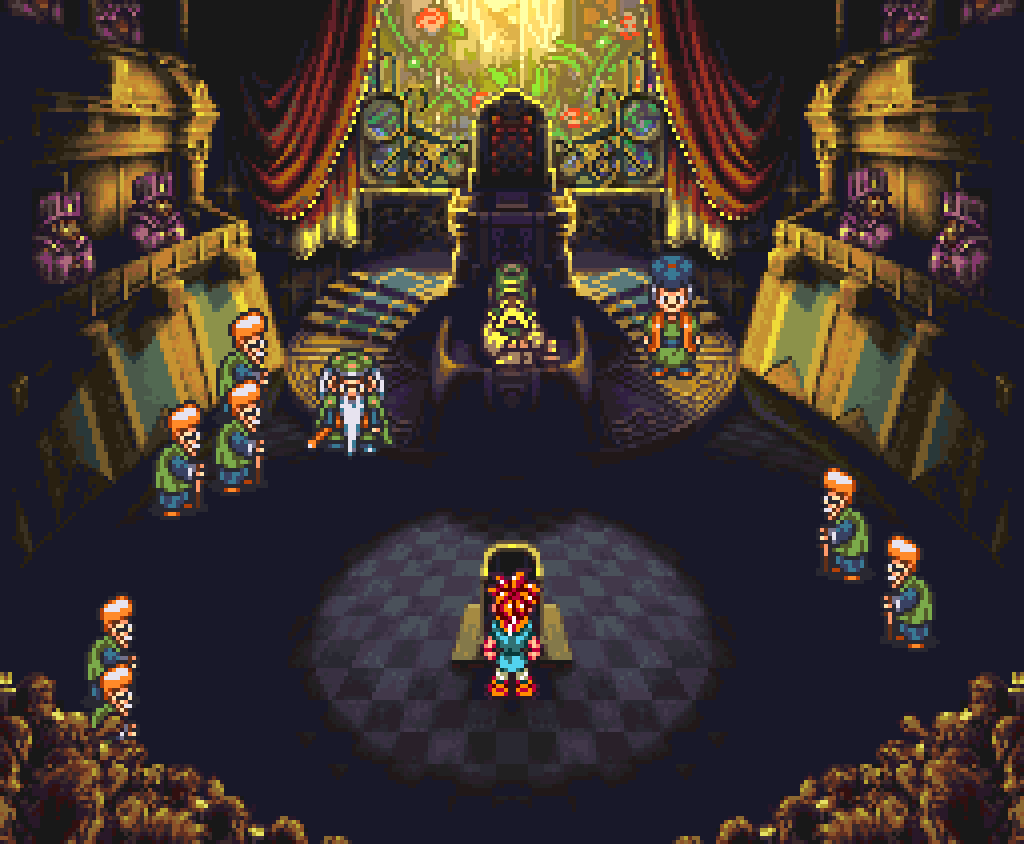
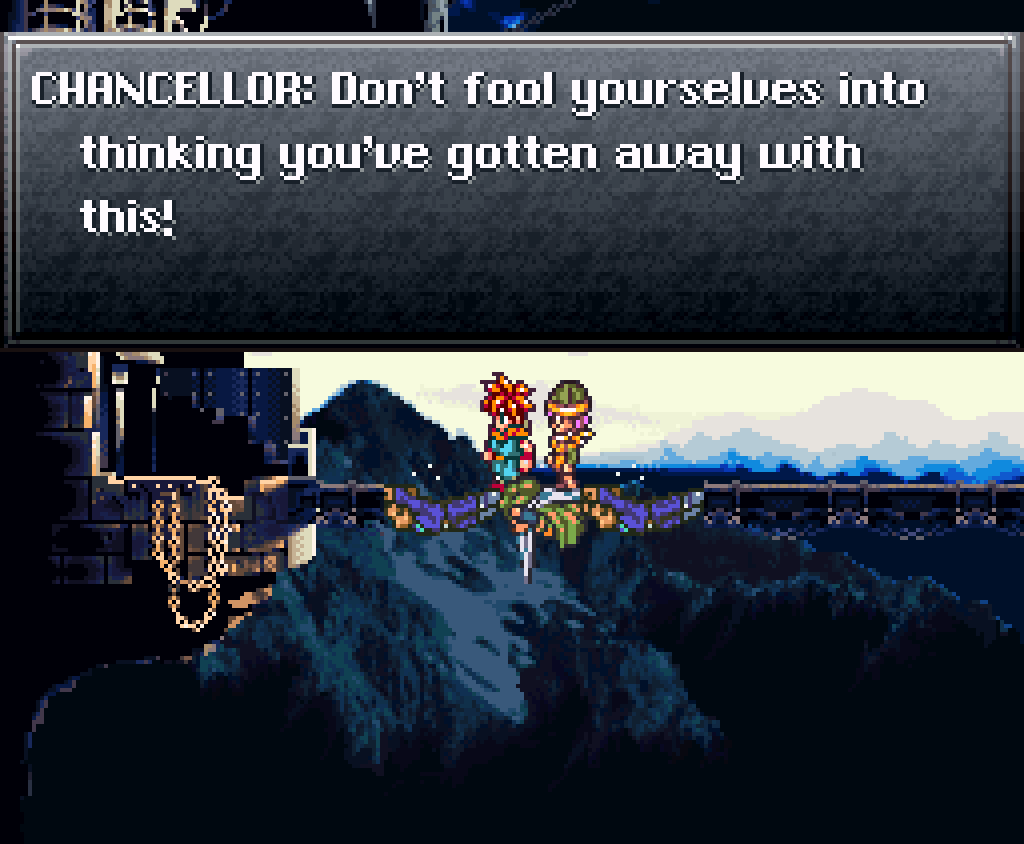
The characters, brought to life with expressive animations, are reasonably endearing (read: I managed to put up with them right to the end). The staging is handled with care, and the story (simple as it is) proves more memorable than usual thanks to several sad moments, rather well handled; the quality of the music certainly helps. I particularly liked the courtroom scene near the start, and later the development given to certain characters towards the end, through their optional personal quests. Reading between the lines for you: between the courtroom and those final quests, I did get fairly bored… And for the sake of completeness, the game doesn’t shy away from its share of clichés and cheesy moments either. Speaking of which, whose brilliant idea was it to name the protagonist “Crono” in a story about time travel? And to throw the Three Wise Men into the mix while they’re at it! Faced with such creativity, I need to sit down…
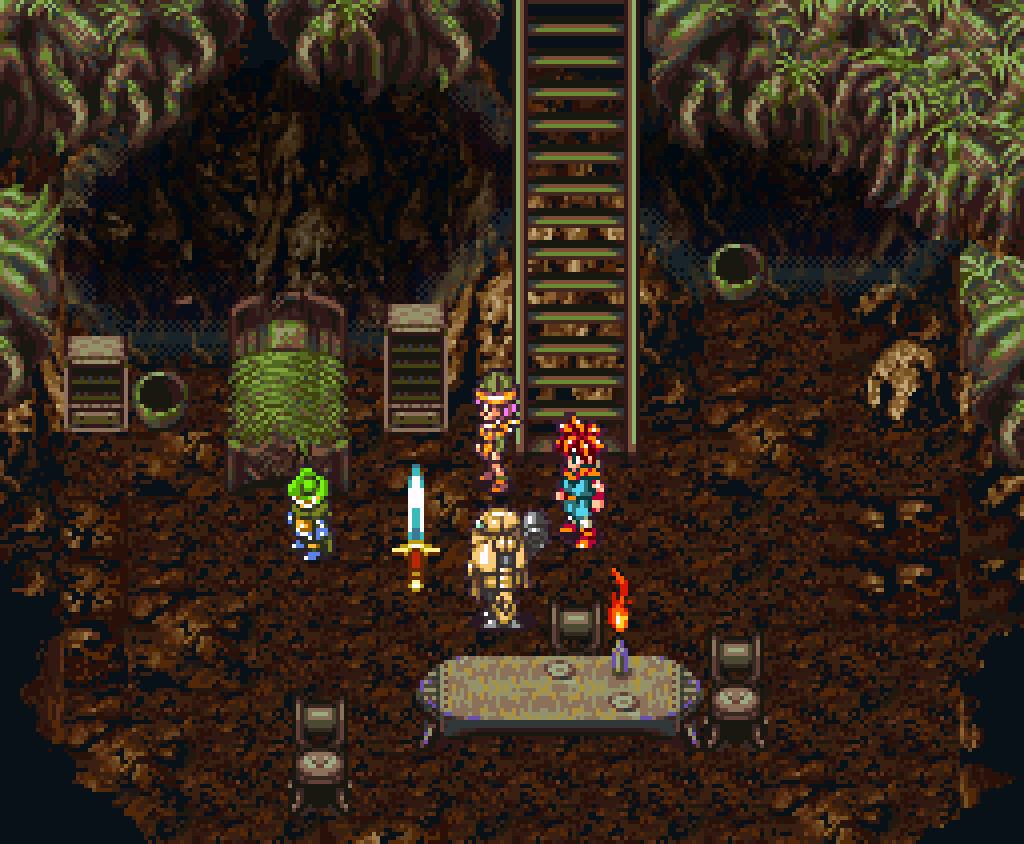
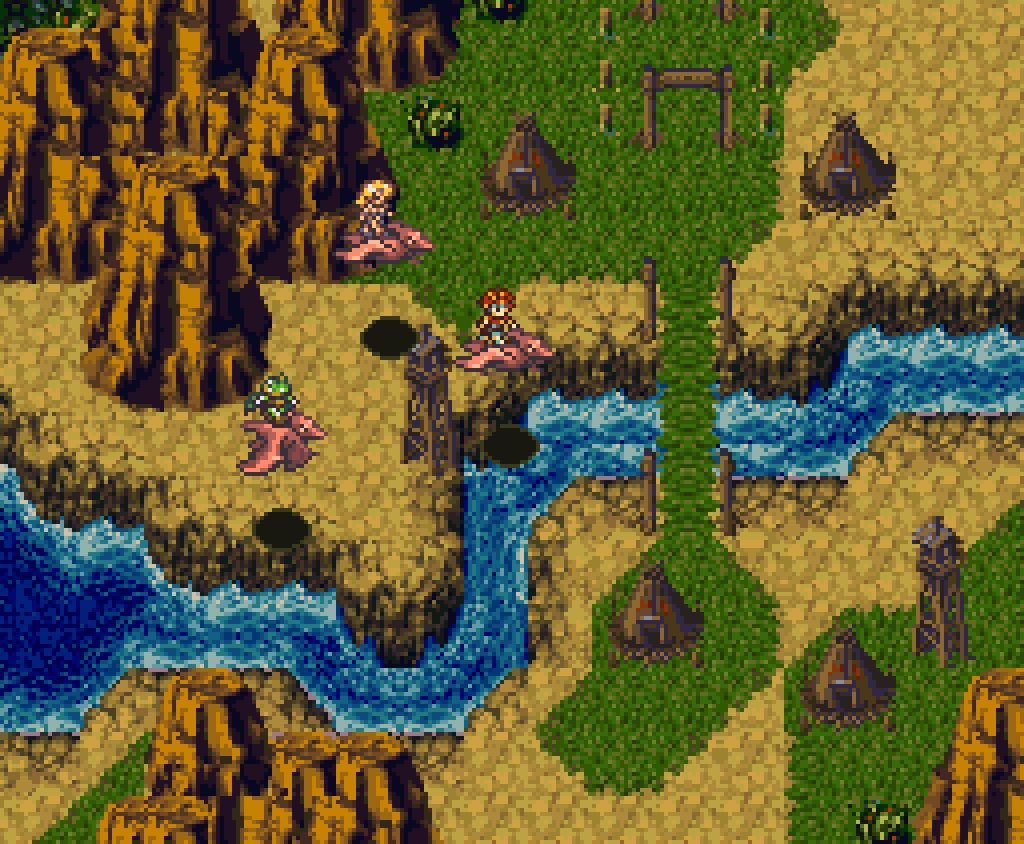
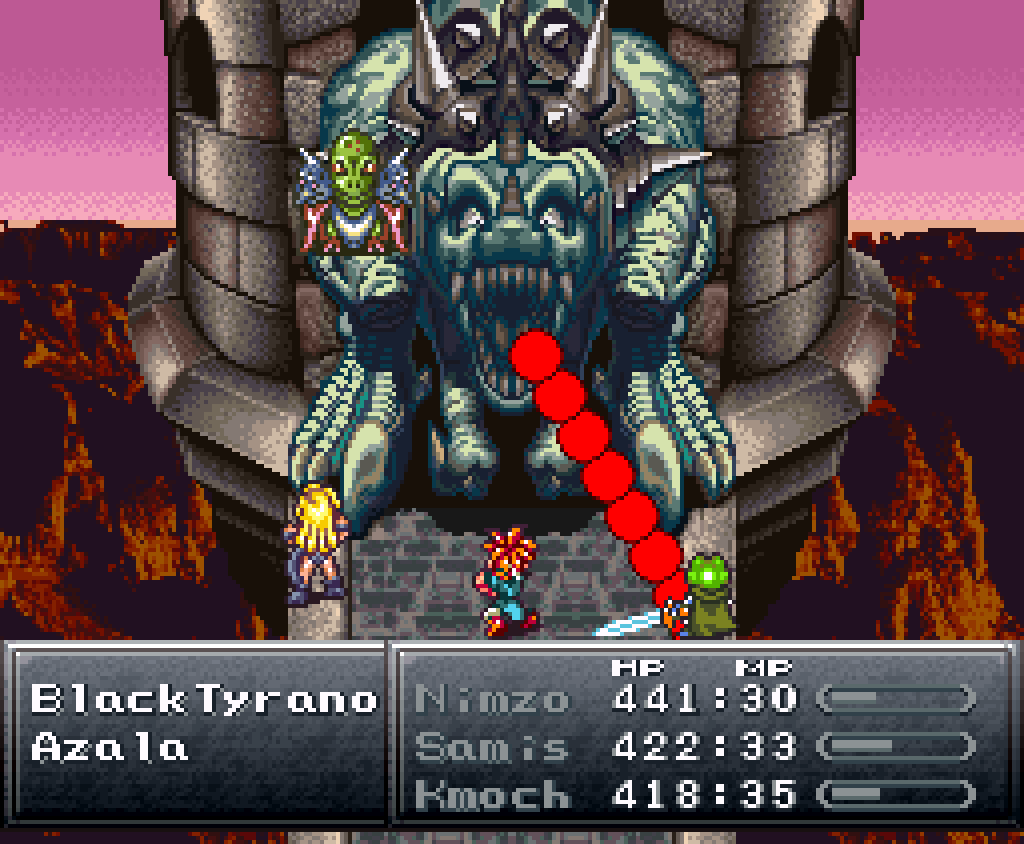
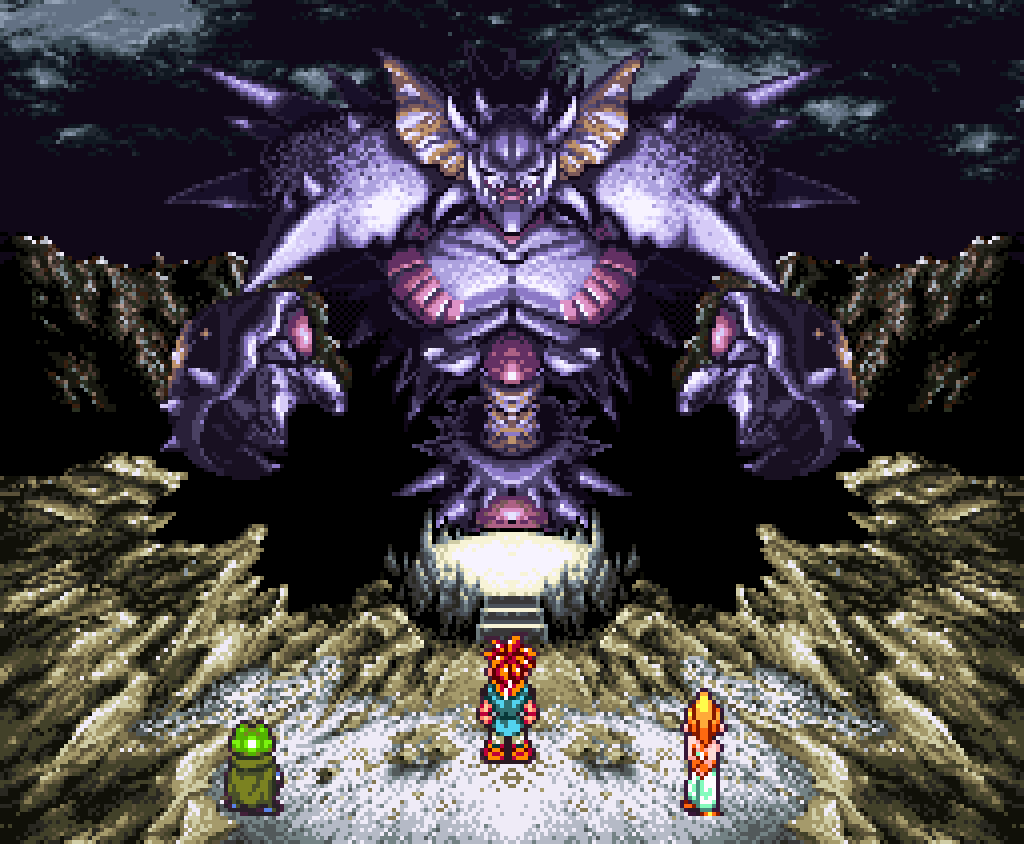
Enough sarcasm. I found the outdoor areas and “dungeons” fairly compact. There are few branching paths, and getting lost is genuinely difficult. The game feels designed to be as un-frustrating as possible. After my recent disappointments elsewhere, I’m grateful for that! For instance, you’re almost always free to backtrack, and by the end, to revisit every region (and every era) thanks to a flying mode of transport. Nothing new for the genre, but welcome all the same. One gripe, though, concerns the final dungeon, which I found overlong and tedious, what with enemies draining your mana, others dodging constantly, and a boss immune to most attacks. And frankly, I’m sick of trudging through some blasted spaceship at the end of every fantasy game…
Incidentally, I noticed two small ergonomic slip-ups, surprising in such a polished title: consumable items carry no description reminder during battle, and certain puzzles require spelling out passwords using the controller buttons (L, R, A, B, X, Y) with no visual guide whatsoever, which is far from intuitive – my apologies once again to Lucca’s mum…
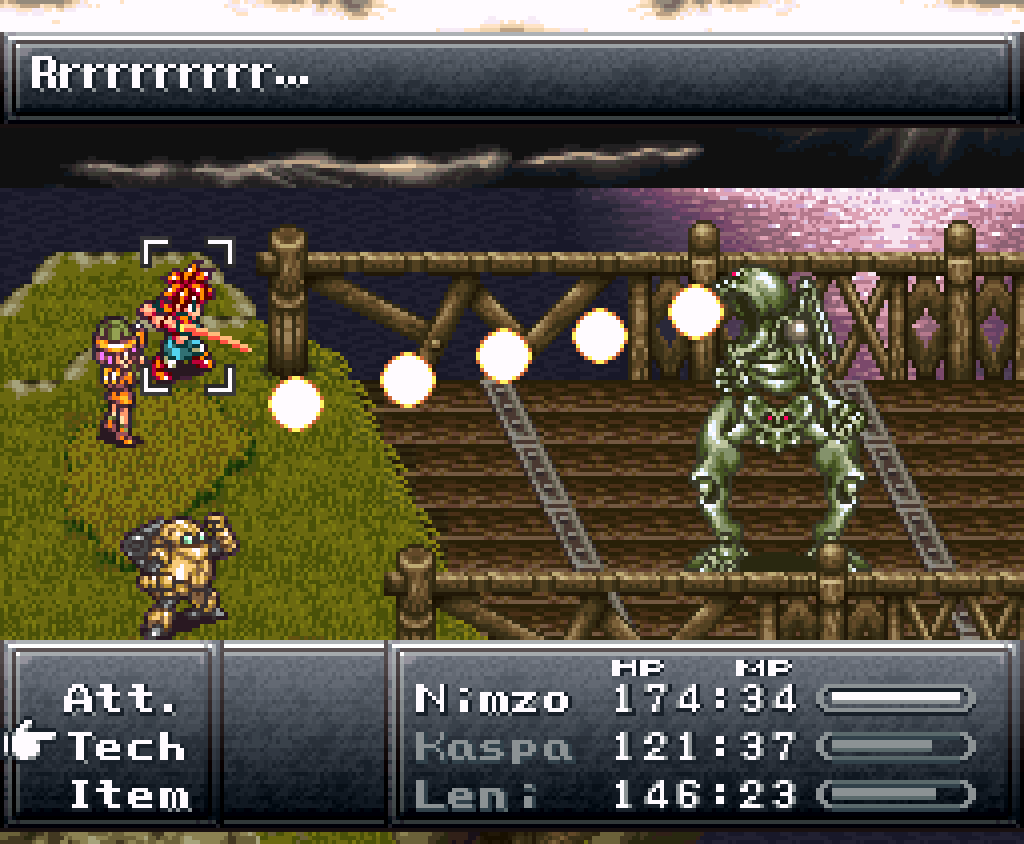
Now, on to combat… Credit where it’s due: there’s a clear effort to inject variety and dynamism into what is, at heart, a fairly “mechanical” process. There are over a hundred attack techniques to learn along the way, some involving two or three characters at once in entertaining little choreographed sequences. Certain attacks are “positional”, striking enemies within a set circular area or in a straight line, and demanding some attention to placement. Finally, some enemies prove resistant or vulnerable to particular elements. On paper, everything seems geared towards freeing you from mindlessly hammering the “attack” button while watching telly… In practice, it mostly comes down to trying each attack in turn until you find the one that works (roughly the strategic depth of rock-paper-scissors). As for tactical positioning, it’s fixed for every battle, with no control over it whatsoever. It’s also rendered moot fairly early on once magic spells capable of blanketing the whole screen come into play. Even so, this remains the most forgiving turn-based combat system I’ve come across, and a decisive test result: not for me!
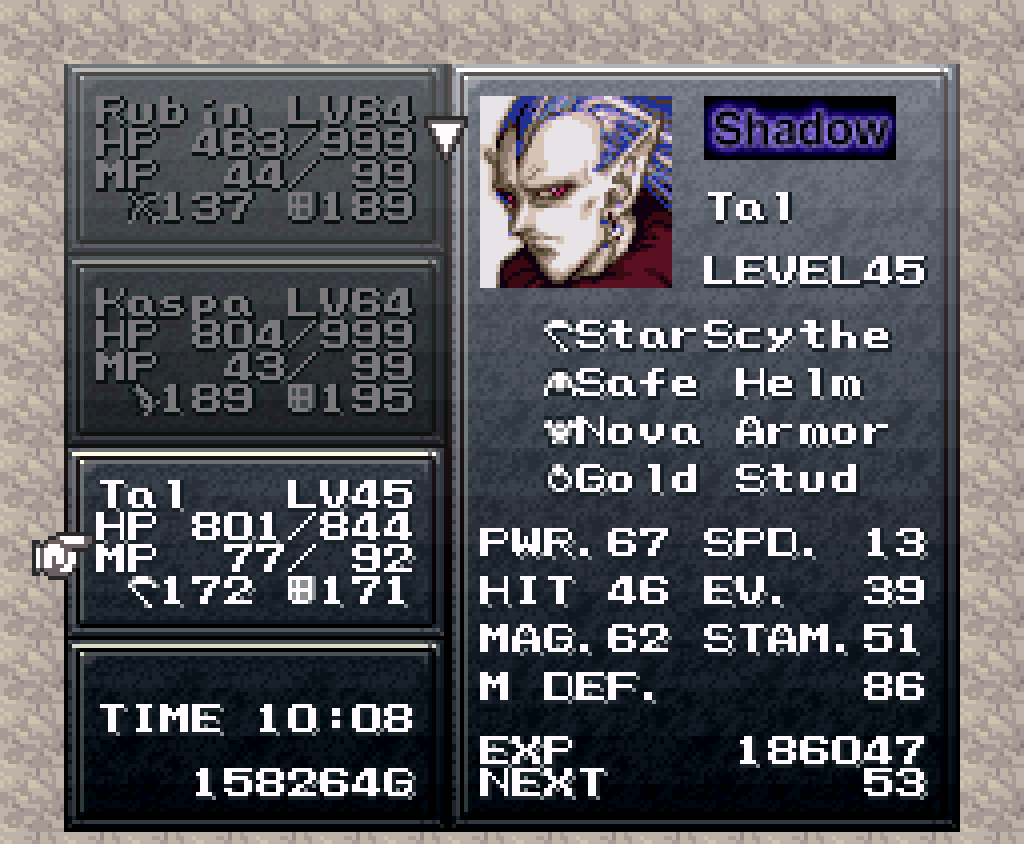
Chrono Trigger stands as an undeniable technical and artistic achievement, then, but once again, I’m reviewing a game. A game has to be fun. This one is built to be replayed several times over, given that it wraps up in around twenty hours, offers a dozen different endings, and introduces that famous “new game plus” system: starting over from scratch while keeping your stats and equipment. Well, I was bored stiff during my second playthrough, mowing down every enemy in a single hit, with no reason left to open chests or hunt for secrets since I already had the best gear going. All I cared about was seeing the alternate endings, but getting there meant slogging through dozens of battles – not random ones, granted, but still just a matter of waiting around and tapping the “magic” button (fine, occasionally switching element when an enemy shrugged it off…). How do people put up with this? Someone explain to me, why exactly is this supposed to be fun?
Yes, there are good moments. Yes, I managed to finish it, which puts it well above something like Wild Arms 3 or Albert Odyssey (you can blame those for my sour mood). It’s no doubt a “cult classic”, historically influential, but I’ll have forgotten it within a fortnight. By contrast, I still remember a game that made my life miserable over thirty years ago: Illusion of Time (Super Nintendo, 1993), with its padding, its stiffness, its dreadful dungeons … but also its real-time action, which pulled me out of the role of spectator.
Its pseudo-sequel, Chrono Cross, came out on PlayStation in 1999, and it’ll be doing so without me!
Otherwise, if you’ve got other Japanese role-playing games to recommend, I’ll be sending you straight to the pinnacle of Western culture.
|