Wild Arms 3 (PlayStation 2)
| Developer: Media.Vision | Graphics: |
 | |
| Publisher: Sony Computer Entertainment* | Sound: |
| |
| Year: 2002 (Japan and USA), 2003 (Europe) | Difficulty: |
 | |
| Genre: Role-playing game | Lastability: |
 | |
| Number of players: 1 | Rating: |
5/10 | |
(*) Published by Ubi Soft in Europe.
Wild Arms is a conventional Japanese role-playing game series with a western-flavoured atmosphere. The first instalment came out on PlayStation as early as 1996 in Japan, and was among the first titles of the genre to be exported to the United States, shortly before a certain Final Fantasy 7. The latter’s success would go on to encourage the localisation and distribution of many more JRPGs across the Atlantic. In Europe, and particularly in France, the selection remained limited, and slow to arrive…
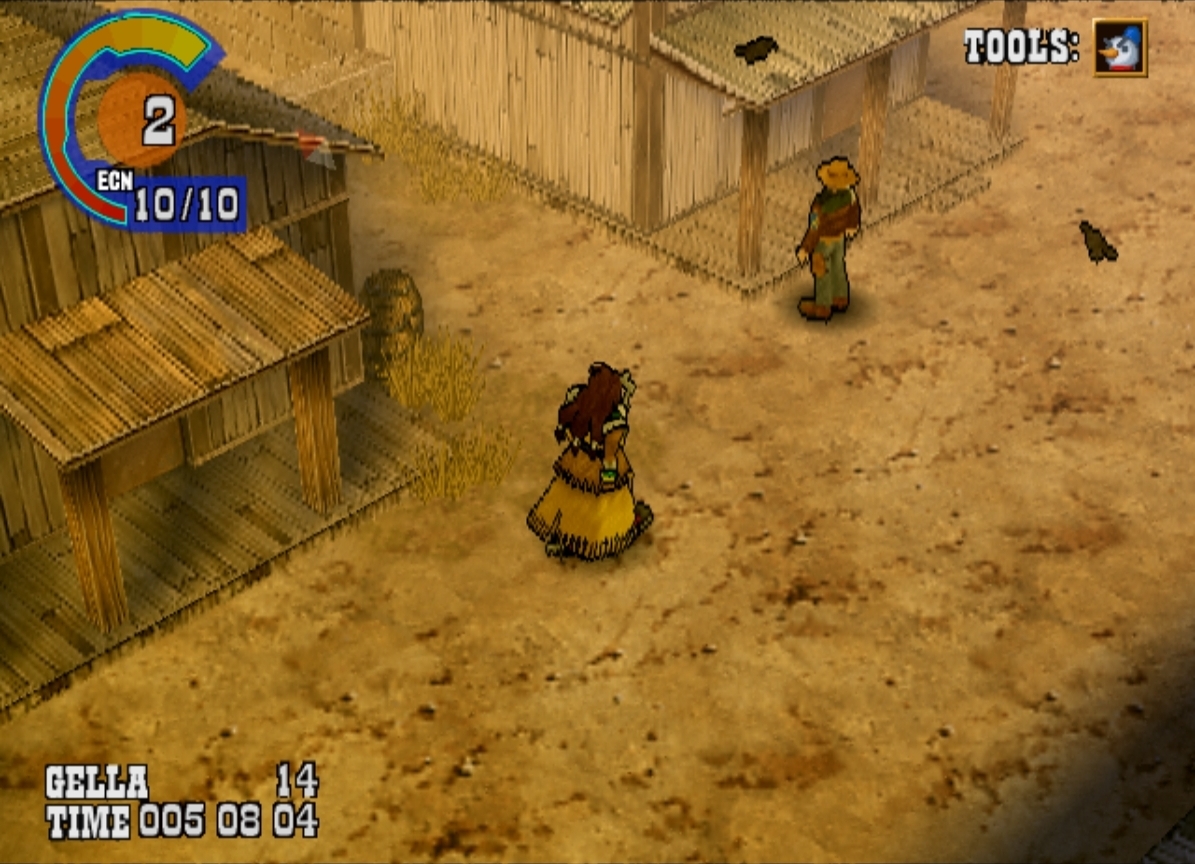
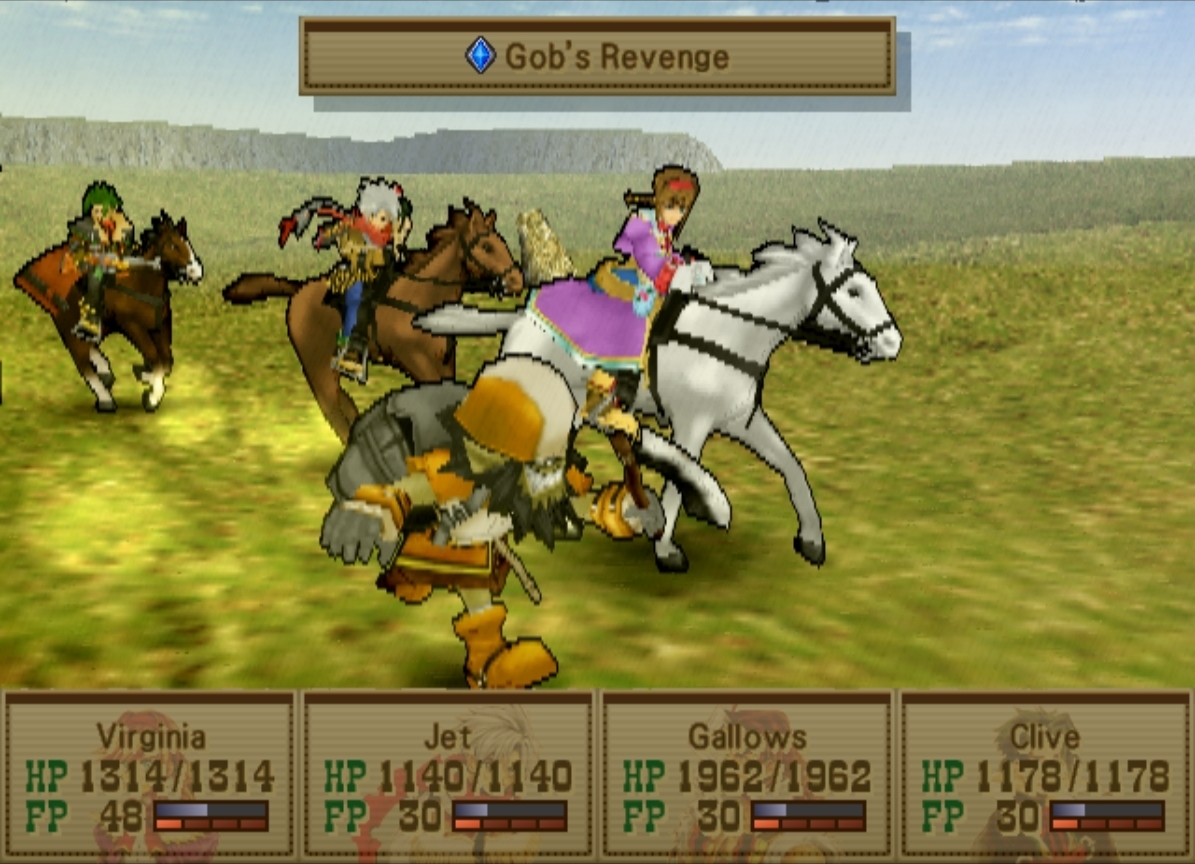
Here I’m focusing on the third entry, which is objectively the most interesting. The western references are more pronounced: desert landscapes, canyons, horses, firearms, saloons… Its cel-shaded graphical style rounds off a strong visual identity. I’d bought this game in the summer of 2003, to keep myself occupied at my grandparents’ place. I remember getting stuck on a puzzle. I spent days translating the English word by word, then trying to work out a cryptic message, supposedly revealing the password to open a door… With no Internet access, I gave up. Twenty-three years later, I set myself the challenge of getting past that point without a walkthrough! Time will tell whether my puzzle-solving skills have improved…
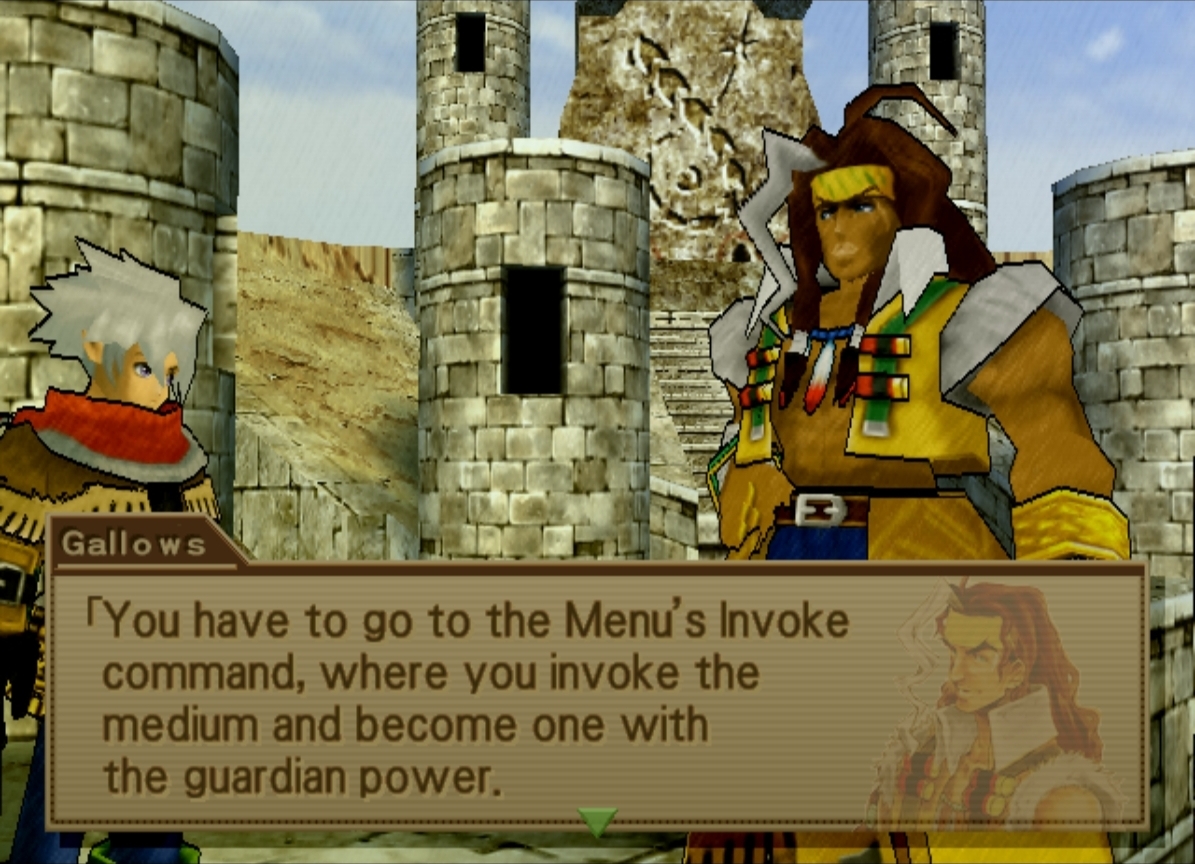
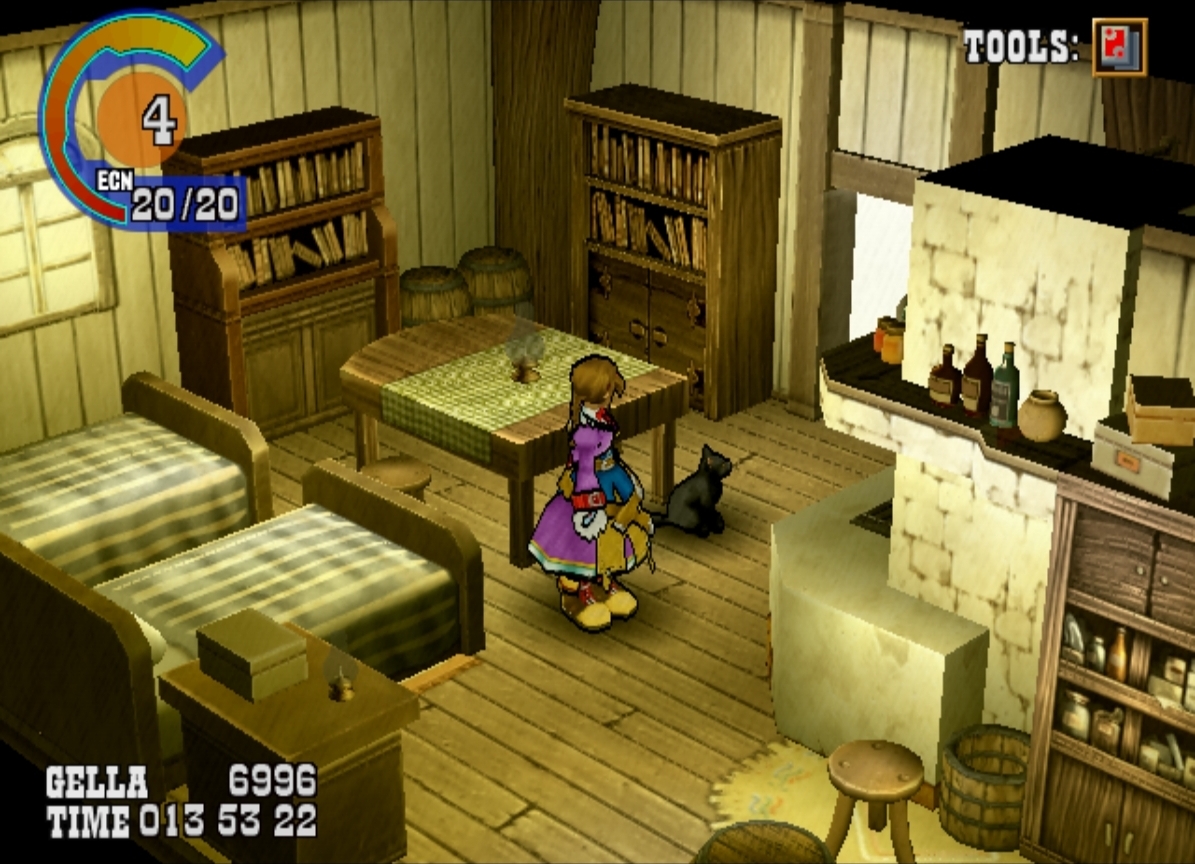
… And I found myself stuck in the prologue, with Gallows (aptly named). I’d forgotten to talk to some bloke in the first village (the one who teaches you to “deploy search waves”). As in Albert Odyssey, progress can indeed be arbitrarily (and silently) halted if you fail to check in with the right busybody, who triggers an invisible scripted event. This is all the more troublesome in this game because the world is much larger, and the villagers’ responses sometimes vary depending on which companion you’re controlling. When in doubt, then, do a full circuit of the town four times over!
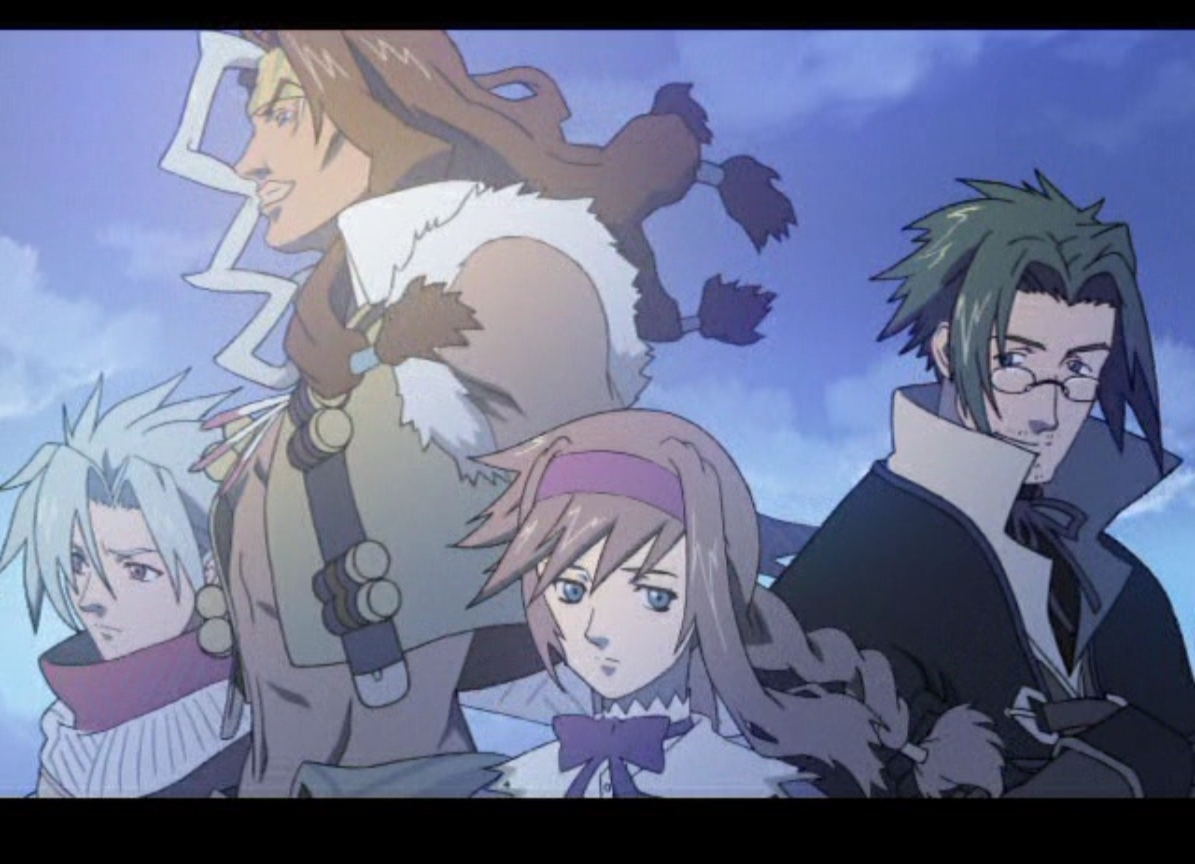
Setbacks aside, I enjoyed the prologue, which stages the protagonists’ chance meeting in cinematic fashion, building to a Mexican stand-off followed by four flashbacks in which you play as each character in turn, through brief tutorial sequences. The starting premise delighted me: a ragtag band of bounty (and treasure) hunters thrown together by circumstance, with no ambition beyond making a living. Borderlands, basically!
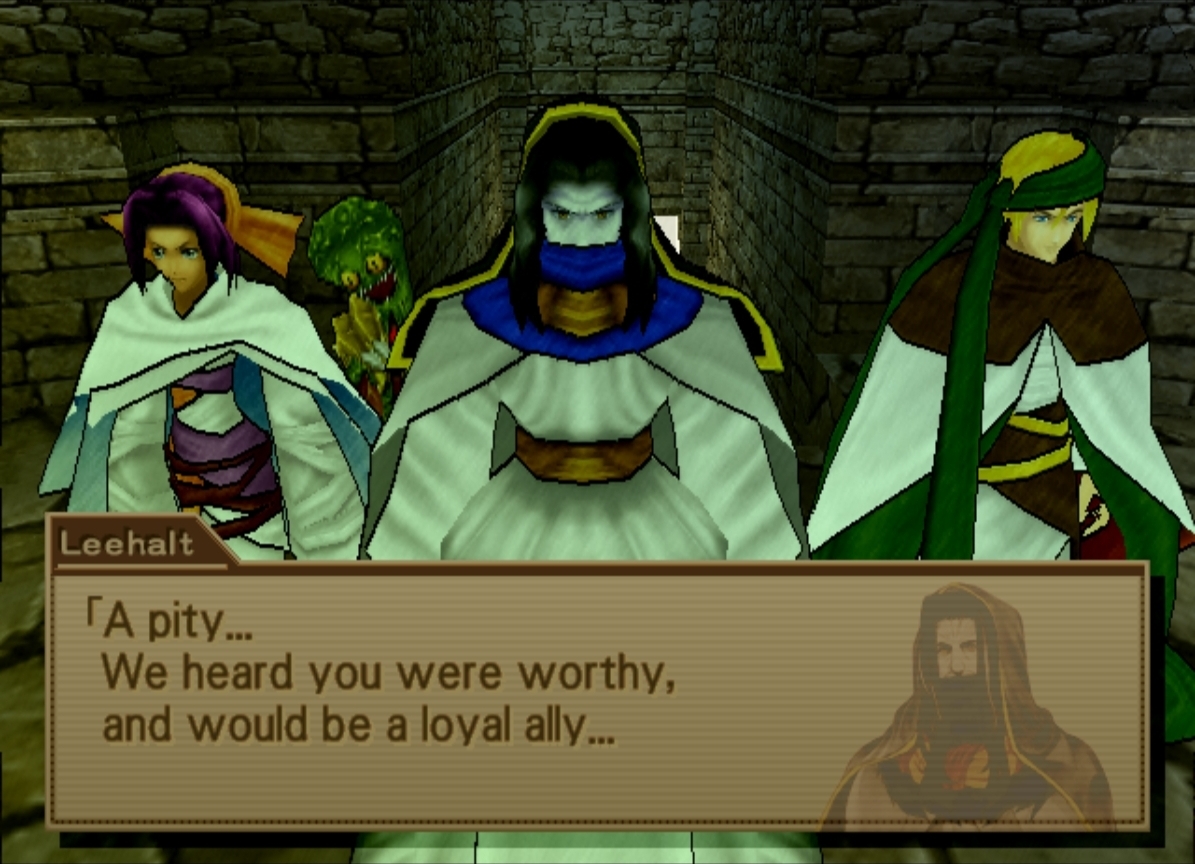
The paintwork starts to peel, however, the moment the underlying plot gets going, sparing us none of the clichés: the spirit of nature dying, elemental forces governed by magic crystals, demons, the power of friendship, and of course, nanomachines for dessert. So much for the western; welcome to just another Japanese role-playing game!
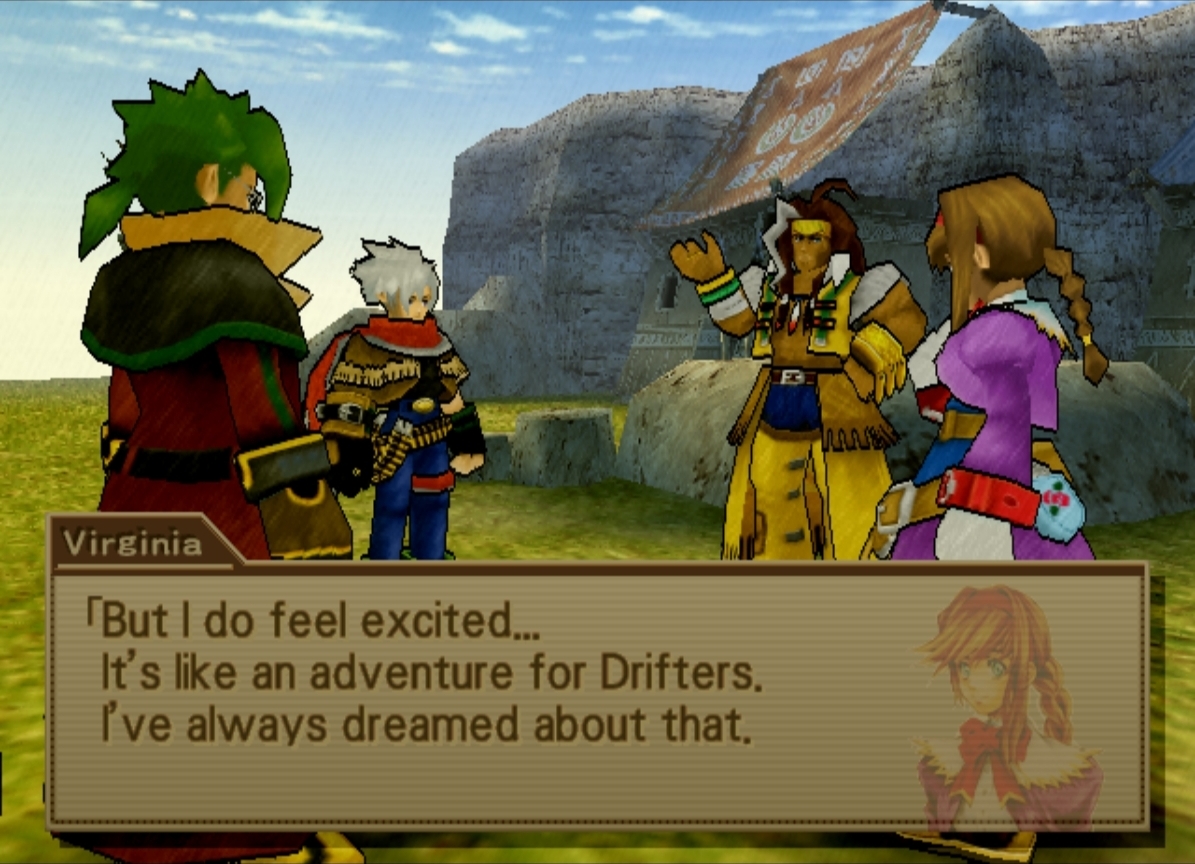
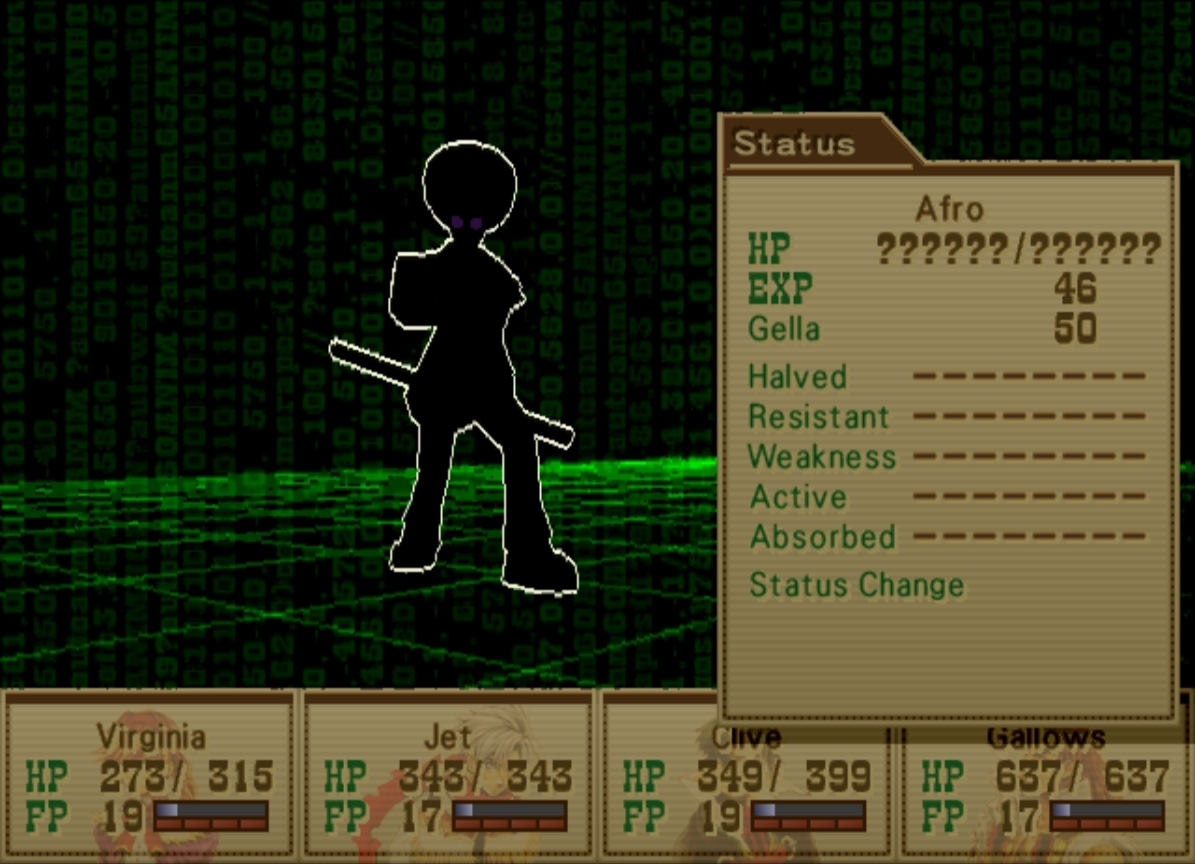
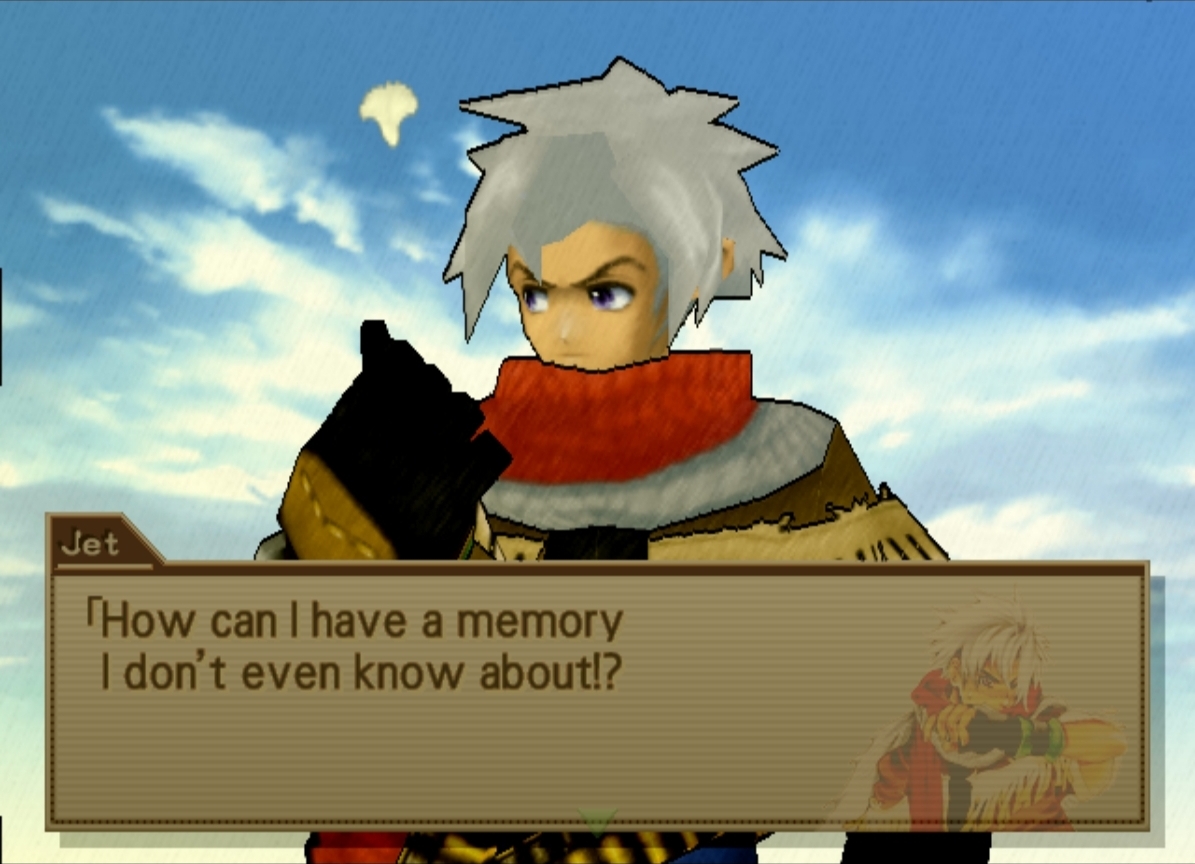
Once again, the characters are a parade of stereotypes: the obligatory antisocial teen in a fit of angst; the wise-old-man archetype (all of thirty) with his glasses, who reminds me of Percy from The Legend of Vox Machina; the Village People’s token Native American; and let’s not forget the leader, an astronomical nitwit! I wanted to throw her down a well. Sadly, the villains don’t fare much better. At first, we trade lead with a rival band of mercenaries, before the “real” antagonists are revealed, looking like they’ve walked straight out of an episode of Sailor Moon. And in between, there’s a second rival group made up of an afro-haired swordsman, a talking (flying) cat, and a nutcase who could be Tron Bonne’s sister in Mega Man Legends. This lot I found genuinely funny. I caught myself thinking I’d rather have played as them, which isn’t a great sign. Why am I stuck with the bore squad?
And so, this whole cast lugs firearms around, has no qualms about using them, yet somehow nobody ever gets hurt. Not a drop of blood. The same eternal antagonists keep tirelessly coming back, after having their guts riddled with bullets several times over. It’s all very childish. And the ultimate insult is that after beating them senseless in battle, there’s a jarring cut to the following cutscene, which recasts my enemies as the victors of the fight and my party as the ones crumpled on the ground…
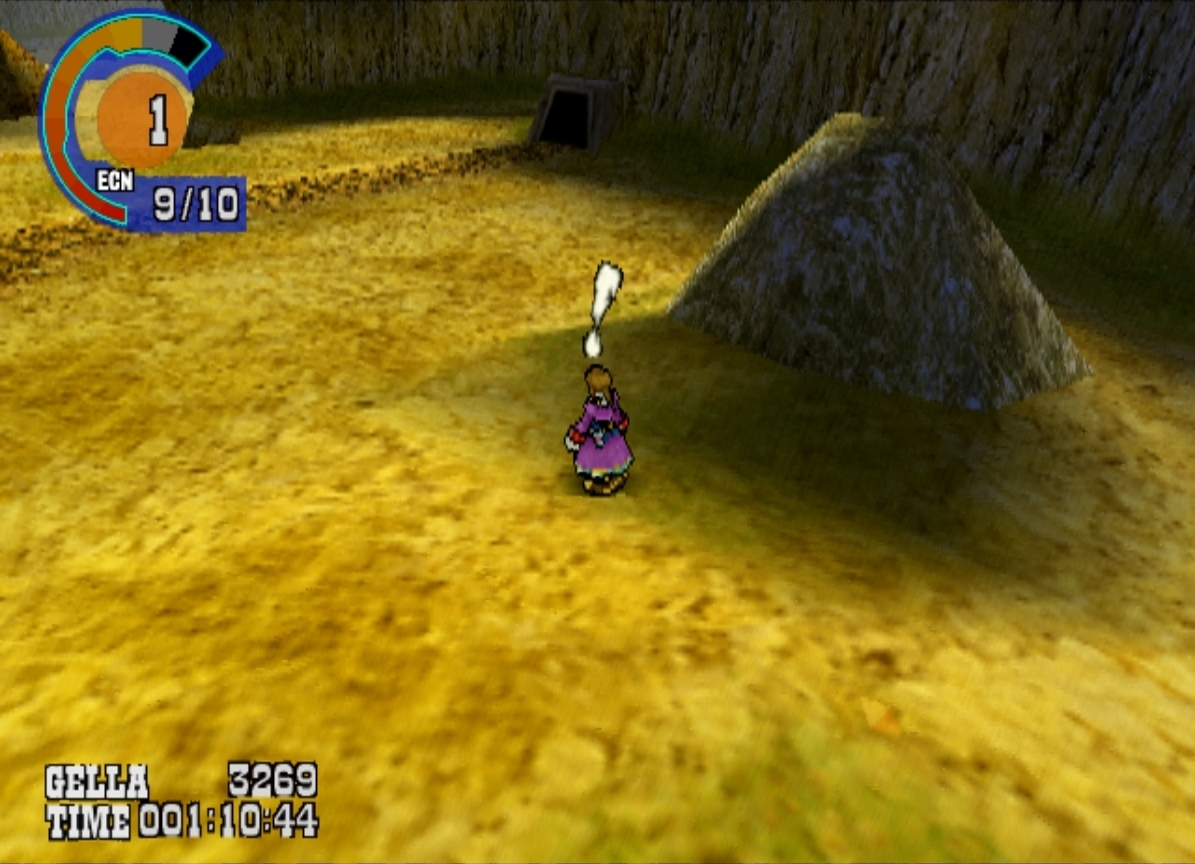
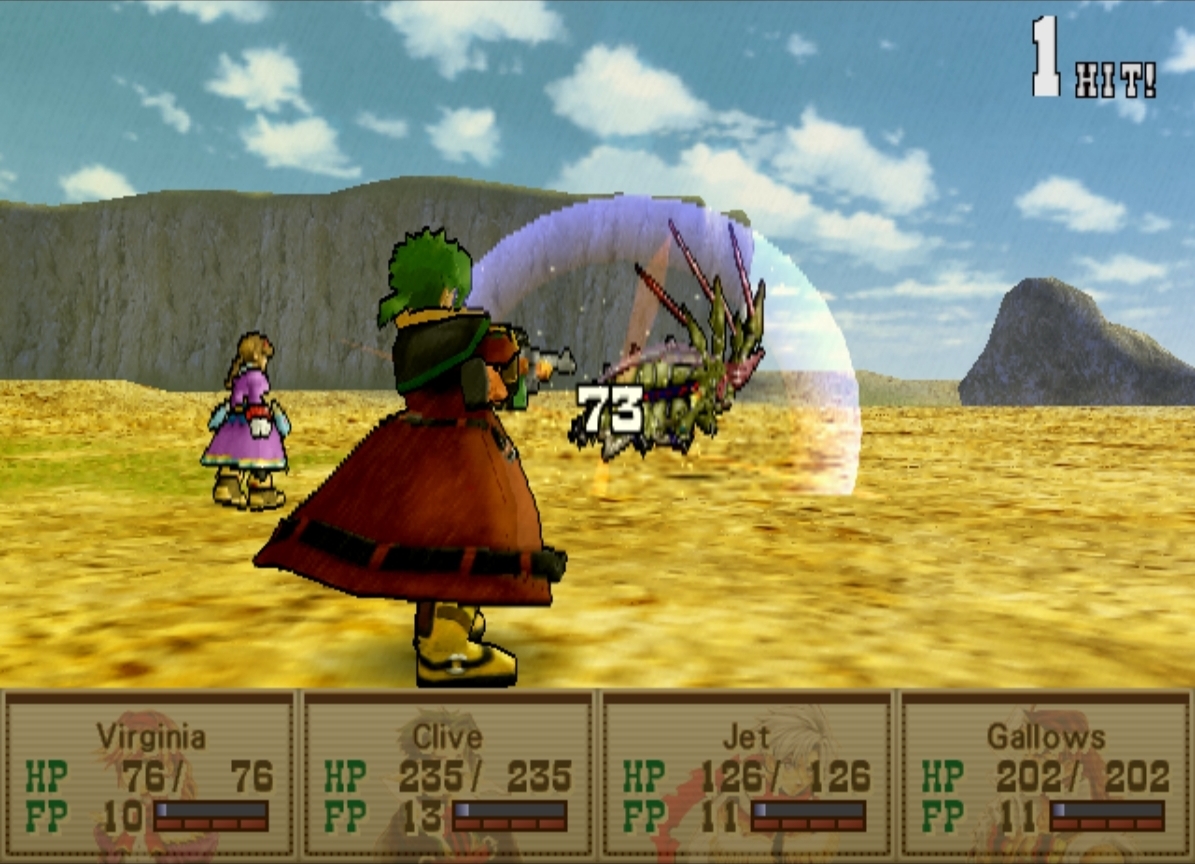
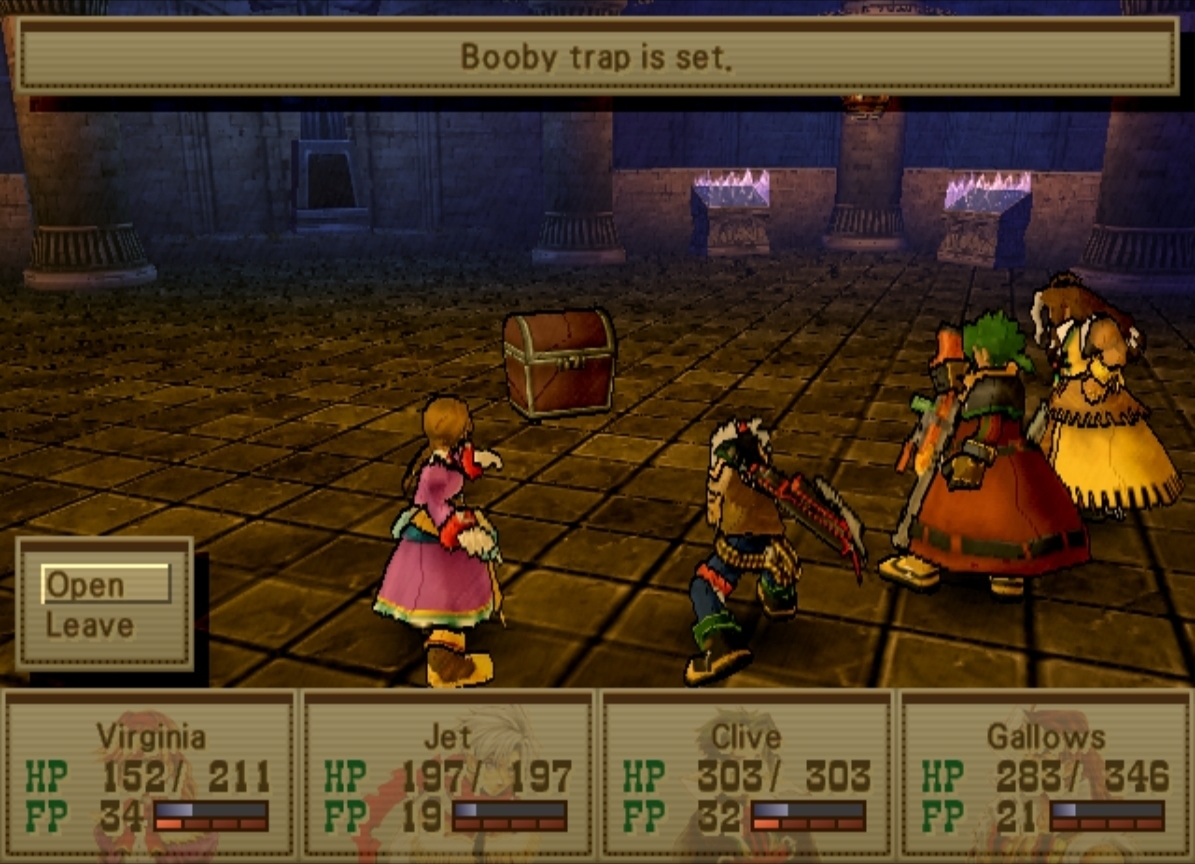
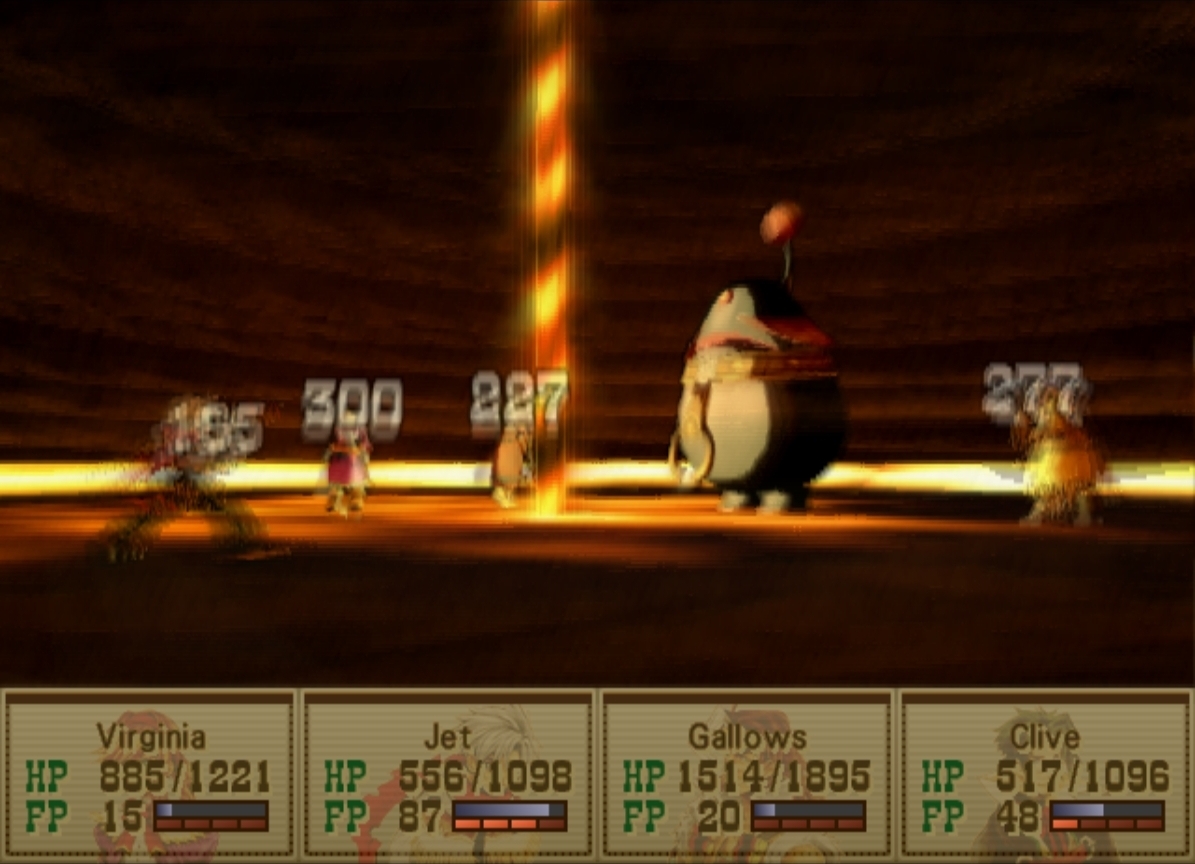
Which brings us to the turn-based random encounters … my pet peeve. While they still mostly boil down to “attack-attack-attack-loot”, repeating every thirty seconds, I have to admit the developers tried to soften the annoyance by adding an “ENC” bar (En-Coun-Ter?), letting you skip a few fights. This gauge drains with use, but recharges by picking up a kind of crystal. Great stuff! I also like the temporary health bar, which tops up your main health after a battle. I don’t think I’ve seen this idea again before Grim Dawn (2016). On the flip side, you can’t heal during exploration without burning through limited resources, which encourages you to head back to the inn for a rest now and then. A realistic constraint, and one I’m fine with.
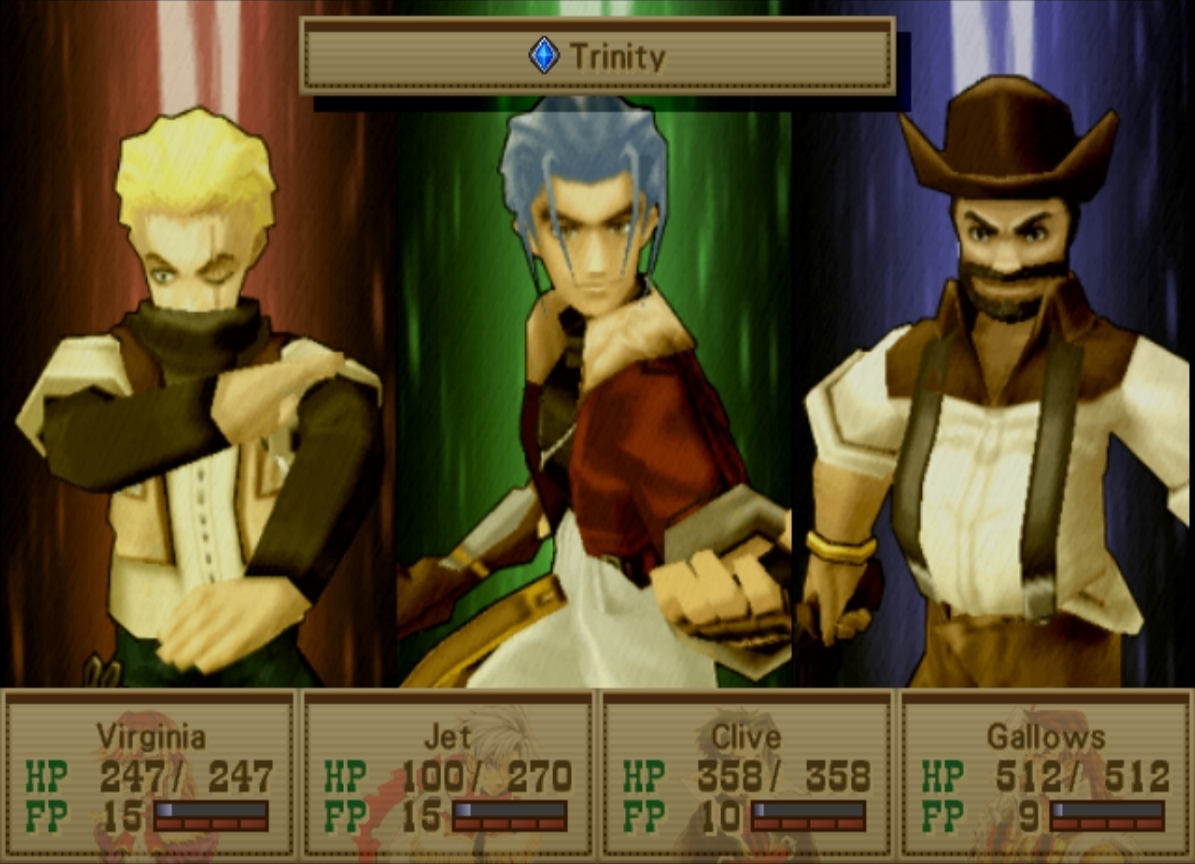
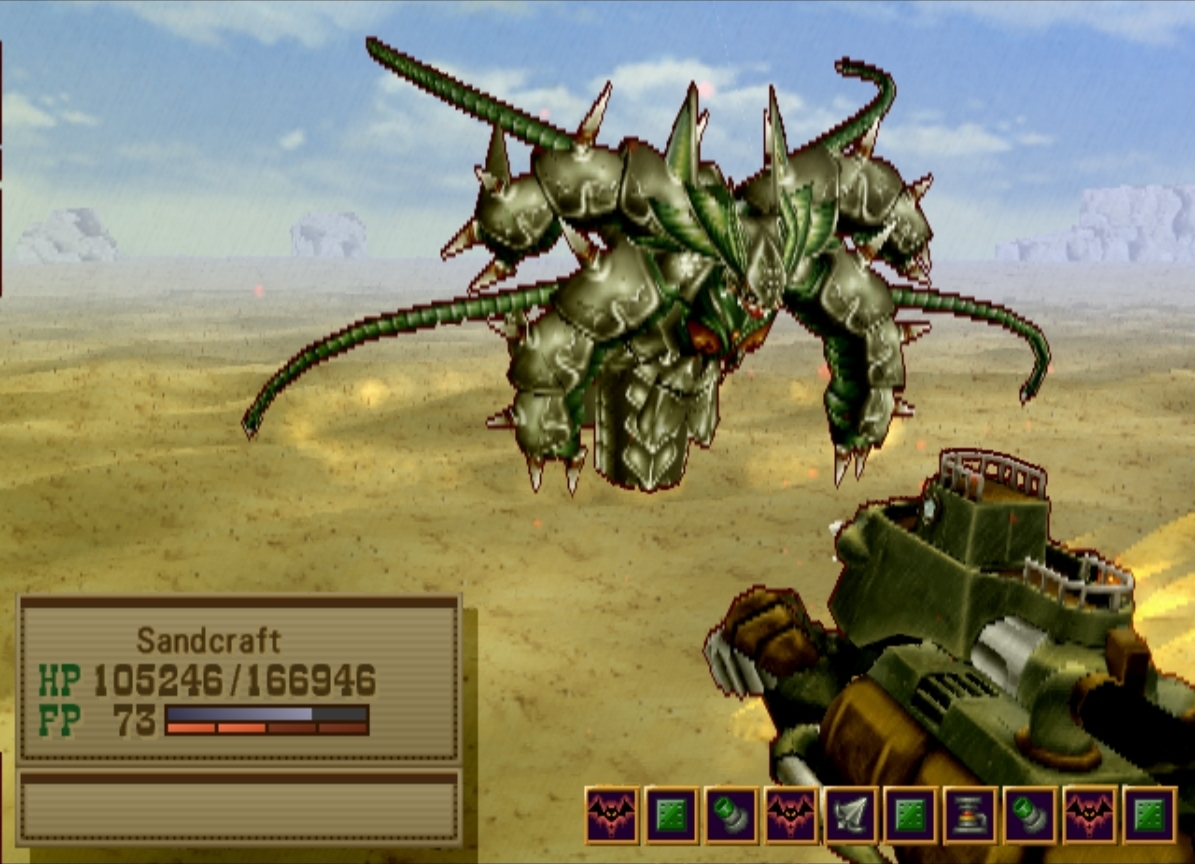
Combat plays out in the usual fashion, split between physical attacks; guns, with infinite ammo but still needing regular reloading; and special or magical techniques on the other side. The new twist is that they’ve swapped the traditional mana points for “Force Points” (FP), which work more like a rage meter: they start at zero and build up as you land normal attacks. This means spending the first few turns mindlessly mashing “attack”, before you’re allowed to spend those points on more useful skills. The system stays slow and rigid until fairly late in the game, when you’re able to gradually raise your “starting FP stock”, finally giving you a real choice of actions from the first turn onward.
There’s no equipment as such (no armour, no new weapons), but gunsmiths handle upgrading your guns’ stats, and you can customise your characters’ skill sets by assigning them “mediums”, mystical relics granting elemental powers, along with the ability to summon a “guardian” (a big monster). Other relics attach to these mediums to further tweak their abilities (specific resistances, counterattacks, auto-recharge…). It all seems overly complicated for not much payoff, and it’s only after several dozen hours that synergies start to emerge. So the mechanic promises to grow richer and more complex towards the end of the game, for anyone with the patience to sit through the beginning and middle. Or so I’m told…
Speaking of synergies, I spotted a textbook case of function clashing with usability: swapping mediums mid-battle gives a genuine advantage, but the pace is already so sluggish that the mere prospect of digging through menus, unequipping and re-equipping my gear, killed any desire to bother. That strikes me as a major design flaw.
Boss fights come across as slightly more “strategic”, though they sometimes feel like gimmicks, artificial tricks rather than real tactics. One of the early ones, for instance, is extremely tough and forces you to use a specific method, hinted at in a book, prominently displayed in the neighbouring village.
I won’t get into the naval combat, because it’s simply incomprehensible!
The developers brought back a contentious feature from Wild Arms 2: “scanning” the surroundings to reveal points of interest (towns and dungeons) that start out hidden. It’s a way of encouraging exploration, even if the method can feel tedious (pressing the same button every ten steps). It’s defensible when the context justifies it: surveying a region uninhabited for centuries, dotted with buried ruins; but harder to explain when there’s a tower or pyramid sitting in the middle of an open plain… The real sticking point is that the scanner only works under a second condition: some specific person first has to tell you the place exists. That detail is what ruins it for me, since it undercuts the whole idea of freely striking out on an adventure to seek out relics of the past, which is exactly what the game’s theme seems to invite you to do.
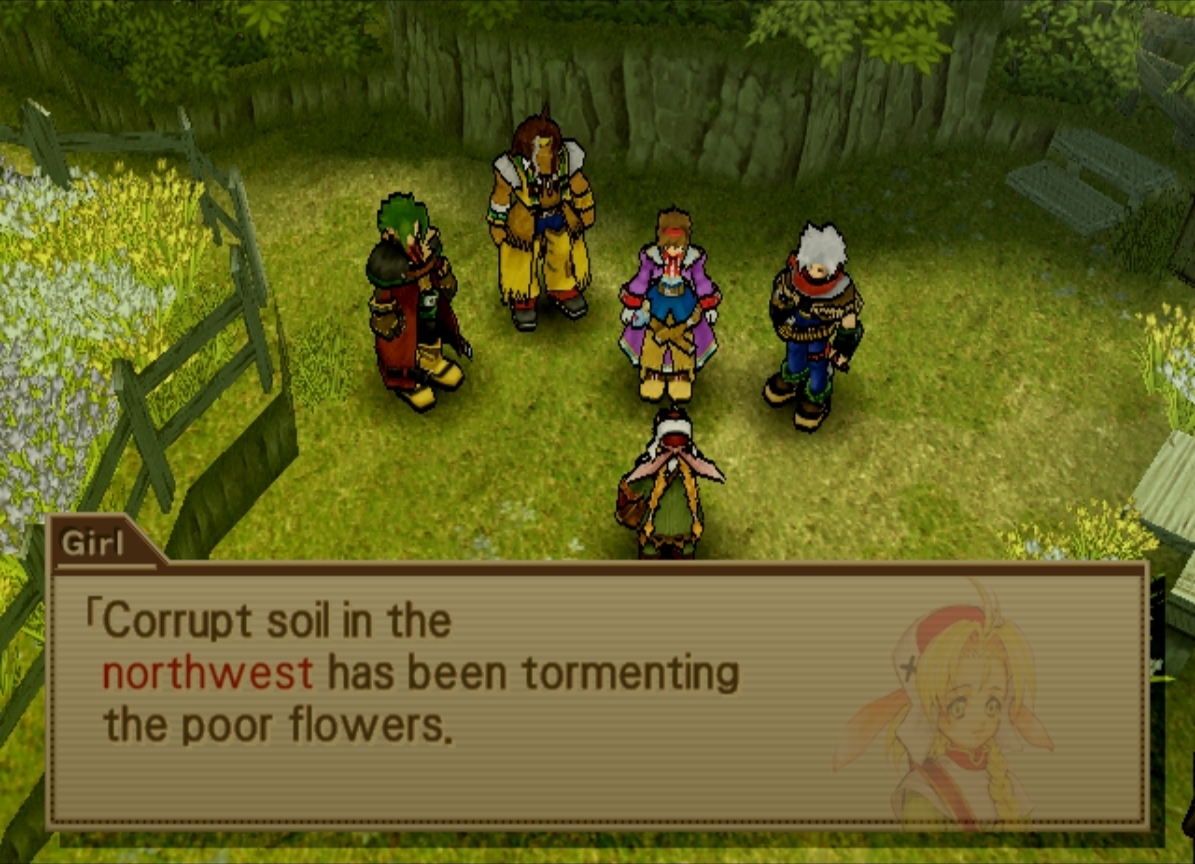
Dialogue is essential, then, and handily, the game never shuts up! They tried to boost interactivity by highlighting certain keywords directly within dialogue boxes, letting you steer conversations at the press of a button. In practice, you just press it every time. It ends up as one more mechanical chore, and reduces villagers to little more than location-dispensers.
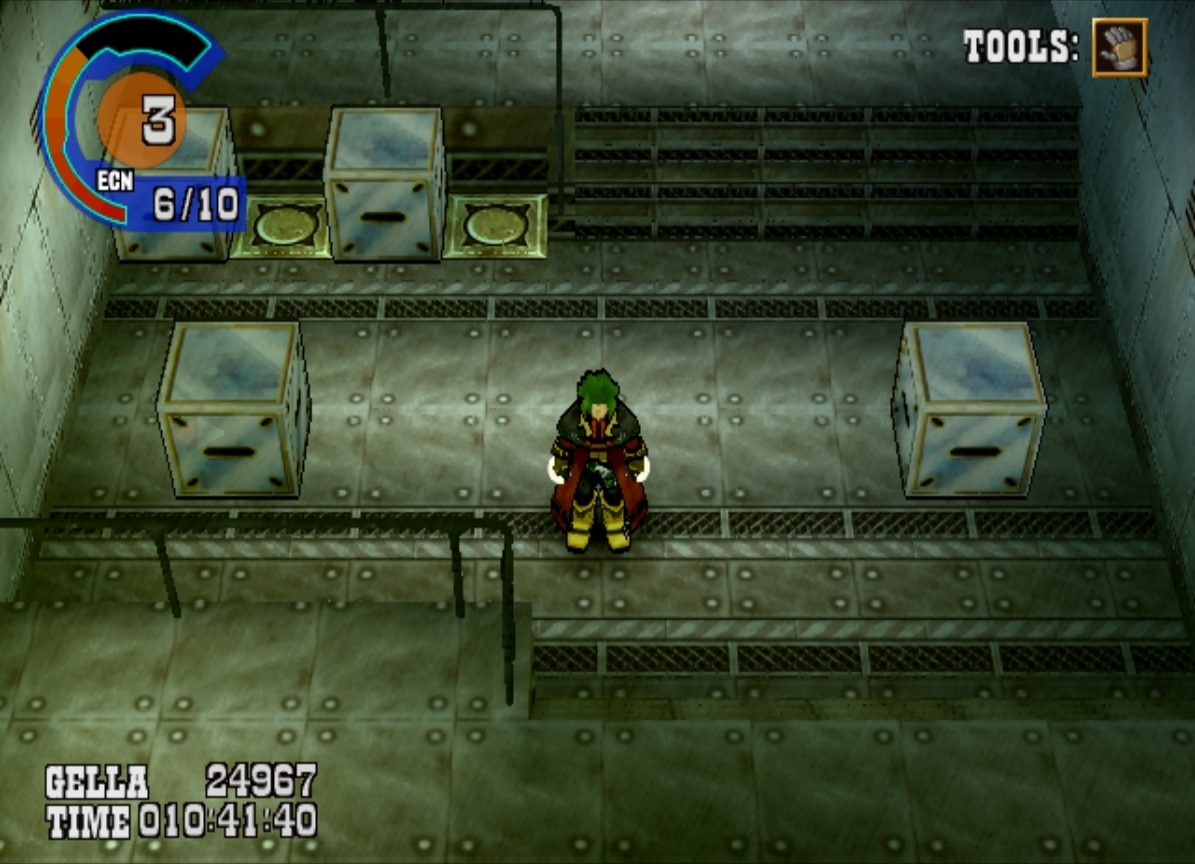
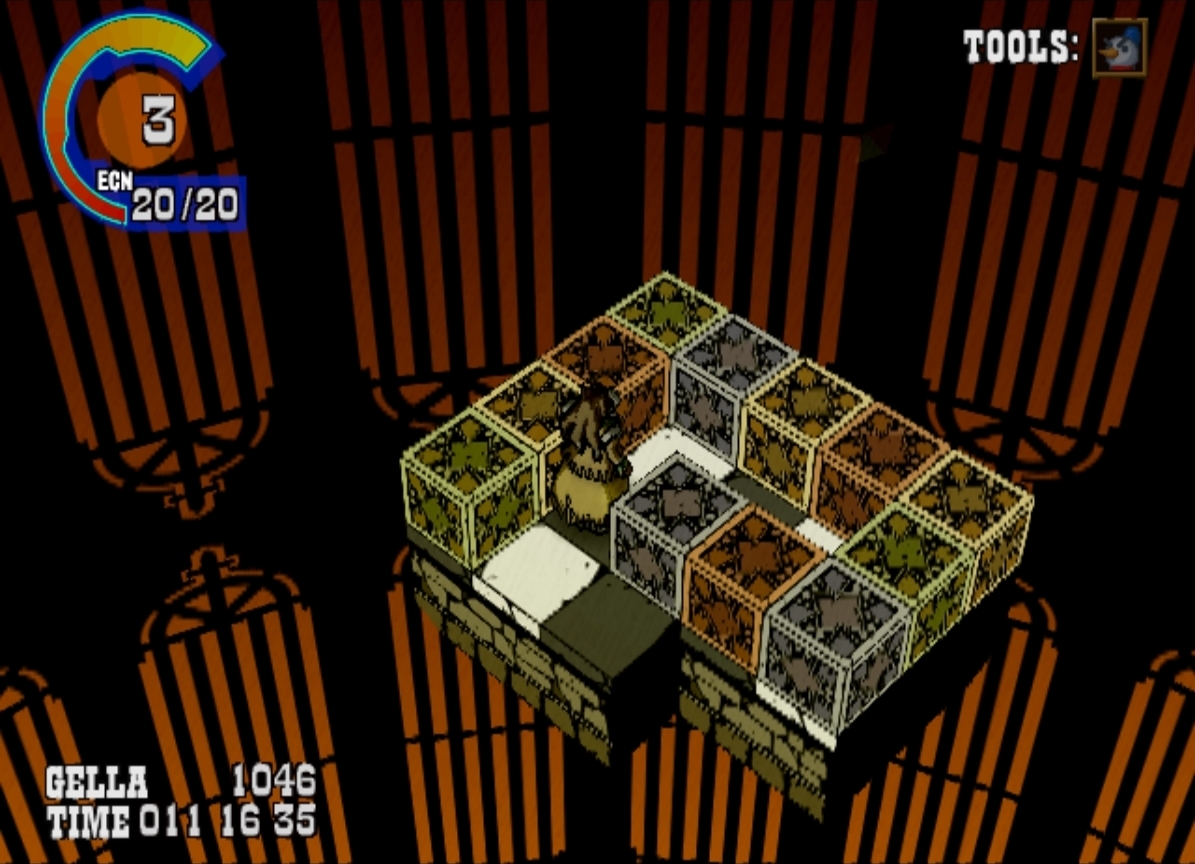
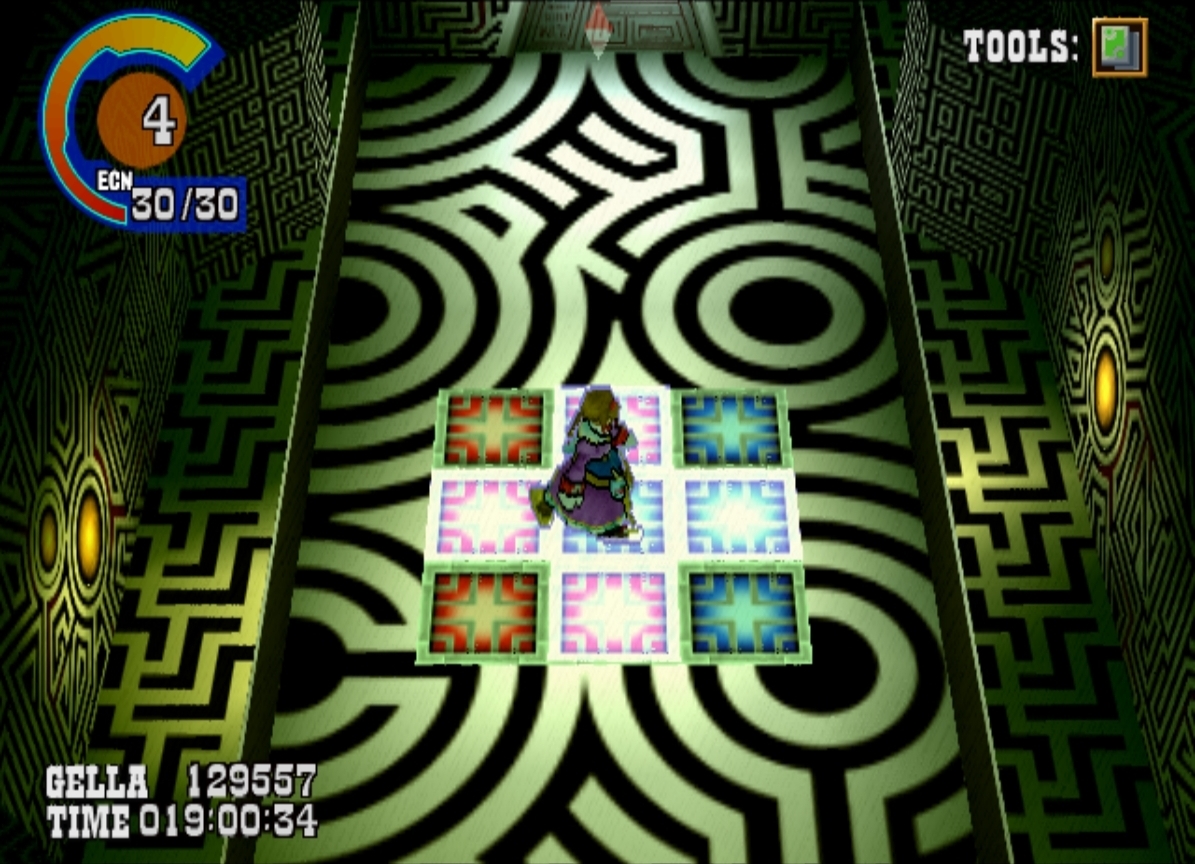
There are plenty of dungeons, all very short, and packed with puzzles (nursery-school difficulty, which is to say well above average for this game). Each character has their own tools for clearing various kinds of obstacles, and you can switch between them freely. It’s simple and effective, if not especially original, once you’ve glanced at the two previous games, but I won’t knock it entirely. You’re encouraged to revisit certain dungeons after picking up a new tool, to reach secret rooms. I’d strongly recommend noting down their names and whereabouts whenever you sense there’s unfinished business (an inaccessible chest, a locked door, an unidentified item…), because it becomes extremely time-consuming towards the end to trek back through all of them one by one.
To link these dungeons together, you can rely on various means of transport (horses, trains, a hovercraft, and of course the obligatory spaceship…). There’s also a whole batch of side activities, legendary bosses, gardening, optional puzzles: a 3D take on Puzznic, surprisingly bearable without a time limit, but again, nothing new.
I’ll close with the usual gripes about game design: rough edges, small things left unnecessary or poorly thought through, at times outright hostile to the player. Judge for yourself:
- I nearly missed the gardening workshop entirely because of a visual quirk: the items shown in the interface appeared greyed out, yet you still had to click on them regardless.
- When riding your horse, it automatically jumps over crevices … whenever it feels like it. And when it doesn’t, you might wrongly assume the path is impassable, turn back, and waste precious time.
- Status effects turn out to be excessively punishing in this game, starting with poison, which lasts indefinitely from early on. Then come other delights: one that blocks healing, one that stops you earning experience, one that prevents you acting or moving at all … and best of all, instant death. I’d recommend stocking up on antidotes, medicine, and other remedies from the pedlar.
- Ambushes are fights where a single companion battles alone for several turns, against enemies sometimes capable of killing them in one hit. A kind of Russian roulette that admittedly fits the western theme, but one I could have done without.
- There’s a feature letting you inch your way forward (the Circle button), introduced right at the start by the tutorial. After seventeen hours of play, I had to use it a second time. Needless to say, I’d completely forgotten about it, and it was rather irritating having to look up a walkthrough just to be reminded it existed.
- And here’s proof the game has it in for me personally: barely two minutes after acquiring my hovercraft, I found myself face to face with a “world boss”! I dealt it no damage whatsoever (genuinely, zero), and there was no option to flee the fight. Naturally, I hadn’t saved in a while. And to twist the knife further, the person who sold me the hovercraft had actually told me to save before setting off, but I hadn’t listened.
In the end, I kept telling myself this game was still considerably better than Albert Odyssey. It boasts personality and substance. And yet I came out of it in exactly the same state of moral distress! My breaking point came right after the fossilised dragon mine. The game hadn’t told me where to go next, or maybe I’d just forgotten. I did have the scanner equipped, which in theory should have picked up the next dungeon, but with no guarantee it would work. Had I already spoken to the right bugger beforehand? No idea! And scan what, exactly? Which continent? So I wandered back into random villages, went round in circles all evening, ploughing through what felt like 14,000 random encounters … before finally throwing in the towel. So here’s my final piece of advice, for your own sanity: follow a step-by-step guide, because the moment you lose the thread, you’re done for.
A single adjustment would have been enough to vastly improve the game: turning it into a proper open world, where everything could be discovered without prerequisites. I’d have loved to explore the map freely, tackle dungeons in whatever order I pleased, and ignore the story and dialogue altogether. The game preaches freedom, but in reality is painfully restrictive and linear. Second failing: they should have offered customisation options much earlier. It’s not right to have to wait thirty hours before getting a glimpse of the combat system’s potential.
The Wild Arms series carried on into the PlayStation 2 era, then onto mobile, but since it dropped the very thing that gave it its soul along the way, the western theme, I won’t be dwelling on it. I’ll head in the other direction instead: Wild Arms 2 (PlayStation, 1999–2000) is “renowned” for its dreadful Japanese-to-English translation, as well as for introducing the map “scan” mechanic, dropping mana points, and adding customisation options for weapons and skills. Too close to the third game to justify its own review (and I doubt its story would manage to hold my attention). What I’d be curious to explore instead, though, is the origins of the series, to find that Wild West atmosphere again without the clunkiness I’ve criticised on this page. Care to follow me?
Oh, and yes, I did manage to get past the barrier that stumped me in my youth. It’s certainly not down to any newfound sharpness of mind, I’ve simply got less respect for games these days! To paraphrase, the password I was looking for turned out to be “Password”…
|