Wild Arms 3 had left a strong impression on me, before it dragged on too long. Its unique atmosphere still made me want to try its predecessor, the original Wild Arms. After a few hours, I almost saw it as an evolution of the third. The essentials were already there: most of the items (consumables and tools), the vast map to explore, the same narrative devices (the elemental guardians, the native tribe, the mercenary blonde and her butler, the flower girl, the lonely orphan with a murky past…); only without the failed experiments such as the dungeon scanner or the boat’s harpoon gun…
“Perfection is achieved, not when there is nothing left to add, but when there is nothing left to take away.” (Antoine de Saint-Exupéry)
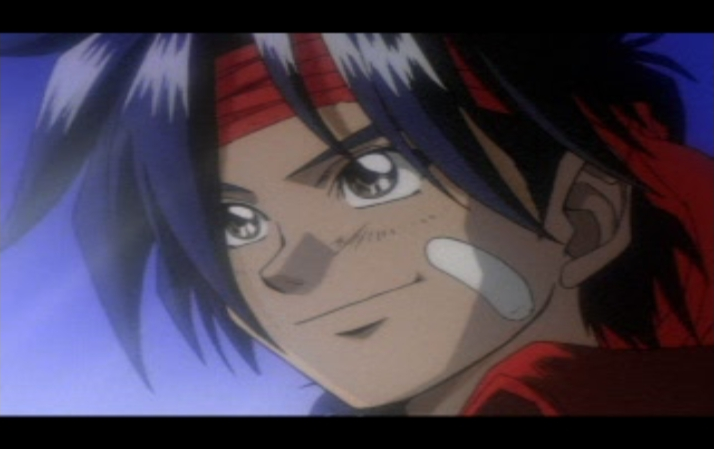
From what I’ve read, players mostly remember Wild Arms for its famous anime-style opening. It shows a young lad with spiky blue hair, a plaster on his cheek, eyes gleaming … scaling a cliff. It’s a struggle, but by pushing on his skinny arms, and after a brief moment of introspection, a deep gaze towards the horizon, epic music … he makes it!
Alright, fine, it’s also celebrated for its soundtrack, lifted wholesale from Ennio Morricone and Riz Ortolani. Apparently the mutual influences are a defining feature of western culture. Given how closely the spaghetti western and the samurai film (chambara) are related, it’s surprising that Japanese role-playing games didn’t borrow from Wild West conventions earlier, or more often.
But the dominant influence seems to come instead from the manga/anime Trigun (1995–1996), and Blueberry Top appears to be inspired by the protagonist of Rapid Reload (PlayStation, 1995), a game from the same studio. That might explain why the Wild West theme stays so muted. I was disappointed to discover that the game’s title isn’t a metaphor at all: the firearms here are relics of the past, inhabited by ancient spirits that their bearers must “tame” (good thing I invoked Saint-Exupéry) by forming an emotional bond with them … rather like with a pokemon (as in half of all shonen, really). Now you know why Tuco takes his bath with his revolver. None of this matters much to the plot, though, which I’ll sum up in three words: demons, bang-bang!
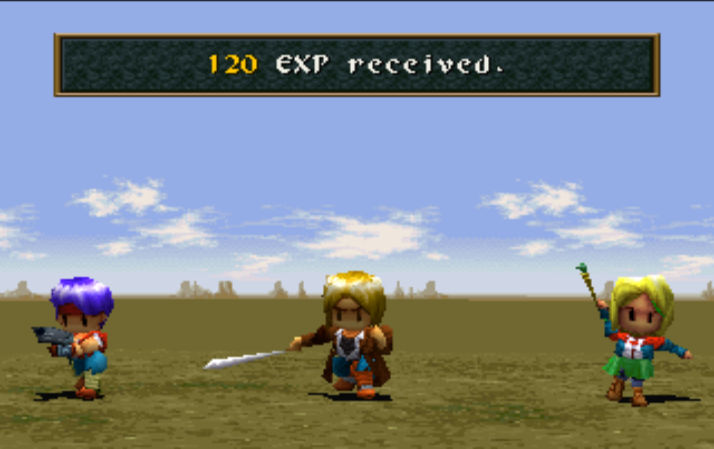
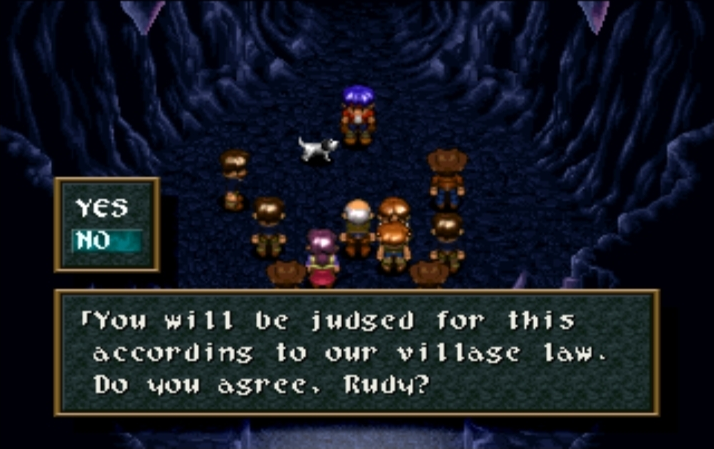
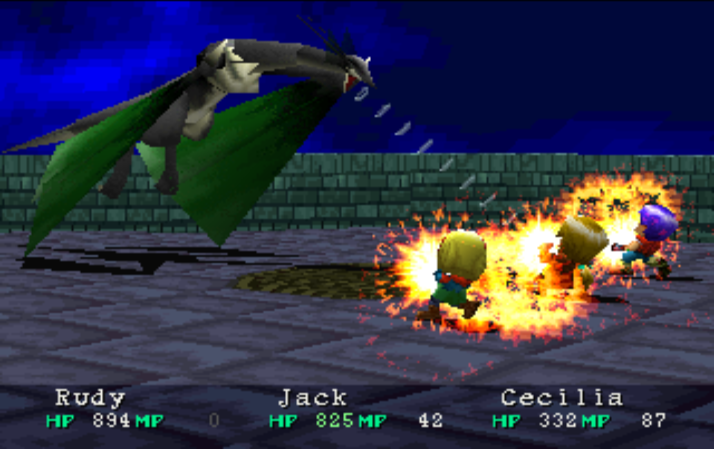
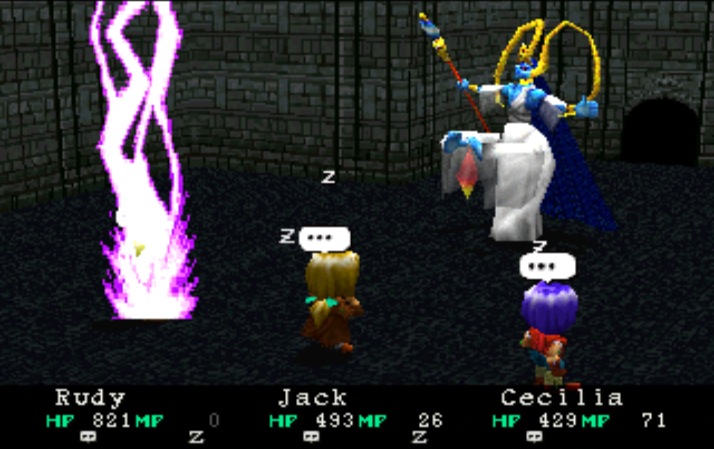
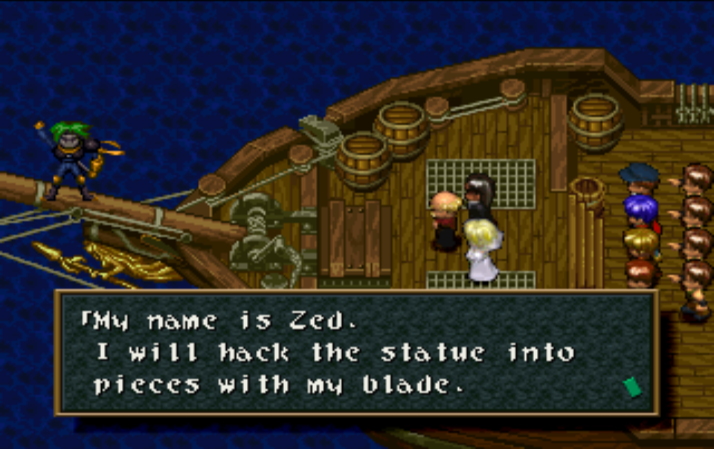
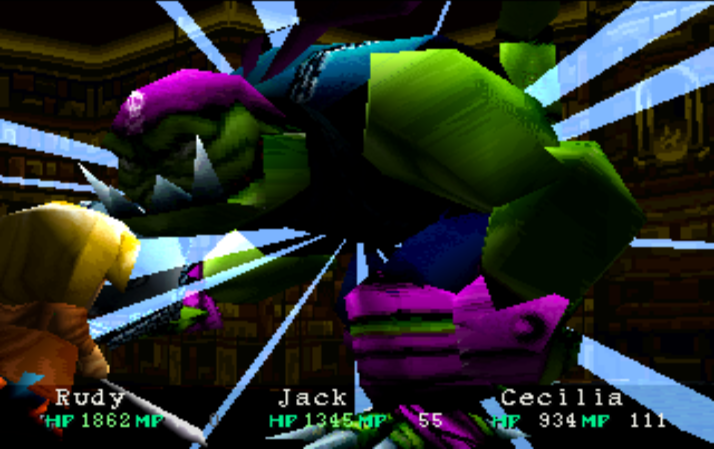
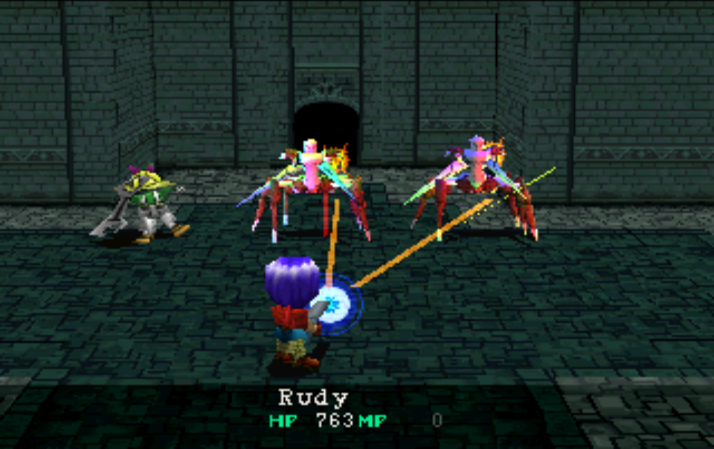
Visually, much like Albert Odyssey, you can tell the game was originally designed for the Super Nintendo before switching consoles at the last minute. The smeary textures and 3D models used during battle sequences feel out of step with the rest of the 2D scenery, and I’ve never been keen on the “super-deformed” style (the same one Final Fantasy 7 would go on to use). Those put off by it can always fall back on the remake: Wild Arms: Alter Code F (PlayStation 2, 2003), which rebuilt the whole game in more advanced 3D, giving it a more consistent overall look, along with a few other, more questionable changes.
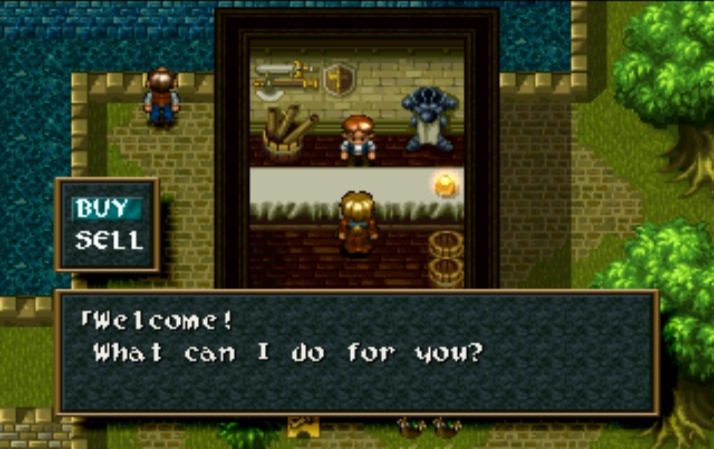
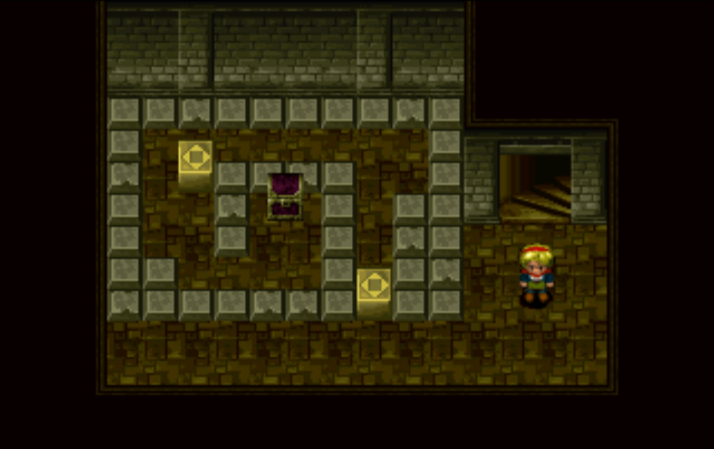
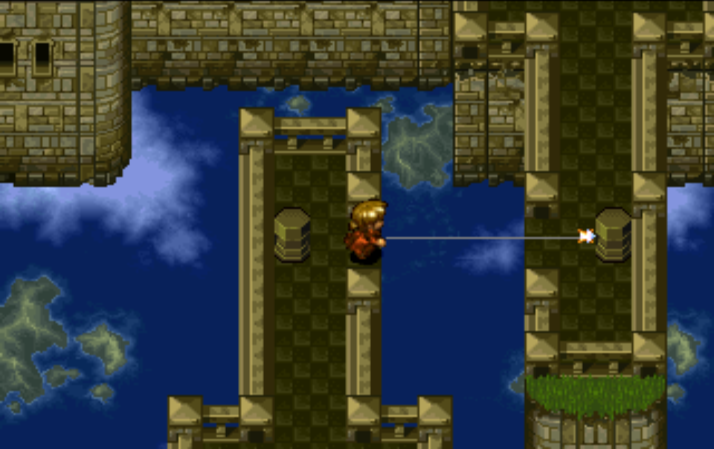
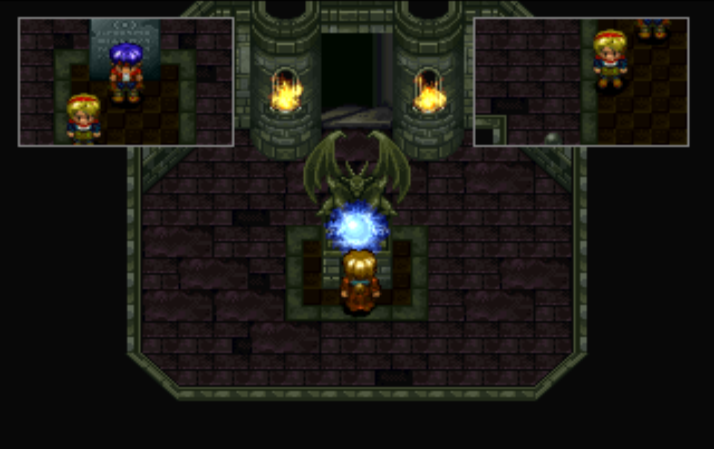
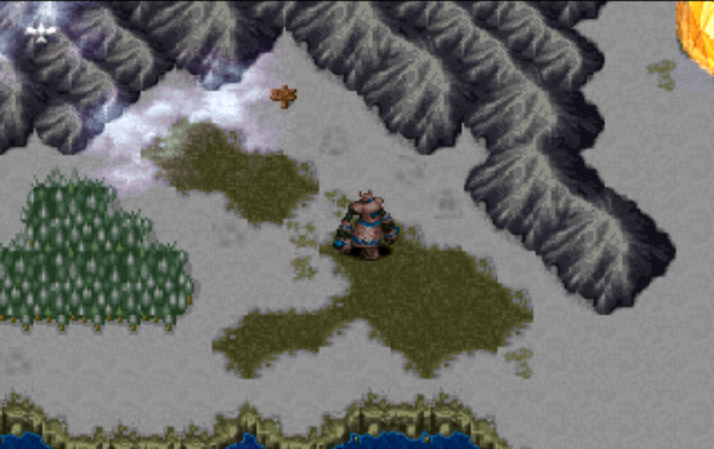
The 2D portion has a cute art style, strongly reminiscent of The Legend of Zelda: A Link to the Past (Super Nintendo, 1991), and that’s not the only thing they share: the way running works (a few steps on the spot, followed by a sprint, then a collision with an obstacle that shakes the screen), carrying chickens or objects overhead to throw them forward, or the various dungeon mechanisms used (pushable blocks, bomb-destructible walls, retractable pillars, one-way currents, pits crossed with a grappling hook…). The one ingredient missing is any real effort put into the puzzle design…
At this point, I have a confession to make. This two-part review nearly got cut short. I went through a severe “crisis” towards the end of the prologue, which put me off the game for several months and sent me towards another one instead, for which I ended up writing an unplanned page…
Excuse me, I’ve just realised I don’t have the IQ needed to carry on. I did everything I was asked, stopping every twenty seconds to fight … clumps of polygons. I presented myself before the ever-unmoving old monarch, glued to his throne in his square castle. Everyone keeps telling me about a festival in the “east gallery”. I’ve done fifteen laps of the palace, and I really don’t fancy reading a walkthrough. Honestly, I’d rather be playing an FPS right now…
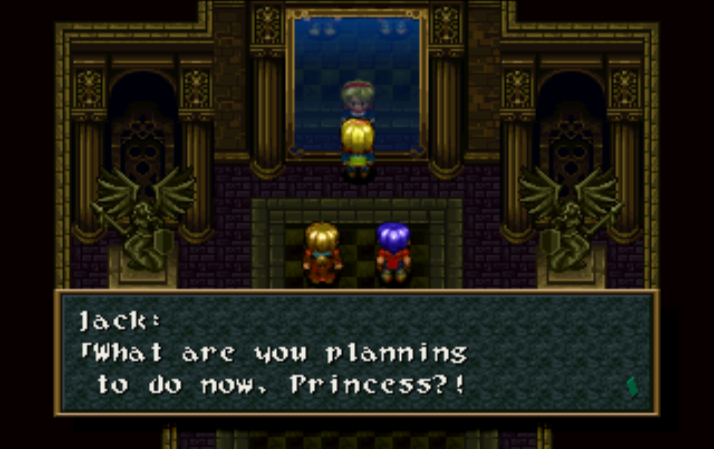
And hang on, now they want me to escort a blonde princess incognito, wearing a magic medallion, to a village festival? Is this game trying to pull a Baldur’s Gate 3 on me? Why should I settle for a watered-down copy of another game’s prologue? I have a better idea: why not go with the original?
Hey, hi there! Three months have passed since my meltdown. I finished the page on Chrono Trigger, before painfully finishing the one on Wild Arms 3. Despite everything harsh I wrote about it, its Wild West atmosphere still holds an inexplicable fascination for me. That said, I no longer have the stomach to go back to find nitwit and her friends, lost in the desert. I need something on a smaller scale. Mostly, I need to get hold of a walkthrough to find that bloody festival…
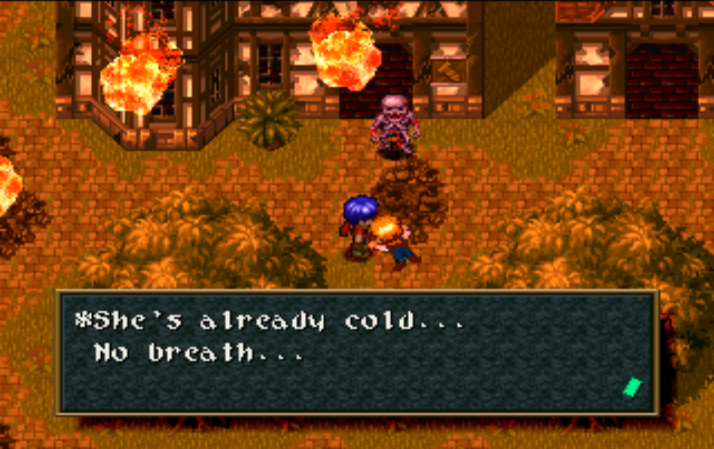
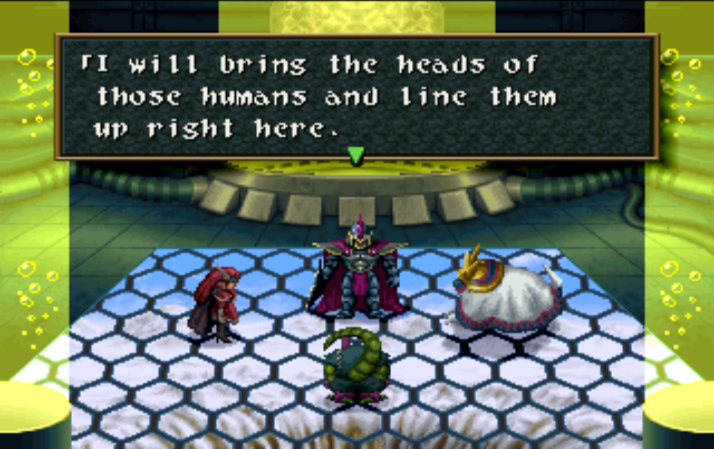
And we’re off again! Quick verdict: the game is nicely presented, handles well, but is hopelessly formulaic. I would point out, though, that the cutesy atmosphere shatters for a brief moment, when you find yourself stepping over dead little girls in the street… The moment is instantly forgotten the second the cartoonish villains standing in for antagonists show up.
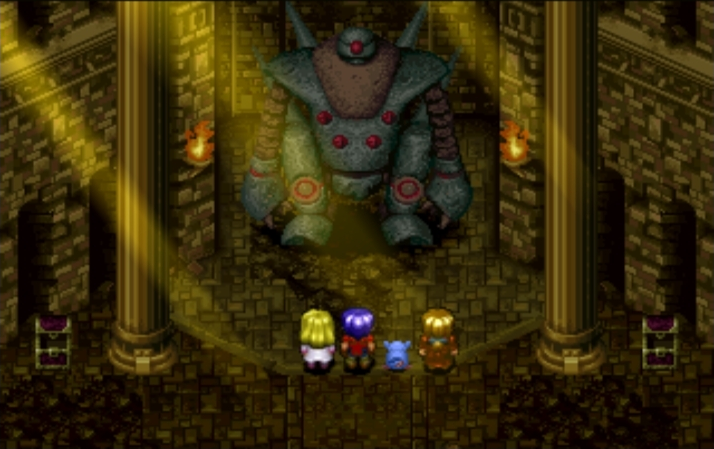
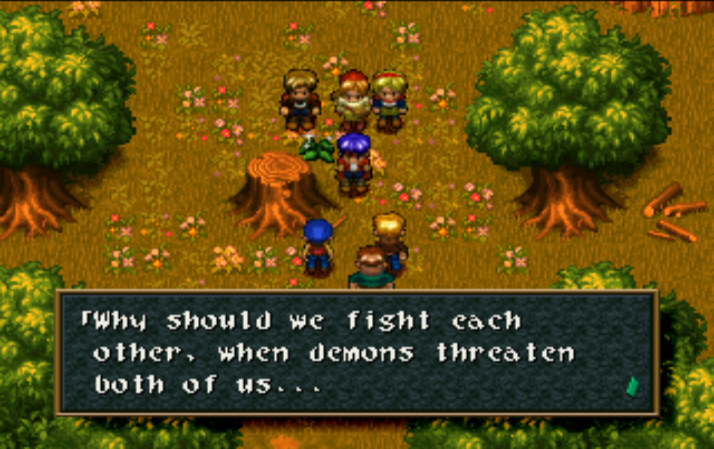
You only control three characters, who sometimes split up to solve (extremely simple) puzzles “cooperatively”. Don’t expect any tactical depth or customisation, though. While you can buy equipment and upgrade weapons, there’s no trade-off to make (between damage and ammo capacity, for instance), unlike what its sequels would go on to offer.
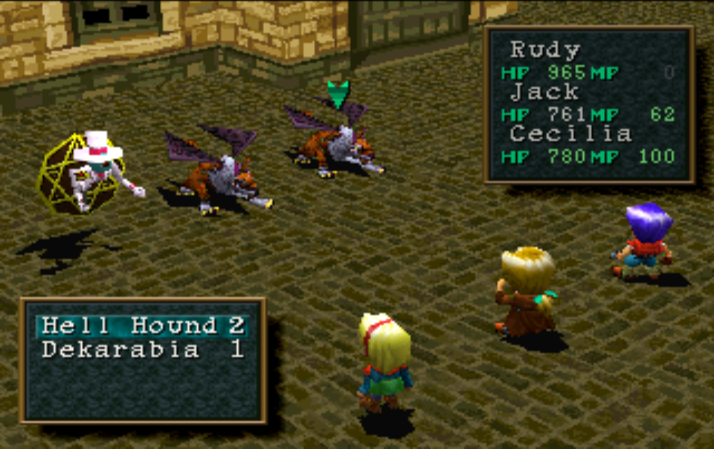
As for random encounters, being the fifth JRPG of this kind I’ve covered on the site, I’ve reached the acceptance stage. I turned on “auto-battle” mode, muted the sound, and subscribed to an excellent channel called Scilabus. Happy to talk about it if you like…
You want me to stick with Wild Arms?
Turn-based combat isn’t just tedious and simplistic; it actually innovates, thanks to its persistent status effects! The worst offender is sleep, which can easily wipe out your party, since your characters don’t wake up when hit. And monsters have this annoying habit of reapplying the effect right after you’ve cleared it.
Can I wrap this up now?
Unlike the third instalment, Wild Arms genuinely had me debating internally whether it surpassed my sorry benchmark: Albert Odyssey. Looking closer, battles are slightly less frequent in the first game (not by much), loading times are a bit shorter, and there are more secrets (including optional bosses). Other than that, it’s an extremely generic title, cheerfully borrowing bits and pieces from all over the place, which puts it squarely alongside the bland, consensus-driven commercial output it’s now fashionable to criticise, and for good reason.
As for the narrative, it unsurprisingly churns out a dated eco-animist fable… Believe me, cynical jibes are queuing up in my head, but I’ve decided to keep them to myself. This game kept me company through the third heatwave of summer 2026. The Forest of Fontainebleau was burning while our rulers were busy jerking themselves off over the 14 July parade. The grim irony isn’t lost on me that no blue-haired twit is coming to save us from the apocalyptic future that is about to come crashing down on our heads…
At least I now understand the appeal of these Japanese role-playing games. Escapism is the last bulwark against hopelessness.