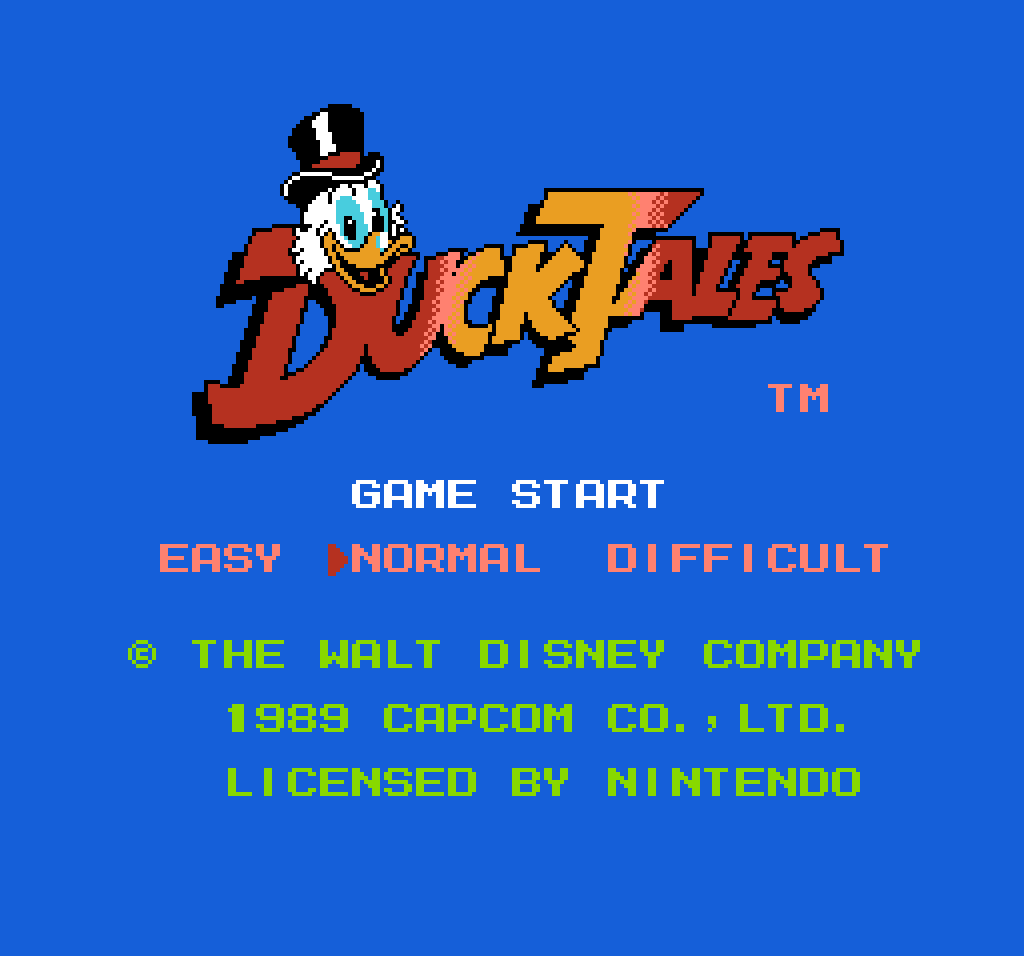
I have heard several YouTubers joke that simply adding a grappling hook to any game would be enough to satisfy them. Far from being limited to climbing or crossing pits, the tool has established itself as an improvised, fast, and spectacular means of locomotion, perfectly suited to contemporary open worlds. The trend was no doubt popularised by Just Cause 3 (2015) or Spider-Man (PlayStation 4, 2018), to the point of becoming almost a convention. Yet, for an old codger raised on the Amiga, the grappling hook conjured anything but speed and precision. I had to use one in Batman, Barbarian 2, Metal Mutant, Turrican 3, and for the first time in motion in Worms, but the experience invariably ended in a humiliating plunge into the water. I recall another contraption dedicated to crossing 2D levels: the pogo stick! Strangely enough, apart from Pogo Joe, Duck Tales, Commander Keen, and at a stretch Mega Man 2, its use never really caught on – perhaps overshadowed by the magic carpet in Lagaf’ or the bathtub in James Pond 2…
I had been given the Game Boy version of Duck Tales as a child, following the adventures of Scrooge McDuck as he hunted for treasure across the four corners of the globe. DuckTales (the TV show), truth be told, left me rather indifferent, but the game had won me over. Many years later, I completed the collection at a flea market with Duck Tales 2 (NES/Game Boy, 1993) and Darkwing Duck (NES/Game Boy, 1992), the game adapted from the animated series spun off from the comic book, itself derived from another comic book, derived from Walt Disney’s famous cartoon. These games bore a strong resemblance to Mega Man in their movement, jumping, and enemy behaviour (enemies reappearing endlessly if one backtracked). I believe part of the development team was shared between the two franchises.
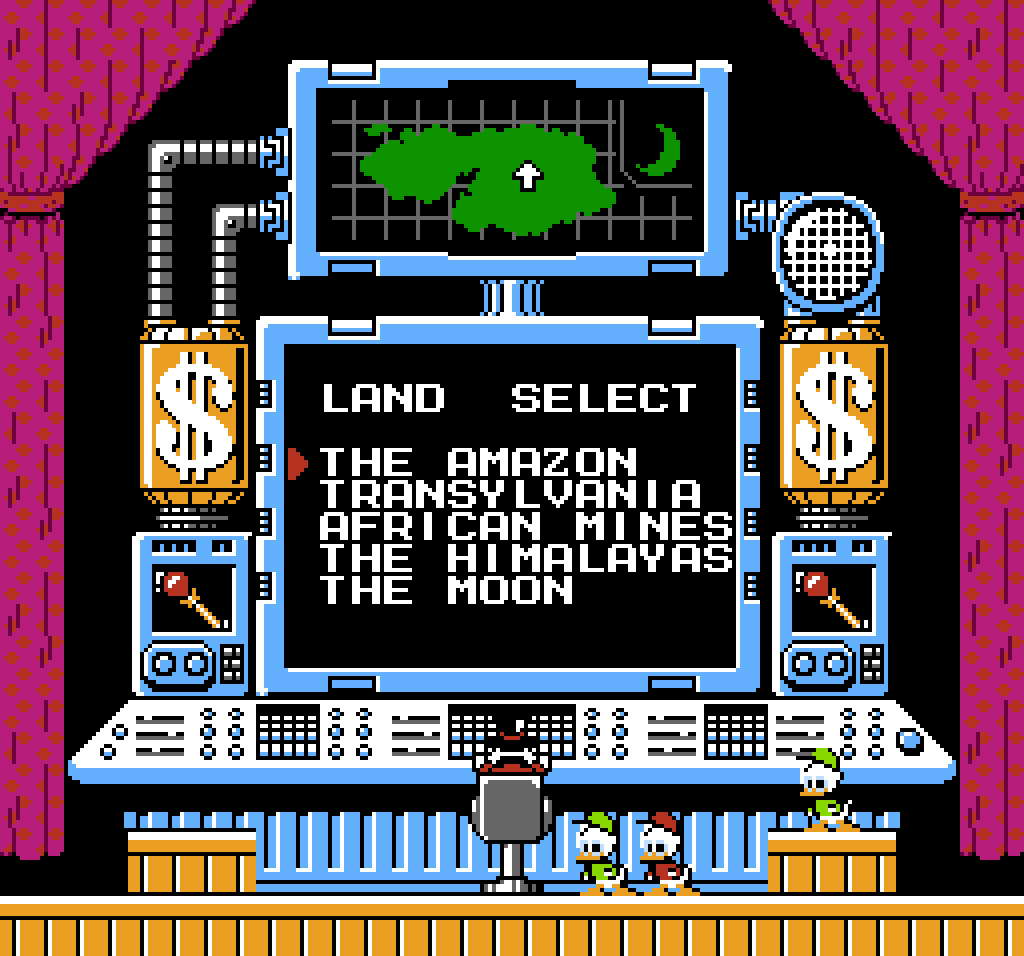
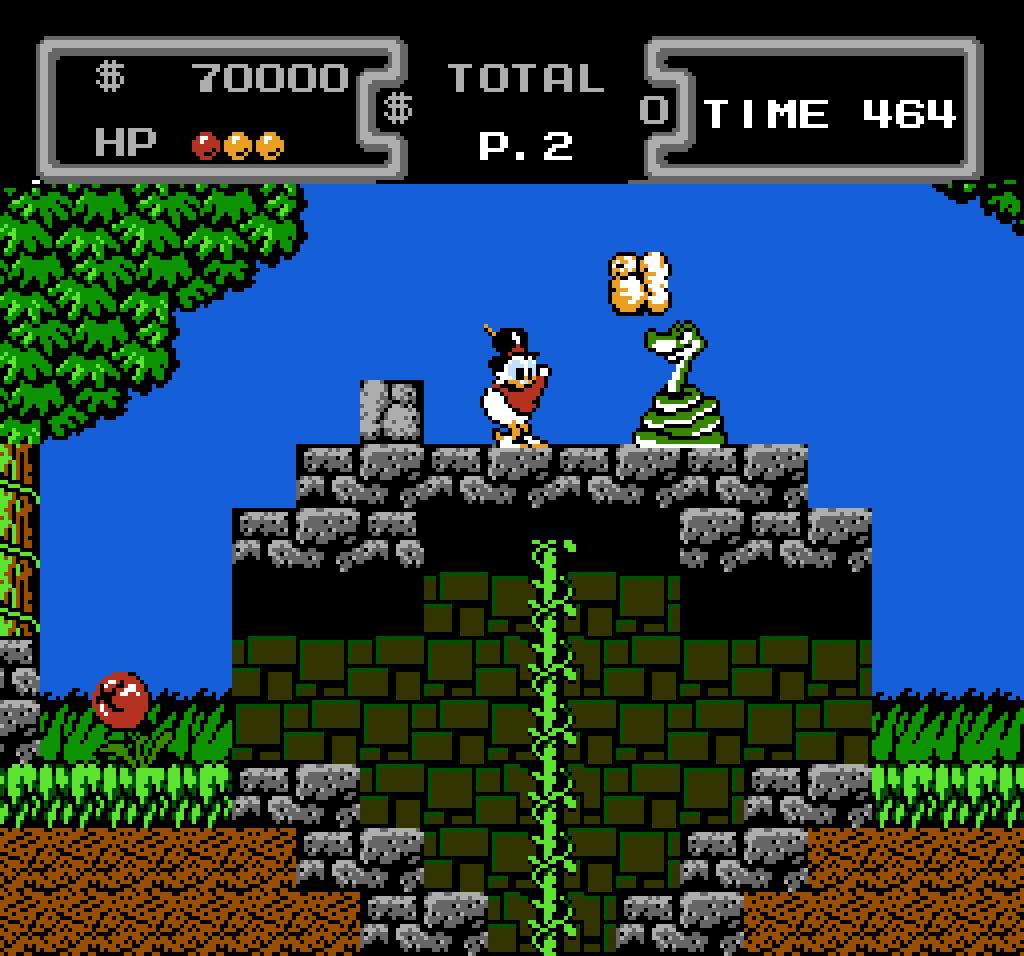
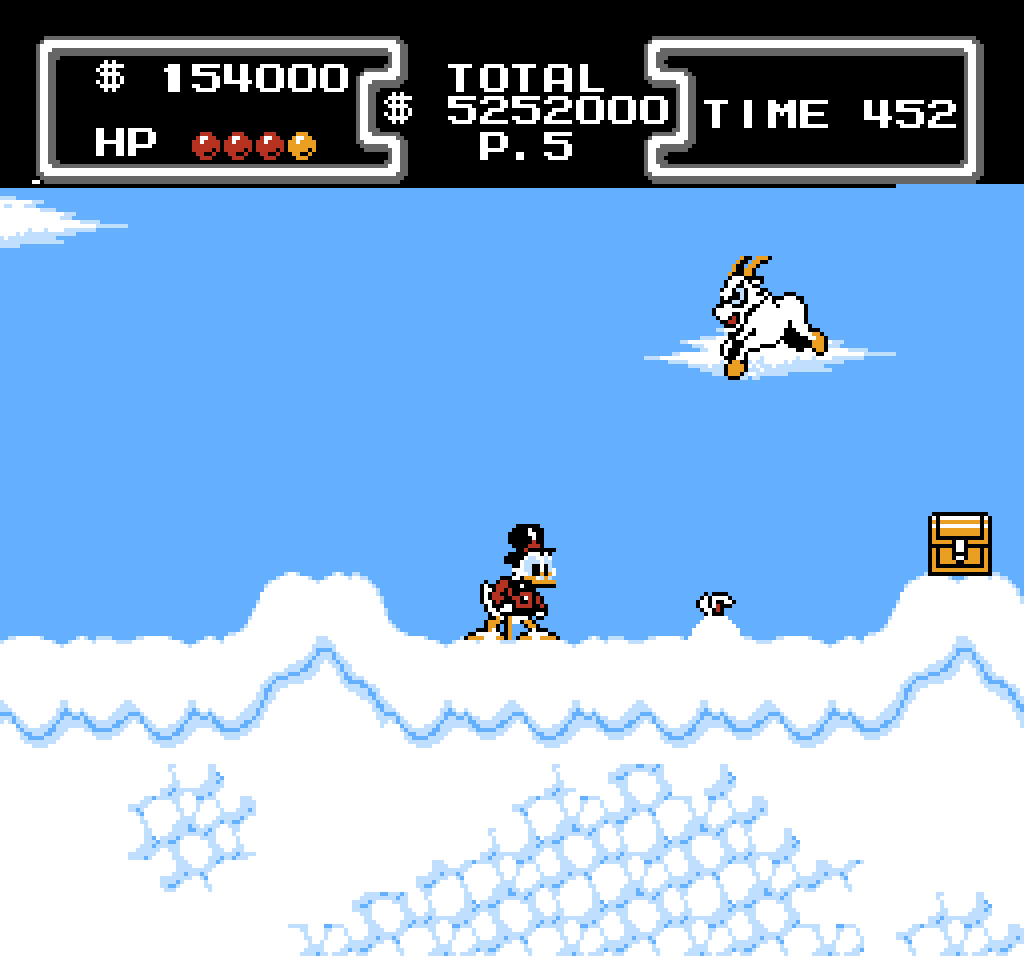
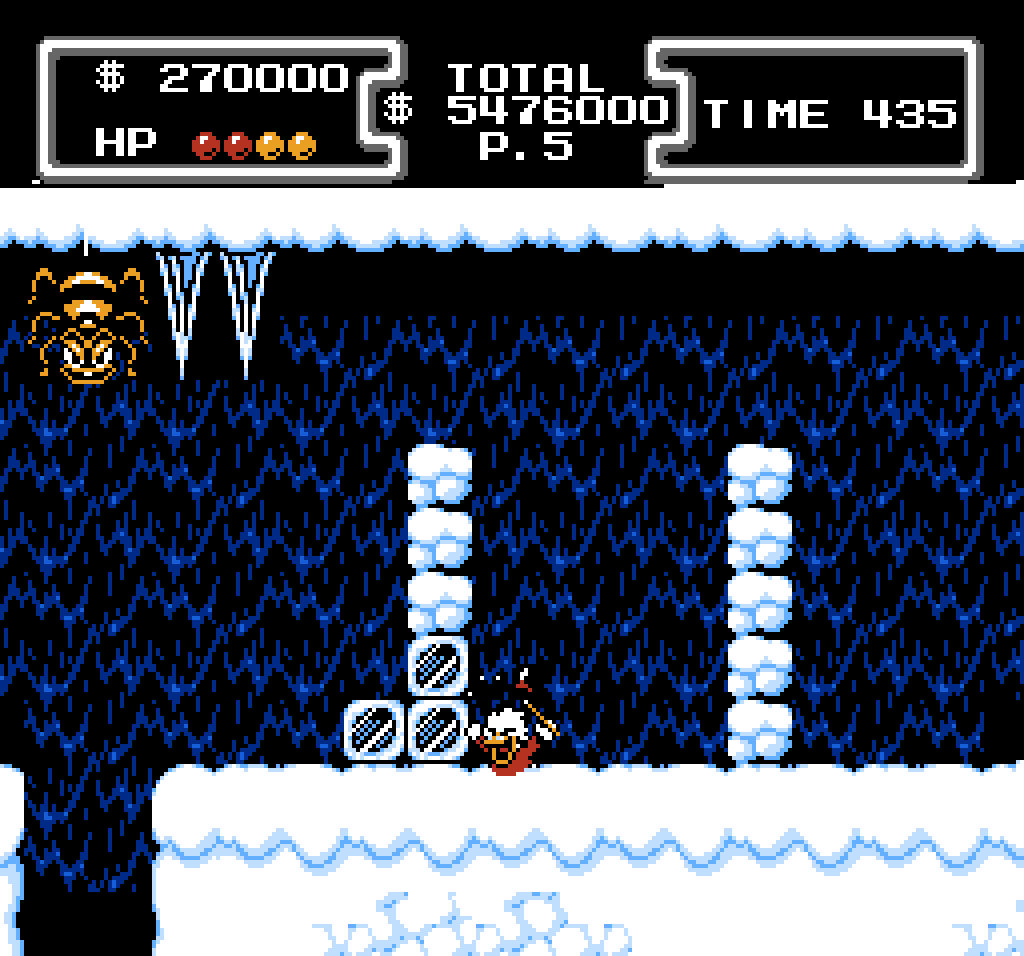
I was therefore looking forward to hopping back on my pogo stick and rediscovering the game, more than thirty years on, in its superior colour version. I started a playthrough, like everyone else, belting out the DuckTales theme at the top of my lungs. The first level in Amazonia proved pleasant and colourful, if rather short. I appreciated the non-linear structure of the levels, which often featured one or more branching paths leading to secret rooms. The trouble is that if one takes the wrong path and stumbles upon the boss, there is no going back. And once a level is completed, returning to it is forbidden, even if one has deliberately left areas unexplored. Rather irritating…
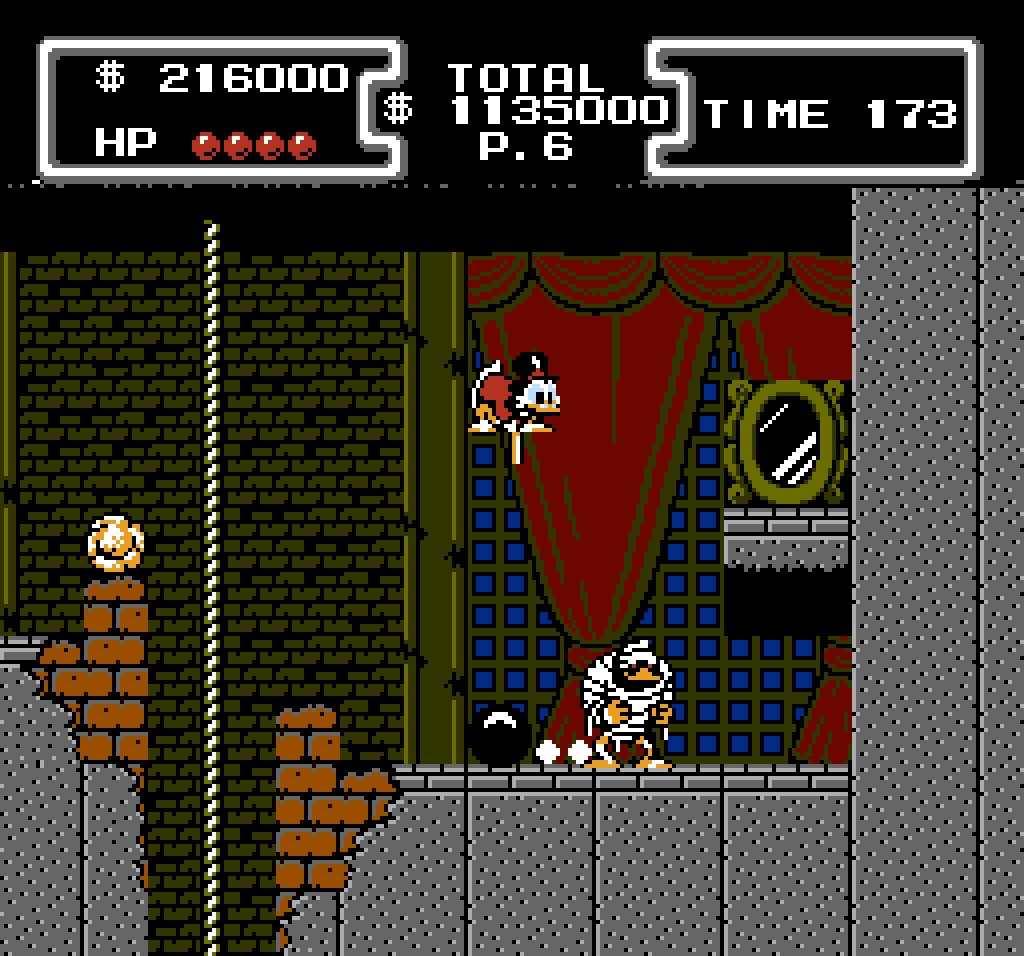
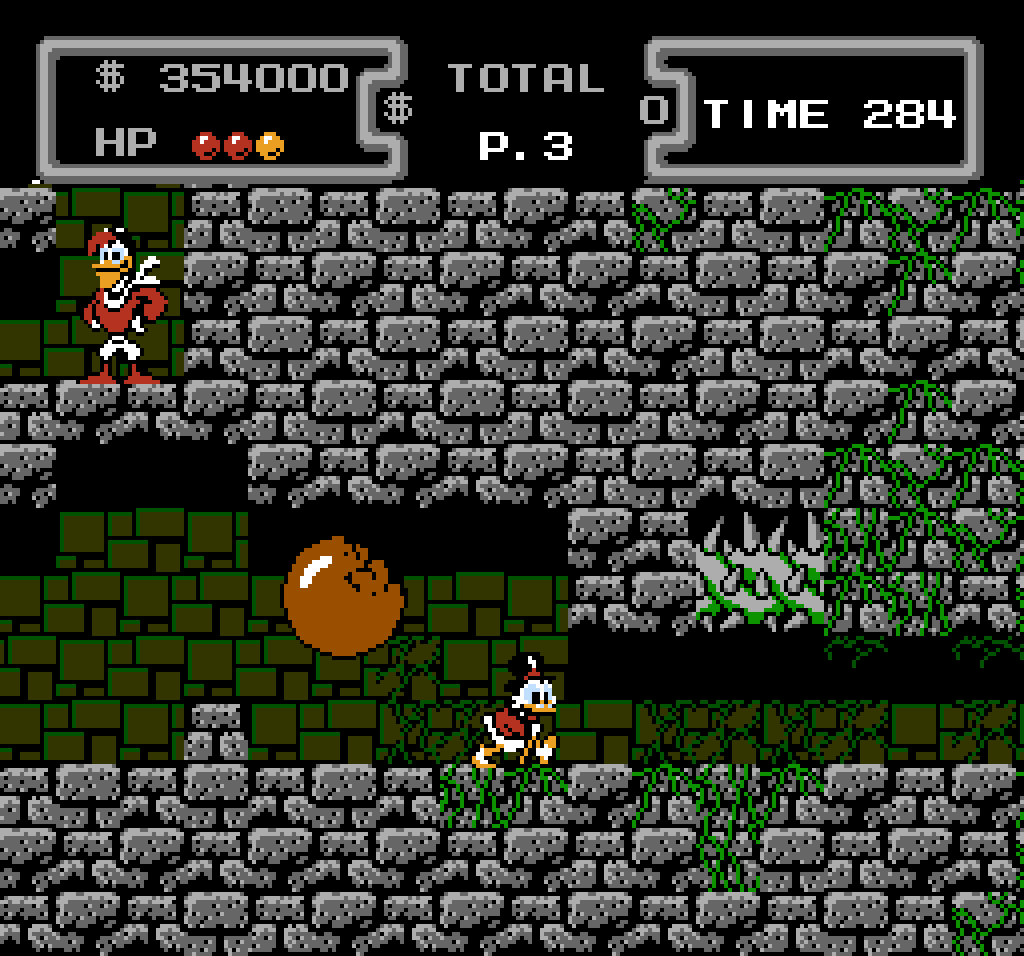
I moved on to Transylvania, which offered even greater non-linearity. Now, I don’t know whether I’m losing my marbles, but I wandered around for a good half an hour without finding the exit, still humming away – though I had by then replaced the lyrics with “I’ve had enough… I’ve had enough… I’ve had enouuugh … enough-enough-enough!” I had time to write five verses. It turns out that the normal route to complete the level runs through an intangible wall, past which I had turned back at least ten times. When I finally realised I could walk straight through it, I was furious. But at the same time, deeply relieved to be leaving that wretched place…
Third stop: the African mines. I had barely made it down a corridor for five seconds before running into one of Scrooge’s nephews standing in front of a locked door. He informed me that I would need a key to proceed, then teleported me … back to the previous level!
I thus continued to wander for a while in search of that key, hollering expletives…
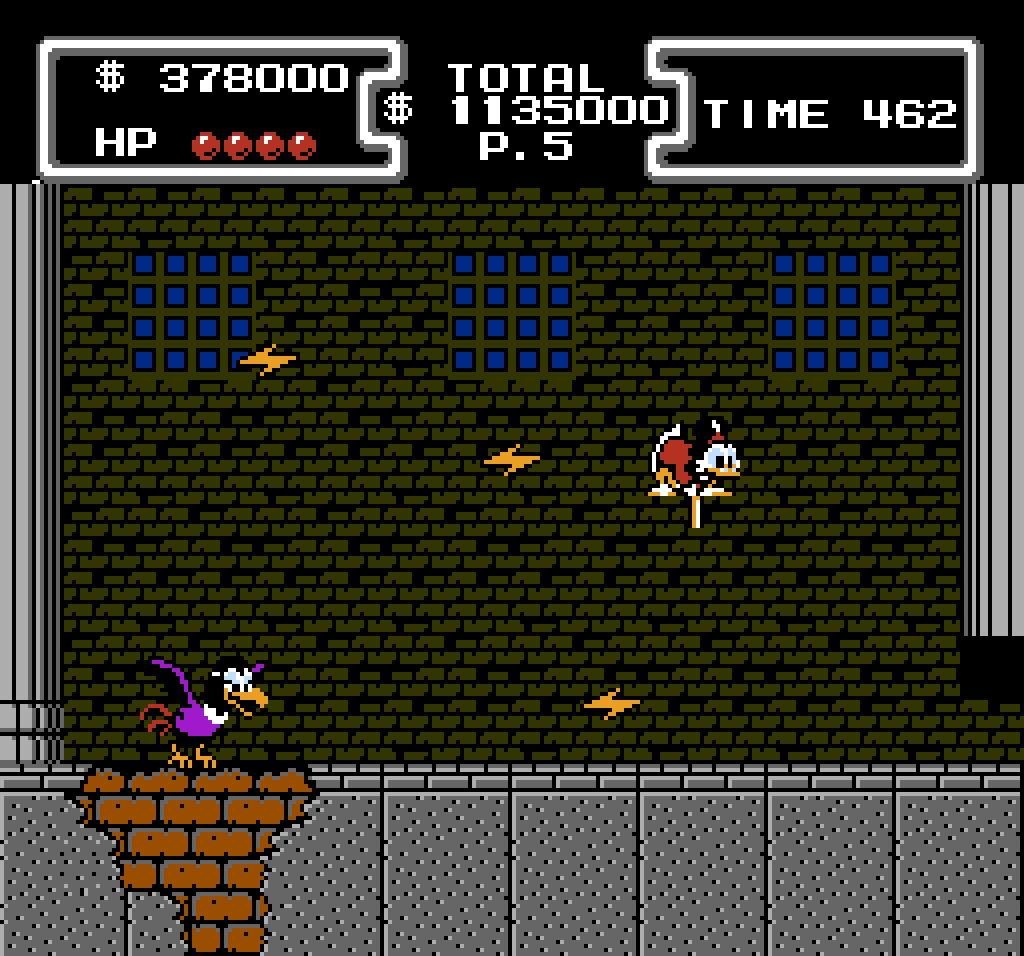
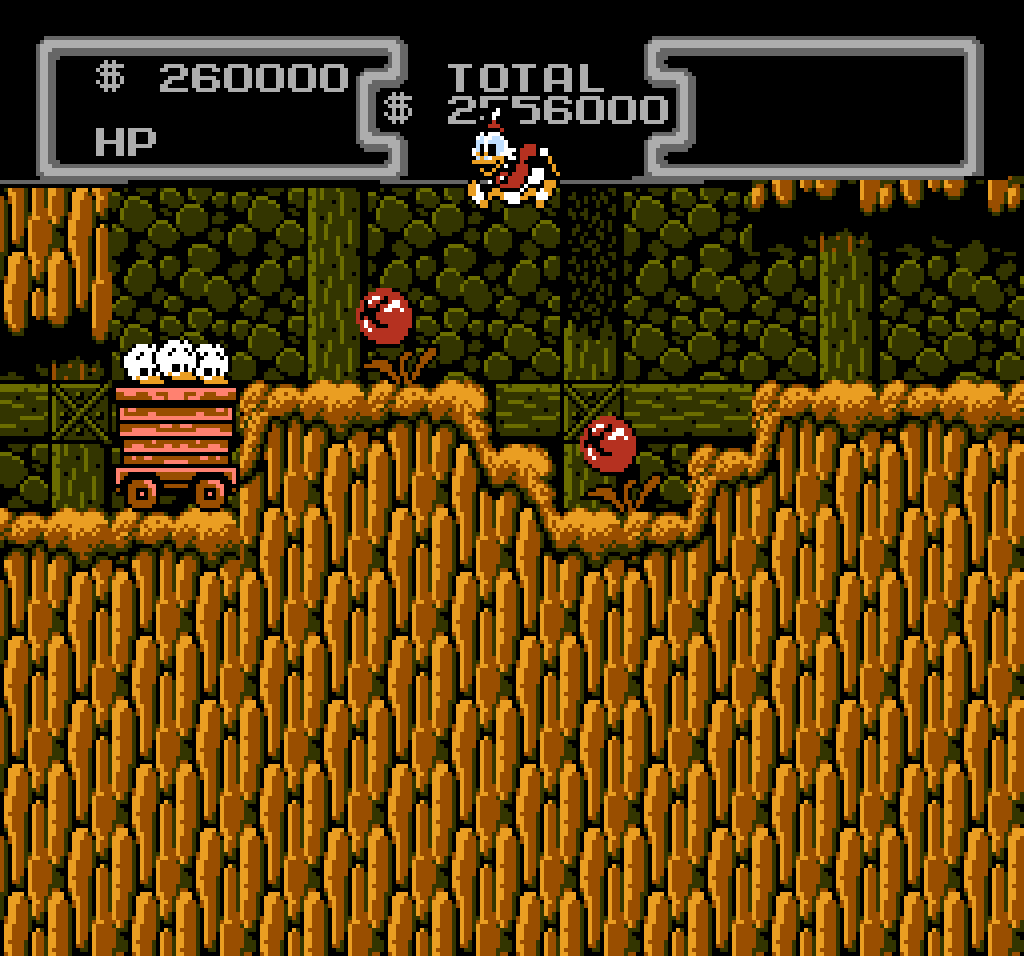
Once the key was safely in my pocket, I dispatched the remaining levels, which I found pleasant enough but brief, and punctuated by bosses that were ridiculously easy to defeat. I was surprised to see certain mechanics so poorly exploited, such as the mine cart section, for instance. By way of comparison, Toki devoted a large portion of a level to that sort of sequence. For a game regularly cited in NES top-10 lists, I had expected something rather more ambitious. The same feeling struck me when I crouched on a moving platform: watching Scrooge lose his footing and fall into the void left me utterly dumbfounded. That is, all the same, a bit of a blot on the copybook for platform game specialists, is it not?
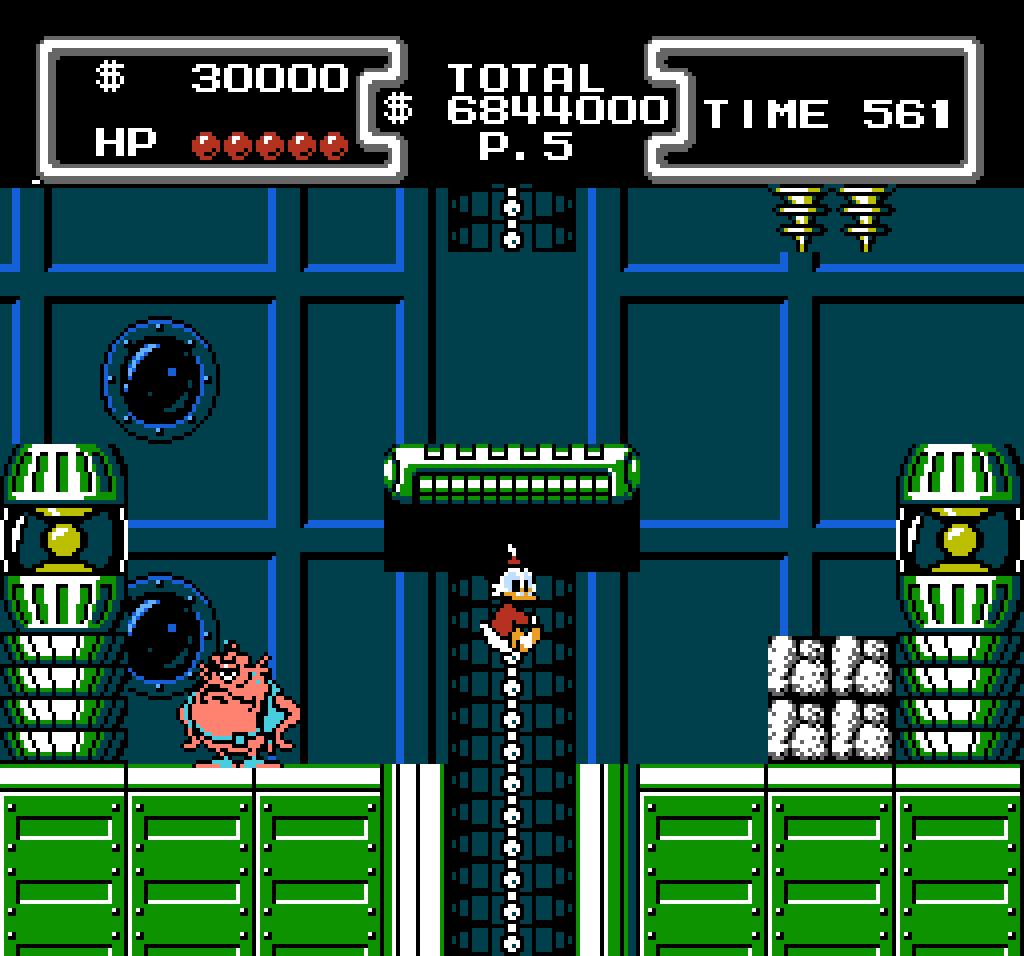
Having completed five tiny levels, I found myself teleported to the final boss’s lair. Care to guess where? Back in Transylvania, of course! A deep sigh… It was there that I received confirmation of my intellectual decline, for the time spent in the three preceding levels had caused me to forget entirely that the false wall existed … and I began wandering in circles again, howling at the moon!
I shall cut this short, as I have suffered quite enough. The game concludes with an ending sequence that varies depending on the number of optional treasures collected – an epilogue that Wario Land (Game Boy, 1994) would later borrow… Strangely, I find myself in a vengeful mood. I am tempted to say that Duck Tales is an overrated game, one that feels like a demo, so short is it, and so poorly showcased are its mechanics. That, or the grumpy old man simply missed his nap.
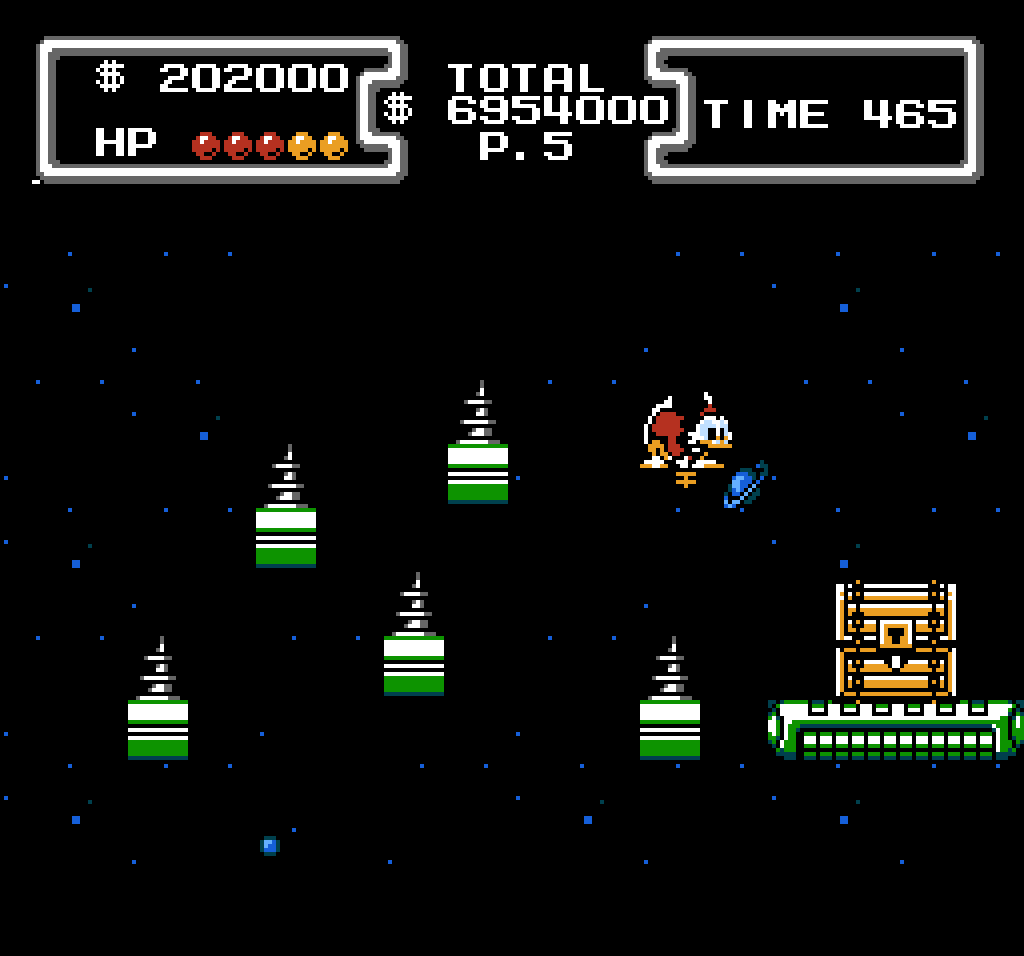
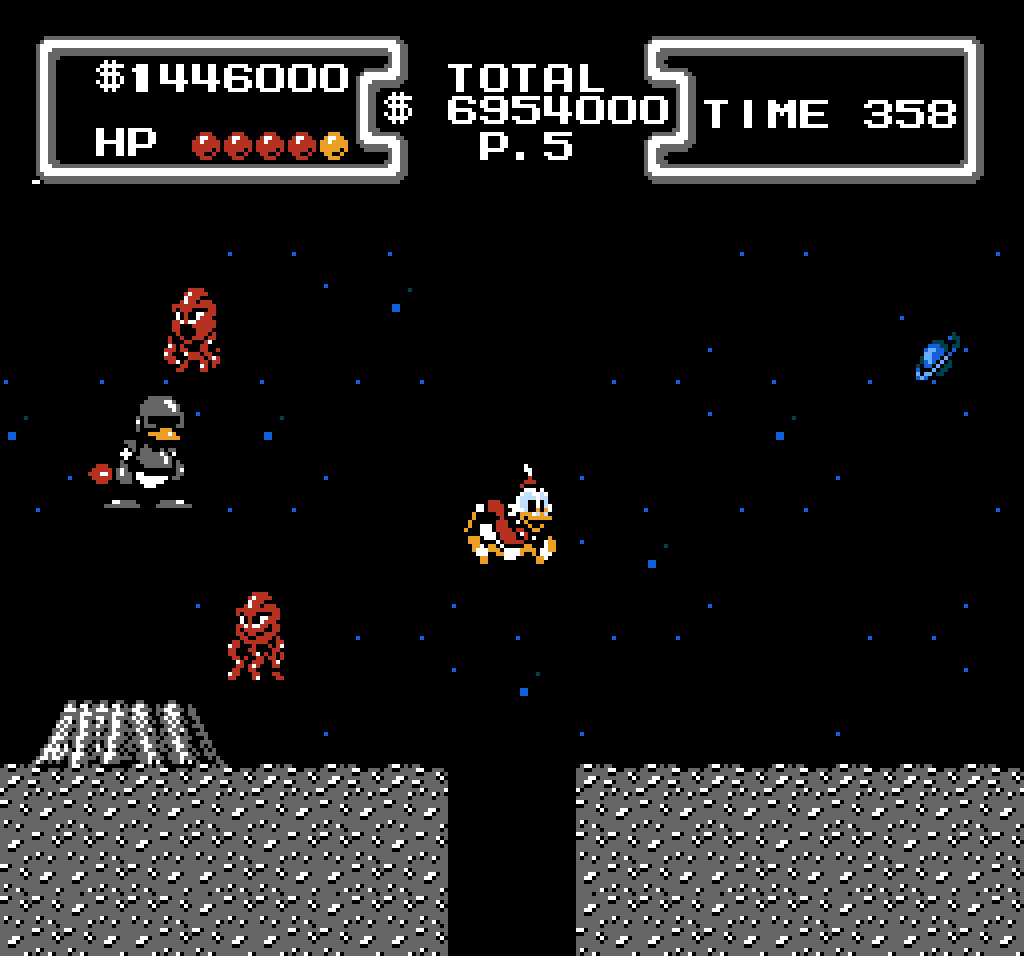
Here is an interesting anecdote, though it will not be enough to redeem the game in my eyes: one of its pieces of music, the Moon theme, is considered an iconic masterpiece. It has inspired hundreds of reinterpretations and drives musicians to distraction on account of a time signature change (from 15/8 to 4/4), amongst other harmonic peculiarities that I would be quite incapable of explaining.
To remain in the spirit of honesty (and minority opinion), should you wish to know my reaction to the remake released on PlayStation 3 in 2013: horrified! Exactly as I had been upon seeing that of Toki. That mobile-phone or washing-powder-packet “style” obliterates every last scrap of charm from the classics.